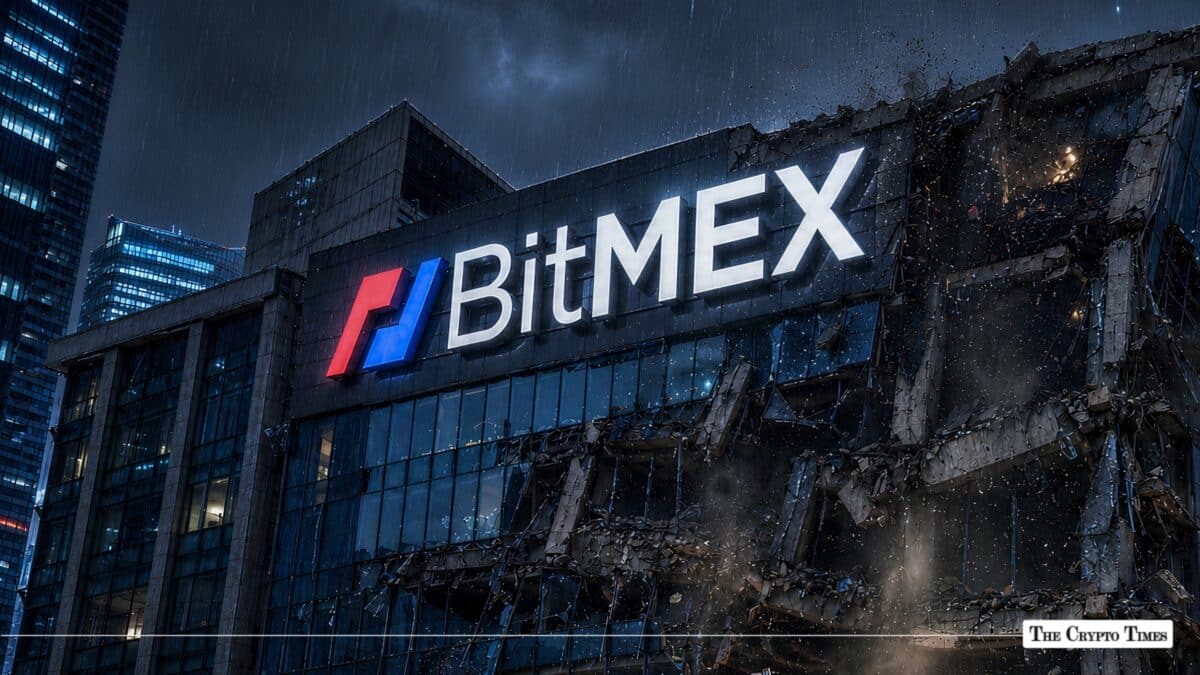
When The Crypto Times documented 40-plus DeFi protocol shutdowns in May, the story was a hack crisis—$770 million drained and the worst run of exploits in the industry’s history. Two months later, the picture has darkened and widened. The exploits were only the opening act. The main event is a capital drought that is now killing not just DeFi protocols, but the exchanges, Layer-2 networks, and wallets that once looked untouchable.
The Headline Numbers
The scale depends on how you count, so here is the honest range. Independent lists compiled from public shutdown statements put the fully verified tally at more than 100 projects between January and late July. The Web3 data platform RootData, which also counts bankruptcy filings and projects whose websites have gone dark for extended periods, puts the figure at roughly 95-110 depending on the snapshot date— around 70 by the end of June, 99-101 across most early-August verified snapshots, and approximately 110 by RootData’s most recent late-July count.
That breadth is the point and the caveat. Not every entry on RootData’s list is a collapse; some are orderly wind-downs, pivots, or single-product sunsets, and the list treats a bankruptcy filing and a community-voted shutdown as equivalent data points. Readers should weigh those distinctions rather than reading all 110 as identical failures.
A few facts frame the wave:
- RootData’s “2026 Crypto Industry Dead Projects List” reached approximately 95-110 entries by late July, spanning exchanges, wallets, DeFi protocols, Layer-1 and Layer-2 networks, NFT platforms, analytics tools, and games.
- More than half of the closures were DeFi protocols.
- The casualties now include major centralized exchanges—BitMEX, BitMart, AscendEX, and several smaller venues, a category that survived the 2022 collapse largely intact.
- Venture funding has contracted sharply: crypto startups raised roughly $4 billion across 355 deals in Q1 2026, a 50% drop in capital from the prior quarter, per Galaxy Research.
- Bitcoin has spent much of 2026 trading well below its ~$126,000 October 2025 peak, a drawdown of roughly 50% that has compressed the token treasuries most projects were funded on.
This is not the disorderly fraud-collapse of Terra or FTX. It is a quieter, more structural cull, a forced consolidation of projects that raised heavily but never reached durable revenue.
What Changed Since May
The May tally was a DeFi story driven by security. The mid-2026 story is an industry story driven by economics. Three things shifted.
First, the closures jumped categories. In the spring, the dead were mostly lending protocols, analytics dashboards, and blockchain games. By July, the list had climbed the stack to centralized exchanges and flagship Layer-2 networks—the supposedly durable infrastructure layer. Even a crypto media outlet, DL News, appears on RootData’s list, a sign the contraction is reaching the press and research layer too.
Second, the driver changed. The early-2026 shutdowns were often triggered by a terminal hack; the summer shutdowns are more often triggered by an empty treasury. The funding wall, not the exploit, is now the leading cause of death.
Third, the tone of the exits changed. Where FTX and Celsius vanished overnight, most 2026 wind-downs have been orderly—published final balances, grace periods for withdrawals, and, in at least one case, a Chapter 11 filing that brings traditional bankruptcy law into a historically informal industry.
The Structural Drivers
The forces behind the purge compound one another.
The funding wall. Projects financed at 2021–22 and 2024–25 valuations hit near-zero runway once speculative capital dried up. Galaxy Research reported new crypto fund formation fell to multi-year lows, with only about eight crypto-focused funds raising roughly $1.1 billion in Q1, and monthly deal counts later drifting toward levels last seen before the 2021 boom. Capital is still flowing, but selectively, toward revenue-generating or AI-adjacent businesses rather than pure-play protocols.
The token-as-revenue collapse. For years, mid-cap projects paid developers, liquidity, and audits in their own appreciating tokens rather than fees. When secondary liquidity for those tokens evaporated, treasuries denominated in them compressed from years of runway to months, and projects that looked solvent on paper became insolvent overnight.
Security costs beyond mid-tier budgets. Enterprise-grade audits, monitoring, and incident response have priced out smaller teams. TRM Labs estimated state-linked operations accounted for the majority of 2026 hack losses. A single nine-figure exploit is now frequently terminal. In some cases the two crises connect directly: the $6 million Lazy Summer exploit traced back to the earlier collapse of Stream Finance, and both now sit on the dead list.
Technological displacement. Early architectures have been overtaken. The clearest example is the Layer-2 layer, where first-generation designs have been rendered obsolete, and the casualties include marquee brands, not just no-name rollups, with Polygon’s zkEVM among the deprecations. Even a 2017-era Layer-1, ICON, appears on the list, a different kind of signal than a 2024 startup folding.
Regulatory and operational costs. Compliance burdens, including MiCA in Europe, contributed to some exchange exits and reshaped where users are migrating after the MiCA deadline.
The Notable Casualties
The full RootData list runs to roughly almost 110 names; the table below is the notable, publicly confirmed subset, grouped by sector. Entries are drawn from projects’ own shutdown announcements and RootData’s tracking.
| Sector | Projects on the list |
|---|---|
| Centralized exchanges | BitMEX, BitMart, AscendEX, EXMO, Zedcex, Coinflare, Oxium, Pingu Exchange, Enclave Markets, CIFDAQ |
| Layer-1 / Layer-2 / infra | Loopring, Polygon zkEVM, Zero Network, Botanix, Mint, UX Chain, Over Protocol, ICON, Forma, Genome, Truebit, PowerLoom |
| DeFi—perps & derivatives | Rage Trade, Voodoo, LogX, Vela Exchange, Fusion Trade, Satori Finance, Valhalla, Ranger, BasePerp, VaporDEX |
| DeFi—lending, credit & yield | Goldfinch, ZeroLend, Ionic, Stream Finance, Summer.fi, Levvy, Avon, Buck, Altura, Cura, Strobe Finance, DeltaDeFi |
| DeFi—stablecoins & aggregators | Angle Protocol, Ebisu, Quiet Finance, ODOS |
| Wallets | Ctrl, Leap, Family, HaHa, Wizz Wallet, SecondFi |
| NFT & marketplaces | Nifty Gateway, Foundation, NFTfi, Exchange Art, Wapal, Catalog, Micro3, Bloktopia |
| RWA / tokenization | RealT, Remora Markets, Ventuals |
| Governance / DAO tooling | Tally, StableLab, CharmVerse, OneBalance |
| Analytics / data / social infra | Zapper, Parsec, DataHaven, OpenRank, Ethereum Follow Protocol, Kiosk, Lemon Terminal, Step Finance |
| Gaming / SocialFi / metaverse | The Forgotten Runiverse, HYTOPIA, GOAT Gaming, fantasy.top, Legend, MUD/Lattice, 0xPPL, X.me |
| Media / research / mining / incubators | DL News, Hazeflow, Poolin, WebN Group, Colony |
| Launchpads / other | vVv, fey, Rova, Pyra, Offramp.xyz, Dango, Rodeo, Zotto, FOMO, glympse.fun, MilkyWay, Everclear, Dmail, Sidekick |
Case Studies
BitMEX: The Pioneer Bows Out
The single most symbolic closure is BitMEX. On July 23, the company said that exchange would permanently cease operations at 04:00 UTC on September 23, halting new registrations immediately, moving to reduce-only mode from August 26, and force-closing remaining positions in an orderly wind-down.
Founded in 2014 by Arthur Hayes, Ben Delo, and Samuel Reed, BitMEX invented the 100x-leverage perpetual swap—now the dominant instrument across crypto derivatives. The specific innovation moment came on May 13, 2016, when BitMEX listed XBTUSD, the first perpetual swap contract, a product that would go on to be adopted by thousands of exchanges globally. At its 2018–19 peak, it commanded a majority share of the derivatives market, up to 57% at peak, and processed over $1 trillion in annual volume.
That share later collapsed to a fraction of a percent as liquidity migrated to Binance, Bybit, OKX, and newer venues like Hyperliquid. By early 2026, BitMEX’s share of centralized perpetual futures volume had fallen to just 0.08%, with Binance controlling ~33% and OKX ~15%. BitMEX said the decision followed a strategic review, stressed it was not insolvent (assets exceed liabilities), and said it has never lost customer funds to a hack, and noted it had been seeking a buyer since early 2025. Its BMEX token fell sharply after the announcement.
Regulatory context also frames the decline. BitMEX faced approximately $200 million in cumulative US regulatory penalties over its lifetime, beginning with a 2020 case in which US authorities charged the company with failing to implement adequate anti-money laundering measures. BitMEX pleaded guilty, and founders Hayes, Delo, and Reed all resigned shortly after the US brought criminal charges. That regulatory cascade drove the liquidity migration that ultimately proved fatal: traders left BitMEX for competitors that offered deeper liquidity, broader product lines, and no legal hangover.
Loopring: The First zk-Rollup Meets Obsolescence
Loopring, Ethereum’s earliest production zero-knowledge rollup, wound down its exchange and automated market maker in late June, taking its relayer offline. The team acknowledged the project never gained meaningful adoption; its original design lacked a virtual machine, limiting composability, and newer zkEVM architectures made it technologically outdated.
Loopring’s timeline of decline was long. The project raised $45 million in a 2017 ICO. Its 2021 partnership powering GameStop’s NFT marketplace was one of its most high profile deals; but neither the partnership nor the broader NFT boom translated into sustained user growth. Loopring had already closed its wallet services in July 2025, citing scaling problems, before the DEX shutdown followed nearly a year later. LRC delistings from major exchanges throughout 2026 further accelerated the decline. The team itself acknowledged it had excelled technical development but failed to build the commercial side of the business.
According to DeFiLlama, its total value locked (TVL) had fallen roughly 99% from a 2021 peak above $760 million to around $17K. Rather than force users to generate self-custody exit proofs, Loopring committed to publishing final balances and batch-returning eligible assets to Ethereum Layer-1—a comparatively user-friendly close, with the team paying all associated gas fees.
Movement Labs: Bankruptcy Comes to Crypto
Movement Labs, developer of a Move-based Layer-1, filed for Chapter 11 after a market-making partner sold a large quantity of MOVE tokens, triggering investigations and a price collapse. The filing is notable less for its size than its form: a formal bankruptcy process brings traditional legal machinery into an industry that has historically handled failure through informal wind-downs and community votes.
The filing specifics: Movement Labs filed its voluntary petition on July 15, 2026 in the U.S. Bankruptcy Court for the District of Delaware, under Subchapter V, a restructuring process specifically designed for qualifying small businesses. The filing reported assets in the range of $100,001 to $500,000 against liabilities of up to $10 million, with under 1,000 creditors listed. The precipitating event: a market-making partner rapidly sold approximately 66 million MOVE tokens, triggering the price collapse, investigations, and eventual bankruptcy filing. MOVE has fallen approximately 99% from its peak, and the Movement blockchain holds $4.04 million in TVL per DeFiLlama data.
Other Notable Shutdowns
Beyond the three above, the 2026 list is dense with names that mattered:
- BitMart — the centralized exchange announced an orderly wind-down on July 26, one of a cluster of mid-tier venues exiting the market this summer.
- AscendEX — the exchange ceased operations on July 1 after years of declining volume and market-share loss to larger rivals.
- Summer.fi — the vault-management platform spun out of the Maker Foundation wound down after a roughly $6 million exploit of its Lazy Summer vaults on July 6 erased its runway; the app stays live for withdrawals until August 31, with the protocol handed to the Lazy Summer DAO. Its TVL had already been bleeding since the Stream Finance fallout.
- Step Finance — the Solana portfolio platform shut down after a late-January treasury hack, initially put at $27.3 million and later assessed closer to $40 million, in which attackers used phishing and stolen keys to drain its multisig; rescue funding never materialized.
- Altura — the HyperEVM stablecoin-yield protocol began an orderly vault wind-down on June 21 after a bank-run-style wave of withdrawals — more than 8.5 million USDT in 24 hours — triggered by contagion from the Main Street (msUSD) depeg, despite Altura saying it had no direct exposure; its final redemptions were later delayed when a bank restricted a £16.4 million account.
- Leap Wallet — one of the Cosmos ecosystem’s most popular non-custodial wallets closed on May 28 after a four-year run, unable to sustain support for a fragmented multi-chain landscape.
- Zapper — the Web3 portfolio and asset-management platform is shutting down on August 3 after seven years, a casualty of the analytics-tooling squeeze.
- Magic Eden Wallet — Magic Eden shut its multi-chain wallet and non-Solana marketplaces to refocus on Solana, where the bulk of its volume sat.
What’s Different From Past Cycles, and One Bright Spot
The 2018 and 2022 downturns were deep, chaotic, and fraud-tinged. The 2026 cull is shallower on price but broader on structure: on-chain activity on networks like Solana has held up in absolute terms, stablecoin supply has been relatively steady, and real-world-asset tokenization has kept expanding even as prices fell, suggesting some adoption is decoupling from speculation.
There is also constructive development. The wave of failures is birthing an on-chain distressed-debt market, tokenized lender claims that let users exit failing positions at market-discovered prices instead of waiting for bailouts that never come. For the first time, DeFi has a framework for unwinding failed projects without total stakeholder loss.
How Many More Will Fall
On current trajectories, further closures are likely through year-end as undercapitalized projects exhaust reserves. The most exposed categories remain lending and perps tooling on low-activity chains, multi-chain wallets facing super-app consolidation, and blockchain games whose server costs outrun token value.
Analysts expect the winner-take-most dynamic to keep concentrating trading and infrastructure around a few dominant venues. These are projections, not certainties—the pace will track macro liquidity and risk appetite as much as anything specific to crypto.
What This Means for You
- Check your exposure now. If you hold assets in any project on a shutdown list, especially wallets with hard deadlines, act before the grace period closes.
- Mind the BitMEX clock. Users have until September 23 to withdraw; leftover balances incur monthly maintenance fees afterward.
- Export keys before app-store removals. Several wallet shutdowns leave keys unrecoverable once apps are delisted.
- Prefer dominant infrastructure. Consolidation is rewarding the largest wallets, marketplaces, and exchanges; thin liquidity is a warning sign.
- Treat a large exploit as terminal. In 2026, a hack above roughly 10% of a mid-cap’s value is usually a death sentence—don’t wait for a recovery announcement that may never come.
The Bottom Line
The 2026 consolidation is the most honest audit crypto has undergone. The May report called it the “Great Protocol Attrition” and confined it to DeFi; two months on, the attrition has climbed the entire stack, and even the pioneers are not exempt. BitMEX helped invent modern crypto trading and is closing anyway. The projects that survive this will have proven real revenue rather than token-subsidized growth—a smaller, leaner, more institutional industry. The question is no longer whether more will fall. It is whether the survivors finally build something that lasts.