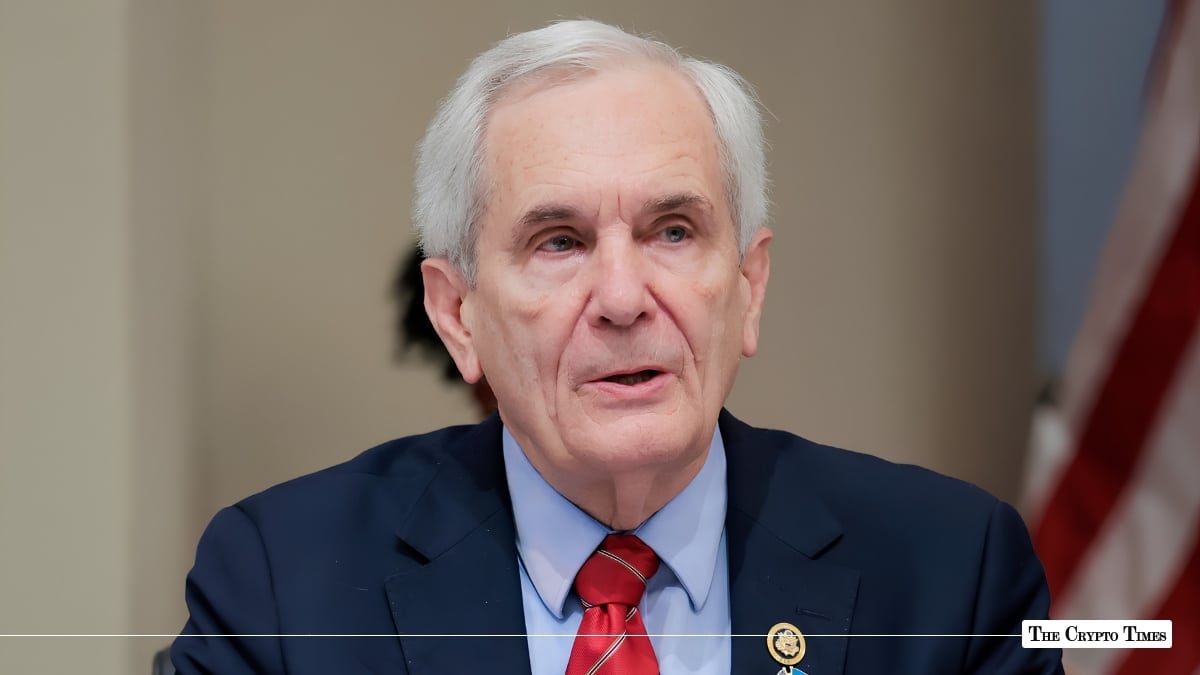
A House hearing on digital asset taxation shifted beyond tax policy Tuesday when Rep. Lloyd Doggett questioned whether pending cryptocurrency legislation could benefit businesses tied to President Donald Trump while failing to strengthen safeguards against illicit finance.
The exchange took place during a House Ways and Means Committee hearing examining several digital asset tax proposals, including legislation covering mining, staking, and broader cryptocurrency taxation. Doggett directed many of his questions to Mike Kaercher, who testified as a witness before the committee.
Questions raised over Trump family crypto businesses
Doggett focused part of his questioning on the Trump family’s growing involvement in the digital asset sector.
Citing reports regarding World Liberty Financial and the Bitcoin mining company American Bitcoin, Doggett asked whether one of the proposed tax measures could allow mining companies and their owners to defer taxes for extended periods. Kaercher responded that the provision could permit such tax deferrals under the framework being considered.
The discussion highlighted a broader debate over whether the proposed legislation would primarily clarify tax treatment for digital assets or create advantages unavailable to other sectors.
Witness says bills could expand crypto industry
Doggett also questioned whether the package of tax measures, combined with the pending Digital Asset Market CLARITY Act, would effectively strengthen the cryptocurrency industry.
Kaercher said he could not speak to lawmakers’ intentions but acknowledged that expanding and supporting the sector could be one likely outcome of the legislation. The comments came as Congress continues to consider multiple crypto-related bills designed to establish clearer rules for digital asset markets, taxation, and market structure.
Concerns over retirement savings and market risk
The hearing also touched on the potential consequences of wider crypto adoption in traditional investment portfolios.
When asked about risks to the broader economy, Kaercher pointed to the possibility that digital assets could become a larger component of retirement accounts. He warned that significant volatility or a major market downturn could affect household retirement savings if exposure to digital assets grows substantially. In such a scenario, policymakers could face pressure to consider government intervention or support measures.
The comments reflected concerns frequently raised by critics of cryptocurrency integration into mainstream financial products.
Debate over illicit finance protections
Doggett further questioned whether any of the tax proposals under consideration would improve protections against money laundering, terrorist financing, or sanctions evasion. Referencing past allegations involving crypto transactions linked to illicit actors, he asked whether the legislation included provisions aimed at reducing those risks.
Kaercher responded that he did not believe the bills would significantly strengthen safeguards against illicit finance in their current form. He suggested that lawmakers may still need to address those issues as the legislation advances through Congress.
Tax reporting rules remain a point of contention
The Texas congressman also argued that stronger tax reporting requirements could help authorities combat tax evasion and other unlawful activity involving digital assets. Kaercher agreed that reporting and collection requirements can reduce opportunities for tax evasion and illicit conduct. He added that traditional financial markets already operate under similar frameworks and that adapting comparable standards to digital assets would be challenging but feasible.
According to Kaercher, the issue is less about whether reporting requirements can work and more about how they should be implemented within decentralized financial systems.
Broader crypto tax debate continues
The hearing underscored the competing priorities shaping digital asset legislation in Washington.
Supporters of the proposed tax bills argue they would modernize outdated rules, provide certainty for taxpayers, and support innovation. Critics, however, contend that some provisions could create favorable treatment for the crypto industry while leaving unresolved questions around financial stability, enforcement, and illicit finance.
As lawmakers continue reviewing multiple cryptocurrency tax proposals alongside broader market structure legislation, those debates are expected to remain central to congressional discussions in the months ahead.
Also Read: Coinbase Calls for Simpler Crypto Tax Rules at House Hearing