Key Highlights
- Galaxy Digital’s Alex Thorn lowered the probability of the CLARITY Act becoming law in 2026 from 50% to 30%.
- Thorn said the legislation is largely complete, but the Senate currently lacks the votes needed for passage.
- He warned that the practical deadline to begin Senate voting is likely July 30, despite Congress remaining in session until early August.
Galaxy Digital’s Head of Research Alex Thorn has lowered his estimate of the CLARITY Act becoming law this year from 50% to 30%, arguing that the bill now faces greater political and procedural obstacles despite the release of its long-awaited combined Senate draft.
In Galaxy Research’s latest report published on July 24, Thorn said the legislation itself is largely complete, but warned that lawmakers are running out of time to assemble the bipartisan coalition needed before Congress leaves for its August recess.
“CLARITY text is here. Now it needs votes.”
Thorn said the legislation itself is largely complete, but described the current political environment as entering “Hail Mary territory,” with the Senate calendar becoming increasingly unforgiving.
Final senate draft complete, But coalition still missing
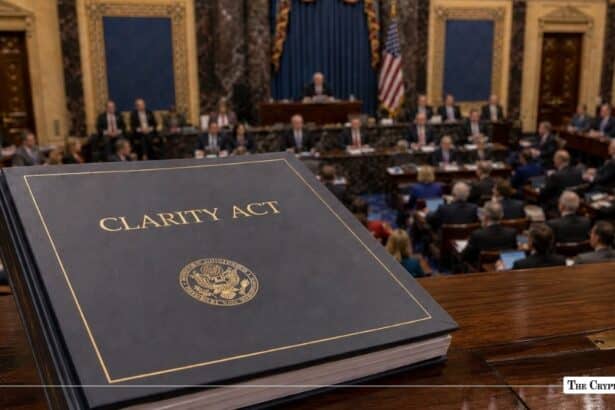
The Senate this week released the long-awaited 616-page combined CLARITY Act, merging legislation previously advanced by the Senate Banking Committee and Senate Agriculture Committee while incorporating months of negotiated changes.
Thorn argued that completing the legislative text does not guarantee passage.
“The combined text is finally public, but the coalition required to pass it is not visibly in place.”
The updated proposal includes new ethics restrictions on senior public officials issuing digital assets, revisions to portions of the GENIUS Act, expanded self-custody protections, continued developer safeguards under the Blockchain Regulatory Certainty Act (BRCA), a revised CFTC registration framework for digital asset intermediaries, and stronger anti-fraud enforcement tools.
Vote arithmetic becoming increasingly difficult
A major factor behind Thorn’s downgrade is the Senate’s uncertain vote count.
Republicans officially control 53 seats, but Thorn noted reports suggesting Senators Josh Hawley and Rand Paul remain likely “no” votes, while Mitch McConnell has not participated in Senate votes since his recent hospitalization.
That could leave Republicans with only about 50 dependable votes, meaning Senate leadership would still need support from several Democrats to reach the 60 votes required to overcome a filibuster.
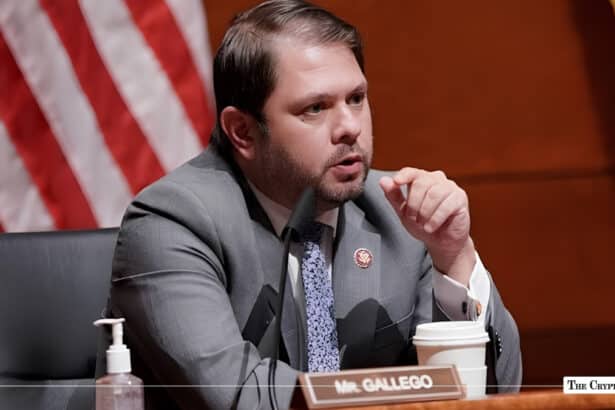
Complicating matters further, seven Democratic senators involved in negotiations—including Mark Warner, Angela Alsobrooks, Cory Booker, Catherine Cortez Masto, Ruben Gallego, John Hickenlooper, and Raphael Warnock—recently released a joint statement saying the current draft “falls short.”
Senator Elizabeth Warren separately criticized the legislation, arguing that portions of the bill could weaken anti-money laundering protections while objecting to its ethics framework.
Calendar becomes the biggest obstacle
While political negotiations continue, Thorn argued that the Senate’s legislative calendar may pose an even greater threat to the bill.
Although lawmakers are scheduled to remain in session until August 7, Thorn believes the practical deadline to begin floor consideration is around July 30, leaving leadership only a narrow window to file cloture, debate the legislation, process amendments, and complete Senate passage before Congress adjourns.
“The calendar is no longer merely an obstacle. It is now the enemy.”
If CLARITY fails to clear the Senate before lawmakers leave Washington for the August recess, Thorn believes its chances of becoming law this year decline significantly as attention shifts toward appropriations battles and election-year politics.
Industry support remains strong
Despite Thorn’s increasingly cautious outlook, support for the legislation remains broad across both the crypto industry and traditional finance.
As previously reported, Coinbase has described the CLARITY Act as essential to its long-term vision of becoming an “Everything Exchange,” arguing that clear market structure rules would accelerate the adoption of tokenized securities and digital assets.
Earlier this year, Aave founder Stani Kulechov publicly backed the CLARITY Act, arguing that stronger developer protections and clearer rules would give DeFi builders the confidence to continue developing in the United States.
Outside the crypto industry, Goldman Sachs CEO David Solomon recently backed advancing the bill, arguing that while the legislation is not perfect, establishing a federal market structure would encourage broader institutional participation in digital asset markets.
Critical days ahead
While Thorn stressed that he still believes the legislation would improve the U.S. regulatory framework for digital assets, he argued that the focus has shifted away from policy negotiations toward whether Senate leadership can secure enough votes before time runs out.
“The time for incremental negotiations is over. The bill needs a last-ditch effort, and it needs leadership.”
With only a limited number of legislative days remaining before the August recess, the coming weeks are expected to determine whether the CLARITY Act advances to a Senate vote or faces further delays.
Also Read:- CLARITY Act: The Bill Exists, the Deal Does Not, Trump Has to Wait