Key Highlights
- a16z crypto Head of Policy & General Counsel Miles Jennings urged the Senate to advance the CLARITY Act in a September 14 opinion piece.
- Jennings linked the legislation to custody, asset segregation and disclosure issues highlighted by the FTX collapse.
- The bill would establish a federal market-structure framework for digital assets and divide regulatory responsibilities between the SEC and CFTC.
With the Senate preparing to consider the CLARITY Act, a16z crypto partner Miles Jennings is urging lawmakers to advance the legislation, arguing that the bill could address some of the regulatory gaps exposed by the collapse of FTX.
In an opinion piece published September 14, Jennings said Congress has yet to establish a comprehensive federal framework for spot digital asset markets.
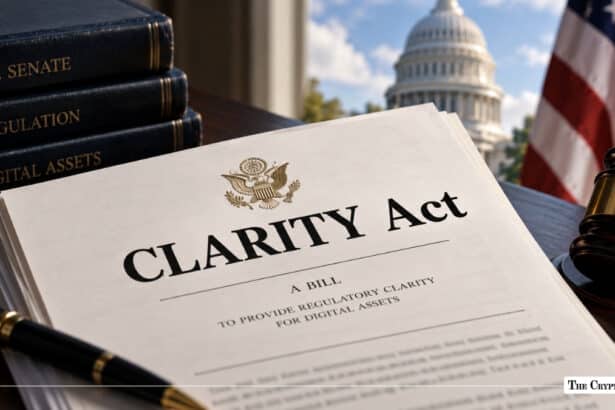
The Senate is scheduled to consider a cloture motion on H.R. 3633, the Digital Asset Market Clarity Act, on September 15.
Jennings points to lessons from FTX
Jennings’ argument focuses on how customer assets are held, protected, and disclosed.
He pointed to the FTX collapse as an example of risks that can arise when customer funds are not adequately segregated, and custody arrangements are not sufficiently controlled.
Among the provisions he highlighted are independent custody arrangements, segregation of customer assets and additional disclosure requirements.
Jennings argues that these measures could provide stronger protections for customers of digital asset intermediaries.
What the CLARITY Act would change
The legislation would establish a federal market-structure framework for digital assets while dividing regulatory responsibilities between the Commodity Futures Trading Commission (CFTC) and the Securities and Exchange Commission (SEC).
Under the proposed framework, the CFTC would generally oversee digital commodities, while the SEC would retain jurisdiction over digital asset securities.
The bill also contains provisions covering customer assets, disclosures, market conduct and requirements for certain digital asset intermediaries.
The latest Senate text includes provisions addressing when certain non-decentralized DeFi protocols would need to register with the CFTC and comply with the Bank Secrecy Act, according to Sen. Cynthia Lummis’ office.
Jennings also pointed to provisions involving qualified custody, conflicts of interest, listing standards, disclosures and restrictions on insider sales.
Federal and state regulation remain in debate
Jennings disputes arguments that the legislation would amount to deregulation.
He said parts of the digital asset market currently operate outside the traditional federal securities framework, leaving some activities subject to state requirements and federal enforcement actions.
The Congressional Research Service has similarly identified gaps in federal oversight of certain spot digital asset transactions.
The division of authority between federal and state regulators remains one of the broader issues surrounding the legislation.
Ethics and stablecoin rules remain unresolved
Senate negotiations continue over provisions involving government officials’ digital-asset interests, stablecoin rewards and customer protections.
The ethics debate includes questions about whether additional restrictions should apply to officials who own or have financial interests in digital assets. Jennings argued that those issues should be addressed through federal ethics rules rather than delaying the broader market-structure bill.
Another dispute concerns rewards offered by stablecoin issuers and whether certain arrangements could create competitive concerns for traditional banks or resemble interest paid on deposits.
The disagreements remain part of the negotiations between Republicans and Democrats.
Lummis highlights customer-asset protections
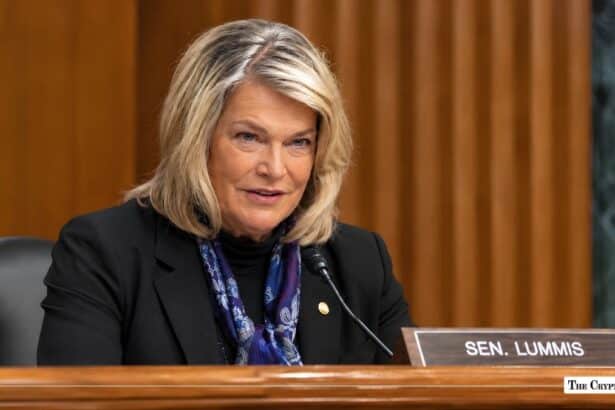
Jennings’ comments come as Sen. Cynthia Lummis continues to support the legislation while emphasizing its customer-protection provisions.
Lummis has pointed to language that would treat certain digital assets held for customers as customer property in bankruptcy and require those assets to remain segregated.
Those provisions overlap with some of the custody concerns raised by Jennings, although negotiations continue over other parts of the bill.
September 15 vote is the next test
The Senate’s next procedural milestone is the cloture motion on H.R. 3633, scheduled for September 15.
The vote would not represent the final passage. It would determine whether the Senate can proceed with consideration of the legislation.
Before the vote, lawmakers still face disagreements over DeFi registration, Bank Secrecy Act requirements, ethics, stablecoin rewards and customer-asset rules.
Jennings’ opinion adds another industry perspective to the debate, but the bill’s next step will depend on whether senators can resolve the remaining disputes and secure enough support to move forward.
Also Read: Lummis Calls CLARITY Act a “Now-or-Never” Moment Ahead of Senate Vote