Patrick Witt, Executive Director of the President’s Council of Advisors for Digital Assets, publicly rejected banking industry warnings on Monday afternoon that stablecoin rewards permitted under the Digital Asset Market Clarity Act (Clarity Act) would drain deposits from United States banks.
Writing on X hours before the Senate’s Tuesday procedural vote, Witt called the deposit flight argument a myth and said that if it were real, it would have already surfaced in bank deposit data.
The exchange sharpened the political stakes ahead of the 2:15 p.m. ET cloture vote scheduled for Tuesday, September 15, 2026, on a bill that would extend the yield ban already imposed on payment stablecoin issuers under last year’s Guiding and Establishing National Innovation for United States Stablecoins Act (GENIUS Act) to crypto exchanges and their affiliates.
Witt Calls Deposit Flight a Myth, Points to Rising Bank Balances
Witt’s reply on X, posted at 17:24:48 GMT on September 14, 2026, answered a Semafor report that a new coalition letter from banking groups had reached Senate desks earlier the same afternoon.
“Crypto companies have been offering rewards on stablecoins for years. We don’t need to speculate: If the deposit flight myth were real, it would have already occurred. Instead, data shows bank deposits are going up, not down,” Witt wrote.
He then walked through what the current bill actually does. “Still, the compromise contained in Section 404 of the Clarity Act restricts the payment of stablecoin rewards that mimic interest on bank deposits,” Witt said. “The latest draft now also adds a ‘circuit breaker’ granting the Secretary of the Treasury extraordinary authority to further restrict stablecoin rewards in the event the boogeyman of deposit flight materializes.”
His closing line framed the political choice for undecided senators. “If Clarity fails, banks get none of these protections.”
Banking Coalition’s Monday Letter to Thune and Schumer
Semafor White House economy reporter Eleanor Mueller flagged the coalition letter on X at 16:34:07 GMT on Monday. She wrote that just about every banking group had joined forces on the letter, arguing that the latest text of the Senate crypto bill did not do enough to address their concerns over stablecoin yields.
The letter’s central line, which Mueller quoted, said a circuit breaker that activates only after substantial deposit flight has already occurred is not a safeguard at all.
Eight banking groups signed the Monday letter to Senate Majority Leader John Thune (R-SD) and Democratic Leader Chuck Schumer (D-NY). The signatories include the American Bankers Association (ABA), the Bank Policy Institute (BPI), and the Independent Community Bankers of America (ICBA). The groups want tighter limits on stablecoin rewards before Tuesday’s procedural vote.
The GENIUS Act already restricts permitted payment stablecoin issuers from paying yield. Banks argue that the ban does not close the loophole for exchanges and other intermediaries that pay rewards on stablecoin balances. Monday’s letter asks lawmakers to strip language that would allow certain rewards to depend on how many stablecoins a customer holds and for how long, calling such a structure economically indistinguishable from a savings account.
The letter also targets the new Treasury circuit breaker inserted into the final draft released late Sunday and early Monday. According to ICBA materials, the authority would cover 18 months after enactment and could be triggered if regulators find a substantial detrimental impact on deposits at community banks holding less than $10 billion in assets.
Treasury Secretary Scott Bessent defended the tool the same day. In a post on X, Bessent said: “If stablecoins cause harm to community banks, I will not hesitate to use these tools to ensure they remain fully protected.” He also called the Clarity Act essential to ensuring America wins the global race for new technology.
A Months-Long Bank Campaign Against Section 404
Monday’s coalition letter is the newest chapter in a lobbying push that began in early summer. On July 13, 2026, the ABA, the ICBA, and 76 state banking associations sent a joint letter to Thune and Schumer seeking sweeping changes to Section 404. The Crypto Times covered that 78-group letter the following day.
The groups asked lawmakers to remove the word “solely” from subsection (1)(A), delete phrases tying the test to a payment stablecoin balance or an interest-bearing bank deposit in subsection (1)(B), replace the “economically or functionally equivalent” standard with “substantially similar,” and strike subsection (3)(B), which they said would permit rewards calculated by reference to balance, duration, or tenure.
On September 10, 2026, all 77 state bankers associations joined the ABA and the ICBA in another letter to Senate leadership urging changes to Section 10404(c)(1) of the merged text. The ICBA restated the demand a day later and cited its own analysis that failing to extend the yield prohibition could reduce community bank lending by $850 billion.
The banking coalition frames its case around Congressional intent. It argues that payment stablecoins should be transactional tools rather than store of value products that substitute for insured deposits, and warns that deposit flight would shrink the local funding base used for mortgages, farm credit, and small business loans.
What Section 404 Actually Says
In committee drafts, the yield language sat in Section 404. In the merged Senate text released this week, it appears as Section 10404.
The compromise was first brokered by Senator Thom Tillis (R-NC) and Senator Angela Alsobrooks (D-MD). It prohibits covered digital asset service providers and their affiliates from paying United States customers interest or yield solely for holding payment stablecoins. It also bars payments that are economically or functionally equivalent to interest on a bank deposit.
Activity-based or transaction-based rewards would remain permitted, subject to later rulemaking. Providers would be barred from marketing stablecoins as bank deposits, investment products, government-backed products, or products insured by the Federal Deposit Insurance Corporation (FDIC).
Banks say those exceptions are the loophole. Crypto platforms counter that a total ban on activity rewards would erase a consumer product already in use, including Coinbase’s USD Coin (USDC) rewards program, without evidence of systemic deposit loss. The Crypto Times explained the mechanics of that bargain in May.
Final Text and the Tuesday Cloture Math
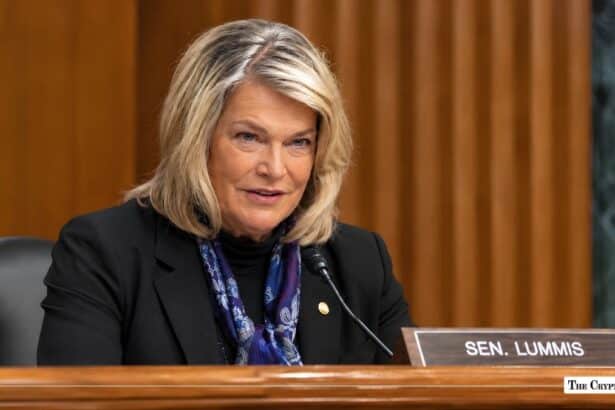
Senate Banking Digital Assets Subcommittee Chair Cynthia Lummis (R-WY), Senate Agriculture Chair John Boozman (R-AR), and Senate Banking Chair Tim Scott (R-SC) released the final draft of the Clarity Act on September 14, 2026. Sponsors said the text reflects more than a year of talks and 126 substantive changes requested by Democrats. The full draft text is posted on Lummis’s website, and the companion House measure is H.R. 3633.
The House passed its version 294 to 134 in July 2025, a roughly 68.7% majority. The Senate Banking Committee cleared its measure 15 to 9 in May 2026. If cloture, the procedural vote to end debate and move to consideration, is invoked on the motion to proceed on Tuesday afternoon, the new text will be offered as an amendment like a substitute.
Cloture requires 60 votes, or 60% of the chamber. Republicans hold 53 Senate seats. At least seven Democrats or independents would need to join if the Republican conference stays unified. The Crypto Times has tracked the vote math in detail and reported on Witt’s earlier warning that a failed cloture vote could push the bill’s timeline back.
Lummis said the bill is ready after a year of intense daily bipartisan negotiations. Scott said the final text gives the Treasury Secretary the tools to protect community banks, farmers, and rural Americans. The Crypto Times has also covered the ethics package added to the final draft and President Donald Trump’s decision to accept those terms.
State Attorneys General Add a Second Objection
A bipartisan group of state attorneys general led by New York Attorney General Letitia James sent a separate Monday letter to Scott and Senator Elizabeth Warren (D-MA) warning that the bill’s language on state authority is ambiguous and could weaken state fraud cases. Signatories include officials from California, Illinois, Arizona, Kansas, Ohio, and Wisconsin, among other states.
The final draft adds ethics rules drawn from the Tillis and Senator Ruben Gallego (D-AZ) proposal, including a role for state attorneys general in enforcing restrictions on federal officials and their spouses. It also converts the Blockchain Regulatory Certainty Act into a civil safe harbor for certain noncustodial developers.
Galaxy Digital Head of Research Alex Thorn has flagged what he views as a missing criminal shield for developers in the current text. Coinbase Chief Financial Officer (CFO) Alesia Haas has separately said the exchange has a backup plan involving the Securities and Exchange Commission (SEC) and Commodity Futures Trading Commission (CFTC) if the bill stalls in the Senate.
Why the Deposit Debate Matters Right Now
Stablecoins are a payments product and a balance sheet product at the same time. Banks fund most local lending with deposits. Crypto platforms use rewards to keep dollar tokens on their apps. The GENIUS Act, signed in 2025, already stops issuers from paying interest. The Clarity Act is the bill that would extend a similar ban, with exceptions, to exchanges and their affiliates.
Witt’s argument is empirical. Rewards on stablecoins have existed for years, and he says the predicted flight has not shown up in deposit data, pointing instead to rising bank balances over the same period. Banks answer that scale, not existence, is the risk, and that a legal blessing of balance-linked rewards would accelerate substitution the moment the bill becomes law.
That is the choice senators face at 2:15 p.m. ET on Tuesday. The final draft restricts interest-like stablecoin rewards and adds a Treasury circuit breaker. Banking groups say both are too weak. Witt says both are more than banks will have if cloture fails. Lummis has already called the vote a now-or-never moment for the market structure package.
Also Read: a16z’s Miles Jennings Urges Senate to Advance CLARITY Act