Key Highlights
- Trump crypto adviser Patrick Witt expects strong Republican support for the September 15 procedural vote on the CLARITY Act.
- Witt said the timing of another attempt could depend on the 2026 midterm elections if the vote fails.
- Negotiations remain focused on ethics, stablecoin rewards and yield, and law-enforcement provisions.
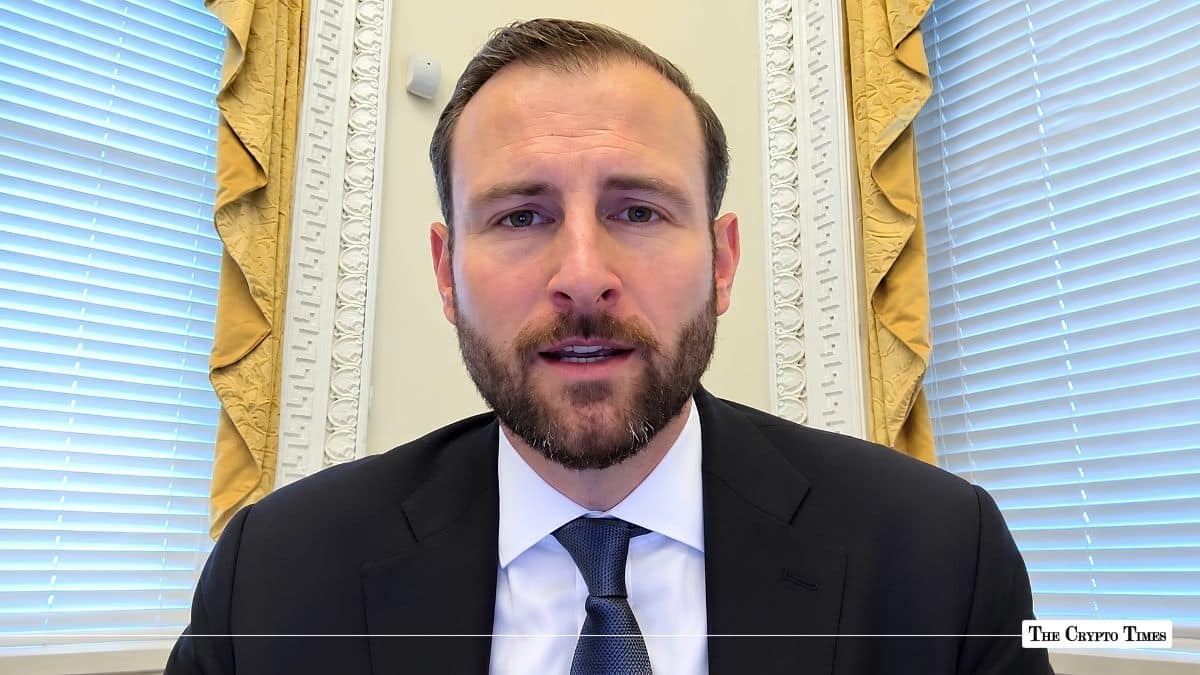
Trump crypto adviser Patrick Witt is urging senators to advance the CLARITY Act through a September 15 procedural vote while negotiations continue over several unresolved provisions.
Speaking to Semafor on September 10, Witt said senators should allow the bill to move forward while continuing to negotiate changes through the legislative process.
“I would say to everyone, Republican and Democrat: Get on the bill and let’s keep talking,” Witt said.
Witt warned that a failed vote could make another attempt more difficult, with the timing potentially affected by the outcome of the 2026 midterm elections and the makeup of the next Congress.
September 15 vote would begin Senate floor consideration
The September 15 vote is a procedural cloture vote on whether to proceed with consideration of the bill, not a final vote on passage.
Witt said he expects strong support for the measure and argued that lawmakers who object to individual provisions should allow the bill to advance and continue negotiations through amendments.
“I’m optimistic about the 15th. It’s obviously a procedural vote,” he said.
He said the political environment after the midterms could influence the prospects for another attempt if the legislation fails.
“The math is highly dependent upon how November turns out with midterm elections,” Witt said.
Witt also pointed to the 2028 presidential election and the possibility of a lame-duck Congress as factors that could affect the timing of future legislation.
CLARITY negotiations have continued since June
The current negotiations follow several rounds of discussions over the bill as it has moved through the Senate.
In June, Witt was working to broker an ethics agreement with Democrats before the August recess, with the administration seeking restrictions involving federal officials and digital assets.
In August, Witt said the administration was continuing talks ahead of the September 15 vote, with stablecoin rewards and yield, ethics provisions and regulatory jurisdiction among the remaining issues.
The September 15 vote now represents the next test for the legislation, while several issues raised during those earlier negotiations remain unresolved.
Witt expects broad republican support
Witt said Republican backing for the procedural vote could be close to the party’s full Senate membership.
“I think it’s going to be very strong. If not all 53, I think you’re going to be right at that number,” he said.
The legislation would still need Democratic support to reach the 60 votes generally required to overcome a Senate cloture hurdle.
Witt pointed to the House version of the legislation, which received support from 80 Democrats, when discussing the possibility of bipartisan support.
“Remember, it came over from the House with 80 Democrats having supported the House version,” he said.
However, the Senate negotiations involve additional provisions that have become points of disagreement.
Stablecoin rewards remain part of the debate
One unresolved issue concerns the treatment of rewards offered by crypto platforms.
Witt said the proposal would restrict what he described as “idle yield” while permitting rewards connected to customer activity.
“That idle yield, if you can take a dollar out of your bank and put it over on a crypto exchange and get paid interest on it, sure, I could see how that could be a temptation,” Witt said.
He distinguished that from rewards linked to customer activity.
“Rewards that are linked to some kind of activity, like any business — not just unique to crypto — any business wants to be able to reward their customers for engaging in certain activities. That’s permitted.”
The final treatment of these products remains part of the negotiations.
Law-enforcement groups shift positions
Witt also discussed negotiations over Section 604, which has drawn concerns from law-enforcement organizations over provisions related to illicit finance.
He said the White House held discussions with law-enforcement officials and subject-matter experts in response to those concerns.
According to Witt, the Fraternal Order of Police, Major Cities Chiefs Association and National Organization of Black Law Enforcement Executives now support the bill.
He said the Major County Sheriffs Association had moved from opposition to neutral, while the National Sheriffs’ Association had also withdrawn its opposition.
The legislation also includes Title IX, which provides additional law-enforcement tools, including grants for state and local digital-asset enforcement capabilities.
These positions were described by Witt and represent his account of the organizations’ current views.
Ethics dispute includes Trump’s digital assets
Another disagreement concerns restrictions on federal officials and digital assets, including President Donald Trump.
Witt said Trump has agreed to what he described as a “historic ethics provision” that would prohibit federal officials from issuing or sponsoring digital assets.
Democratic negotiators are seeking additional restrictions.
According to Witt, proposals include allowing state attorneys general to sue over violations and requiring the president to divest certain digital-asset holdings rather than place them in a blind trust.
Witt raised constitutional concerns about both proposals, arguing that state-level enforcement could create the possibility of politically motivated actions and questioning whether mandatory divestment could conflict with constitutional limits.
Senators Thom Tillis and Ruben Gallego have also worked on a separate ethics proposal. Witt said the White House was reviewing whether elements of that proposal could be incorporated into the legislation.
The Democratic negotiators’ own characterization of the discussions was not included in the interview.
SEC and CFTC could continue rulemaking
Witt said federal agencies could continue developing crypto rules if Congress fails to pass the CLARITY Act.
He pointed to ongoing work at the SEC and CFTC, including the SEC’s “Reg Crypto” initiative and an unfinished “innovation exemption.”
“If Congress can’t get its act together, it would certainly be a big disappointment… but in the absence of that, the regulators will move out on a pretty bold program of different rulemakings within their authorities,” Witt said.
He acknowledged that agency rules would not provide the same statutory framework as legislation.
“Rules are still pretty durable,” Witt said, “but nothing is quite like legislation.”
Witt also said Senate Minority Leader Chuck Schumer had submitted Democratic nominees for open SEC and CFTC commissioner positions, which he described as part of the broader discussions surrounding the legislation.
What comes next
The September 15 procedural vote would determine whether the Senate begins formally considering the CLARITY Act.
A successful vote would not resolve the remaining disputes over ethics, stablecoin rewards and yield, or law enforcement. Those issues would continue to be negotiated as the legislation moves through the Senate process.
If the vote fails, Witt said the prospects for another attempt could depend on the 2026 midterm elections and the resulting balance of power in Congress.
For now, Witt is urging lawmakers to advance the bill while negotiations continue over the provisions that remain unsettled.
Also Read: Lummis: CLARITY Act Shields Tether-Style Stablecoin Freezes