Key Highlights
- The U.S. senator said current rules can leave stablecoin issuers and exchanges exposed to lawsuits when restricting assets suspected of illicit activity.
- Lummis said the CLARITY Act would provide a framework allowing covered entities to place temporary holds without civil liability.
- Her comments followed a lawsuit filed against Tether by two Thai nationals in the U.S. District Court for the Southern District of New York.
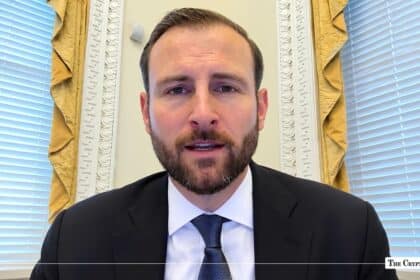
U.S. Sen. Cynthia Lummis said a lawsuit against Tether highlights what she views as a gap in the rules governing the freezing of stablecoins suspected of being linked to illicit activity.
In a post on X on September 10, 2026, Lummis said exchanges and stablecoin issuers can face lawsuits when they freeze assets suspected of being linked to illicit activity. She said Section 305 would allow covered entities to place qualifying temporary holds in response to suspected illicit activity without facing civil liability under certain circumstances.
Lummis’s comments referred to a case filed against Tether by two Thai nationals. The lawsuit was brought in the U.S. District Court for the Southern District of New York under case number 1:26-cv-07400. The plaintiffs, Nutthawat Rukthammachalern and Natthawat Kasamvilas, named Tether Holdings S.A. de C.V., Tether International S.A. de C.V., Tether Operations S.A. de C.V., and Tether Investments S.A. de C.V. as defendants. The complaint was filed on August 31, 2026.
Details of the Tether lawsuit
According to the complaint, the plaintiffs alleged that Tether used its smart-contract blacklist function on October 30, 2025, to freeze 42,417,785.62 USDT held in their Ethereum addresses. The filing states that the freeze followed an informal request from a Homeland Security Investigations agent and was not backed at that time by a warrant, court order, or any other legal process directed at Tether.
The plaintiffs stated they received no prior notice of the freeze. One of them emailed Tether in early November 2025 to ask why the funds were locked. The company directed him to an HSI special agent rather than providing an explanation, according to the complaint.
The plaintiffs argued that Tether has no custodial relationship with holders who acquire USDT on the secondary market and that they are not parties to Tether’s terms of service.
The complaint further alleged that a seizure warrant issued by a magistrate judge in the Eastern District of North Carolina on February 19, 2026, called for Tether to burn the frozen tokens and issue an equivalent amount of USDT to a government-controlled wallet. The plaintiffs sought restoration of access to the funds, damages, and other relief.
Lummis’s earlier comments on the CLARITY Act
On September 8, 2026, Lummis urged Senate colleagues to advance the Clarity Act. In a post on X, she wrote that colleagues had a choice between supporting American innovation and strong consumer protections or ceding the future of finance to China.
What is Section 305 of the CLARITY Act
Section 305 of the Digital Asset Market CLARITY Act addresses temporary holds for certain digital asset transactions. The provision defines a covered person as a permitted payment stablecoin issuer, a qualifying foreign payment stablecoin issuer registered with the Office of the Comptroller of the Currency, or a digital asset service provider. It defines a covered agency as any state or federal law enforcement agency, including the Department of the Treasury.
Under the section, a qualified written request is a written communication from an authorized official of a covered agency that identifies a specific wallet, address, account, or transaction reasonably suspected of being linked to illicit activity. The request asks a covered person to initiate an action, such as delaying the execution of a transaction, conversion, or withdrawal involving digital assets, and includes a designated agency contact.
A temporary hold under the section is a restriction applied by a covered person that delays execution of a transaction, conversion, or withdrawal involving digital assets for a reasonable period not to exceed 30 calendar days. The period may be extended for an additional 150 calendar days pursuant to a qualified written request.
The provision is intended to establish a framework under which covered persons may apply temporary holds in response to such requests. Lummis stated that this section would allow issuers and exchanges to freeze stablecoins suspected of involvement in illicit activity without facing civil liability.
Also Read: SGX Wins CFTC Authorization to Open Bitcoin and Ether Perps to US Institutions