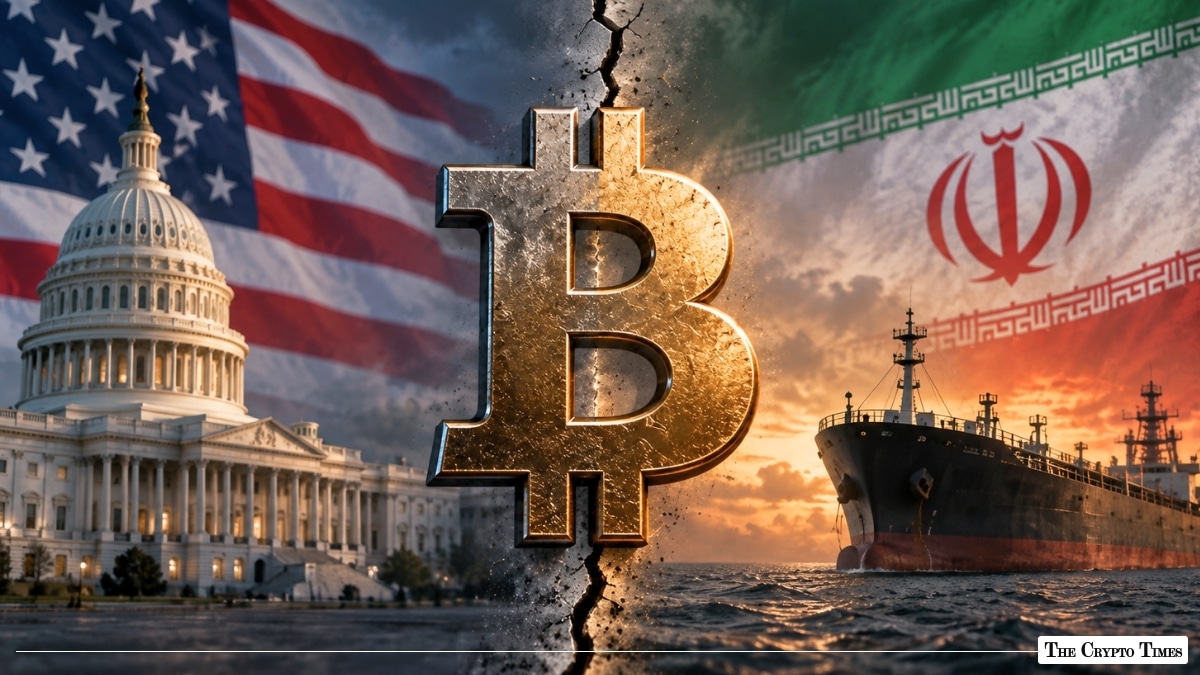
U.S. prosecutors are seeking to seize and forfeit about $61 million in cryptocurrency that they allege represents proceeds from a black-market network selling sanctioned Iranian crude oil and petroleum products.
The civil forfeiture complaint, filed by the U.S. Attorney’s Office for the Southern District of New York on Monday, alleges that the proceeds were ultimately directed toward the Iranian government and military-linked entities, including the Islamic Revolutionary Guard Corps (IRGC), which the U.S. has designated as a terrorist organization.
The complaint also describes a broader crypto-linked network that allegedly handled more than $1.5 billion in proceeds from Iranian oil sales. Prosecutors said the funds were moved through crypto addresses and intermediaries in an effort to conceal their source and ownership.
“This action demonstrates our determination to deprive the Government of Iran and its terrorist proxies of the illegal money they rely on,” Deputy U.S. Attorney Sean S. Buckley said.
Buckley also said: “Today we are seizing and seeking to forfeit more than $61 million of the Government of Iran’s money, which otherwise would have promoted hostile military action and terrorist attacks against the U.S. and our allies.”
How the alleged network worked
According to the complaint, two Chinese companies, Blessed Trust and Hexa Whale Trading Limited, played a central role in moving the proceeds.
Blessed Trust allegedly presented itself as a wealth management and virtual-asset custody business, while Hexa Whale described itself as a commodities broker. U.S. authorities allege that both instead helped process Iranian oil proceeds and convert fiat currency into cryptocurrency.
The companies allegedly operated through trading accounts on Binance, a cryptocurrency exchange based in the UAE, and worked with clients in China’s petroleum and petroleum-products sector.
Binance is not named as a defendant in the civil forfeiture action, which targets the alleged cryptocurrency proceeds in rem. In a statement, Binance said it did not permit transactions with sanctioned individuals, would continue to cooperate with law enforcement, and would investigate, restrict or freeze accounts, offboard users, and report to authorities where sanctions or illicit-finance risk is identified.
Separately, in March 2026, Co-CEO Richard Teng and Binance called earlier Wall Street Journal and Senate-related claims about Blessed Trust and Hexa Whale “false and defamatory,” and said the exchange had already removed Hexa Whale from its platform in August 2025 and Blessed Trust in January 2026 after reviews prompted by law-enforcement inquiries.
At the center of the investigation are a group of unhosted crypto addresses identified as “Entity A.” The addresses allegedly received and distributed more than $1.5 billion generated from Iranian oil sales.
The funds were allegedly transferred to IRGC-related money services businesses, crypto addresses linked to the group, and an Iranian cryptocurrency exchange. Authorities said the network used multiple transactions and crypto addresses to make the origin and ownership of the funds harder to trace.
Crypto and financial trail
The alleged activity also extended into the traditional financial system. Prosecutors said Blessed Trust and Hexa Whale used the U.S. financial system to send or receive tens of millions of dollars connected to the scheme.
The FBI said its investigation focused on tracing the movement of the funds through the network. “The FBI’s ability to follow the money” can help identify and disrupt illicit financial networks, FBI Assistant Director in Charge James C. Barnacle Jr. said.
The case highlights how blockchain analysis can help investigators trace cryptocurrency linked to sanctions evasion and money laundering. Public blockchain records can reveal transfers between wallets, while investigators can use additional financial and corporate records to connect those addresses to entities operating across jurisdictions.
The latest action follows broader U.S. efforts to target Iran’s use of cryptocurrency for sanctions evasion. In August, the U.S. Treasury designated digital assets as a sanctionable sector of Iran’s economy, allowing the Office of Foreign Assets Control (OFAC) to target individuals and entities operating in the sector.
The Treasury said Iran was increasingly using cryptocurrency for transactions linked to the government and IRGC. The move adds to U.S. efforts to target crypto channels tied to sanctions evasion.
Allegations remain unproven
The U.S. government is seeking forfeiture of the cryptocurrency, but the civil complaint itself does not establish that the assets are criminal proceeds.
The Justice Department stressed that the complaint contains allegations that must be established through court proceedings before the government can obtain a forfeiture judgment.
The investigation remains ongoing, with prosecutors from the Southern District of New York handling the case alongside the FBI and several Justice Department units.
The next major development will likely come through court proceedings over the government’s forfeiture request and further investigative action surrounding the alleged $1.5 billion crypto-linked oil network.
Also Read: SEC Clears Near 24-Hour Wall Street Trading as Binance Flags Overnight Demand