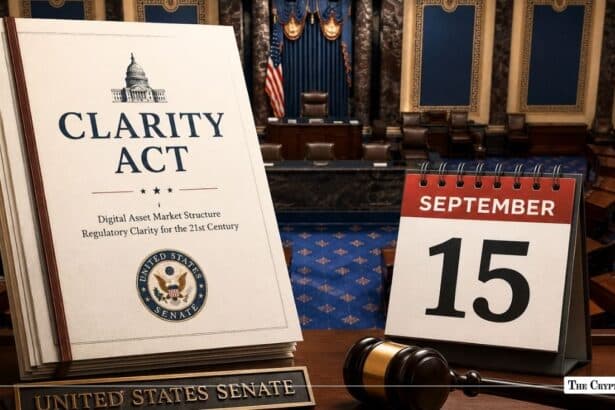
The White House has agreed on an ethics package for the CLARITY Act and circulated the language to Senate Republicans, potentially resolving the dispute that has kept the digital asset market structure bill off the Senate floor for months.
What Was Agreed
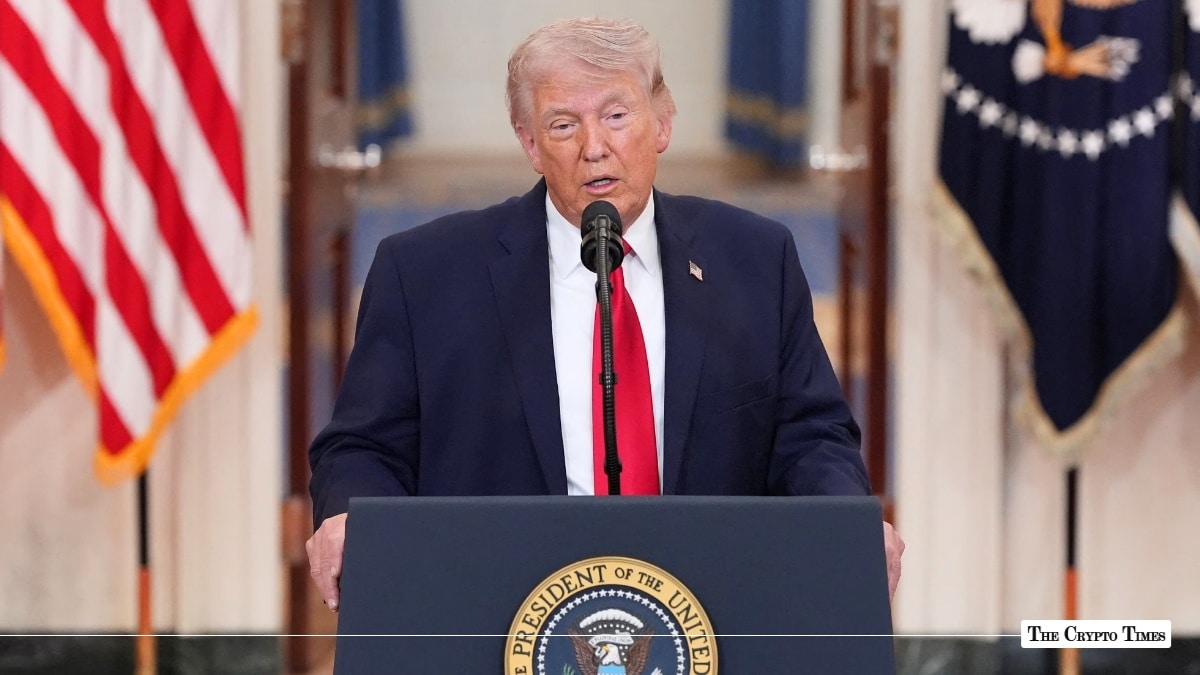
The agreement was reached between the White House and Senators Cynthia Lummis and Bernie Moreno, with President Trump signing off on the proposal late Monday. The language was sent to certain Senate Republicans on Monday afternoon.
Journalist Eleanor Terrett first reported the development, saying she was hearing from multiple industry sources that the White House had agreed on an ethics package and transmitted the language, adding that the details of the agreement remained unclear and that she had sought comment.
Those details have still not been made public. There has been no official statement from the White House, and revised bill text has not been released, though industry participants expect it within days.
The Democrats Were Not in the Room
The breakthrough carries an unresolved problem: the senators whose votes it is meant to secure have not seen it.
Democrats said Monday that they have been largely excluded from the ethics negotiations in recent weeks, including a White House meeting last Thursday between Trump and senior officials. The agreement was struck between the administration and two Republican senators, and the text has been shared with Republicans rather than with the members who set the ethics provision as their condition.
That matters because of who has been driving the demand. Senator Elizabeth Warren wrote to Senate leaders on July 13, calling robust ethics guardrails non-negotiable, and Senator Kirsten Gillibrand has said the provision must be in the bill or the bill does not move. Senators Ruben Gallego and Angela Alsobrooks, the only two Democrats to advance the bill out of the Banking Committee, have made their floor votes conditional on a satisfactory resolution.
None of them can evaluate a package they have not read. Until the text circulates, the agreement establishes that the White House has moved — not that any Democratic vote has.
Why Ethics Was the Blocker
The dispute has been the bill’s central obstacle since the spring. Democrats have sought language barring the president, vice president, senior officials, members of Congress, and their families from profiting from the digital asset industry while regulating it.
The demand hardened after Trump’s financial disclosure showed roughly $1.4 billion in crypto-related income, including about $636 million tied to the memecoin business and roughly $594 million from World Liberty Financial. The White House position throughout has been that it would accept rules applying across the board while rejecting language that singled out a specific office, official, or family.
That impasse shaped the merged draft, which was released without any ethics provision. Three Democrats—Chris Murphy, Chris Van Hollen, and Jeff Merkley—came out formally against the bill following its release, with Murphy and Van Hollen appearing at a Capitol Hill press conference to urge the Senate to reject it.
Whether the new language satisfies that bloc is the question the coming days will answer.
The Negotiator Came Back
One signal of the administration’s urgency is a reversal. White House crypto adviser Patrick Witt had been scheduled to depart for months-long Georgia Army National Guard training, having already postponed once to stay through the negotiations. He has since said he will be in Washington for the Senate push to finish the job.
Witt has been the administration’s lead voice on the ethics question, articulating the across-the-board position that shaped the White House’s stance. His return removes a gap that would have opened at the decisive moment.
The Math and the Calendar
The bill still requires 60 votes to invoke cloture. Reporting has differed on the current Republican count since the death of Senator Lindsey Graham, placing the party at either 52 or 53 seats, which puts the number of Democratic crossovers required at seven or eight, assuming full Republican support.
That assumption carries its own risk: Senators Josh Hawley and Rand Paul both opposed the GENIUS Act, and Senator Mitch McConnell has been absent.
The calendar is now the binding constraint. The Senate begins its summer recess in the first week of August, leaving Majority Leader John Thune only a handful of legislative days to schedule floor time, with the National Defense Authorization Act competing for the same window. House Financial Services Committee Chairman Bryan Steil said this week the bill could pass within days.
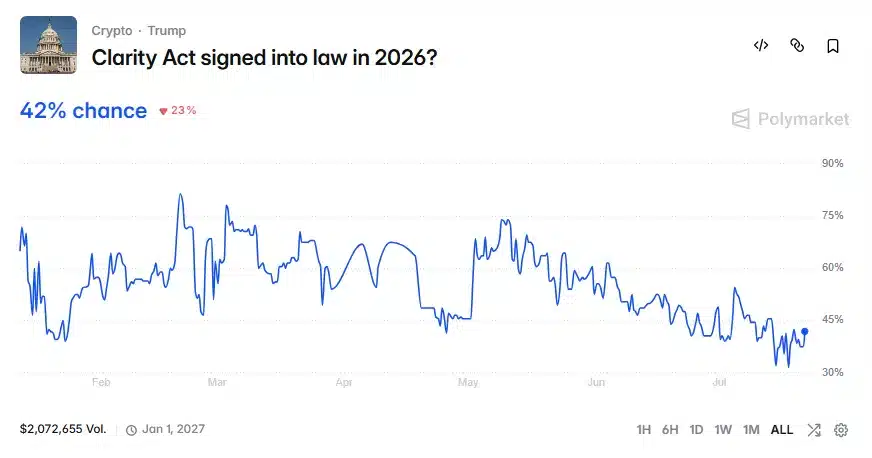
Prediction markets registered the shift. Polymarket’s contract on the CLARITY Act being signed into law in 2026 moved to 42% following the reports, recovering from the mid-to-high thirties earlier in the week, though still far below the roughly 80% it commanded in February.
What Happens Next
Three things need to occur in sequence. The revised bill text must be released with the ethics language included. Democrats must see it and decide whether it meets the standard they set. And Thune must find floor time before the recess.
None of that has happened yet. What changed on Monday is that the obstacle everyone identified as the bill’s biggest has, for the first time, produced an agreement between one side of it.
Also Read: Patrick Witt Urges US to Pass CLARITY Act as Russia Nears Crypto Law