On June 16, India did something it had never done before: it switched off one of the world’s largest messaging platforms nationwide. The order blocking Telegram until June 22 was issued to stop exam-paper fraud ahead of the NEET re-examination — but within hours it had become something far larger than an exam-security measure. It turned into a cross-border dispute over internet routing, drew a public broadside from Telegram’s founder, and, largely unremarked in mainstream coverage, severed a core layer of crypto infrastructure in the network’s single biggest market.
For India’s crypto users, Telegram is not a convenience, it is plumbing. It is where TON Mini-App wallets live, where trading bots execute, and where the signal, OTC, and peer-to-peer communities that move real retail volume operate, in the country that leads the world in grassroots crypto adoption. The block lands at the most sensitive possible moment for that ecosystem: weeks after Telegram took direct control of the TON blockchain, and midway through Toncoin’s rebrand to Gram, with exchanges instructed to switch labels by the very day the ban is meant to lift.
And the story has already outgrown the exam hall that started it. Founder Pavel Durov has accused Indian telecom Reliance of sabotaging Telegram access well beyond India’s borders, framing it as a competitive war waged on behalf of Meta-owned WhatsApp — claims that are part verifiable, part contested, and central to why this ban matters long past June 22.
Telegram Banned in India Until June 22: The NEET Exam-Fraud Order
The Ministry of Electronics and Information Technology (MeitY) invoked Section 69A of the IT Act, 2000 on June 16 to block Telegram across India through June 22, acting on a recommendation from the National Testing Agency (NTA). A second order requires Telegram to disable its message-editing feature in India until June 30, targeting a method cheating rackets used to fabricate fake paper-leak “evidence” after the fact.
The trigger is the NEET-UG re-examination, scheduled for June 21, which the Supreme Court ordered after the original May 3 exam was cancelled over a leak that compromised roughly 140 questions and affected about 2.27 million students.
Channels operating openly under names like “PAPER LEAKED NEET,” “Re-NEET 2026” and “Private Mafia” were demanding sums from a few thousand rupees to several lakh in exchange for purported access to the re-exam paper.
How the Section 69A Block Works — and What It Covers
The order directs internet service providers to restrict access to both the Telegram app and its web interface, making this a platform-wide block rather than a channel-level takedown. The NTA framed it as a “measure of last resort,” reached only after channel-by-channel takedowns coordinated by the Indian Cyber Crime Coordination Centre (I4C) failed to force adequate compliance.
The restriction applies to all of Telegram’s 150 million-plus Indian users, not just the fraud channels — which is the core of the criticism it has drawn. Section 69A allows the government to block online resources in the interest of national sovereignty and integrity, and digital-rights groups have long argued it is used opaquely; the Internet Freedom Foundation called this block a disproportionate, band-aid response that punishes ordinary users instead of fixing the source of exam leaks.
Durov Calls the Ban a Rash Decision That Punished 150 Million Users
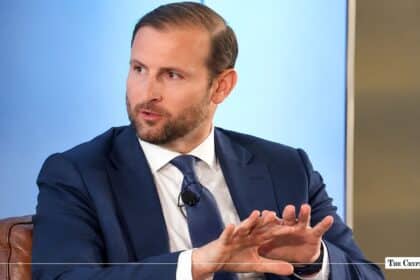
Telegram founder and CEO Pavel Durov publicly criticized the ban, saying it punished more than 150 million ordinary Indian users rather than the insiders who leaked the exam materials, and that it failed on its own terms because the leaks simply migrated to other apps such as WhatsApp. India is one of Telegram’s largest markets globally, which is why a temporary block carries outsized weight for the company.
Durov’s framing echoes his stance during restrictions in Russia and Iran, where he has repeatedly argued that platform bans push users toward VPNs rather than toward state-approved alternatives.
Durov’s Reliance Accusation: BGP Hijacking and a Meta “Competitive War”
Durov then escalated sharply. In a June 16 post, he accused Indian telecom Reliance of sabotaging Telegram access for millions of users outside India — including in the UAE — through BGP hijacking, a manipulation of the internet’s core routing system that can divert or break traffic.
He described the alleged sabotage as intentional, said Reliance had ignored multiple reports, advised network operators to reject unauthorized route announcements from Reliance’s autonomous system (AS18101), and speculated that “Reliance/WhatsApp” may also be behind the lobbying to ban Telegram in India. He framed the episode as a possible “competitive war,” asserting that Reliance is “partially owned by Meta — the company behind WhatsApp.”
Two qualifications matter here. First, the routing accusation is Durov’s allegation: as of writing, independent monitors that track route hijacks had not publicly corroborated it, and the claim should be read as a founder-level charge rather than an established fact. Second, the ownership framing is misleading as worded — the relationship runs the other way around.
Fact-Check: Meta Does Not “Own” Reliance — It Holds a Minority Jio Stake
Meta does not own a stake in Reliance Industries. Through its subsidiary Jaadhu Holdings, Meta holds a minority position in Jio Platforms — Reliance’s digital and telecom holding company — acquired for roughly ₹43,574 crore in 2020. Reliance Industries retains about 67% of Jio Platforms, and Meta’s stake sits near 9–10% and is expected to trim slightly ahead of the planned Jio IPO.
So Reliance controls Jio; Meta is one of several outside investors in the subsidiary, alongside Google and a roster of sovereign and private-equity funds. Durov’s “Reliance is partially owned by Meta” inverts that structure and would not survive a clean fact-check, even though a genuine Meta–Jio financial link does exist.
Why the Ban Matters for Crypto: Telegram Is India’s Crypto Rails
For Indian crypto users, Telegram is not a side channel — it is infrastructure. The app hosts the TON blockchain’s Mini-App ecosystem, including non-custodial wallets and in-app stablecoin transfers, alongside the trading bots, OTC and peer-to-peer desks, and signal communities that route a meaningful share of retail activity
India ranks first globally in grassroots crypto adoption, with on-chain transaction volumes exceeding ₹50,000 crore in FY 2024-25, which makes a Telegram blackout a materially bigger disruption here than in most markets. The same reach is why Telegram has become India’s dominant vector for crypto fraud, from fake trading groups to job-scam funnels that have cost individual victims lakhs of rupees.
TON’s Exposure: A Telegram Block at the Network’s Most Telegram-Dependent Moment
The timing compounds the impact. Telegram took direct control of the TON network weeks ago, cutting fees roughly sixfold and becoming the network’s single largest validator — deepening the dependency between app and chain rather than loosening it.
TON is simultaneously mid-rebrand to Gram, with exchanges and wallets instructed to switch labels by June 22, the same day the access ban is set to lift. An access cut to Telegram in India therefore lands on the TON/Gram ecosystem at its most Telegram-reliant moment, in its largest user market, during a sensitive branding transition — a convergence no other token of its size is exposed to.
How Toncoin (Now Gram) Is Trading Through the Ban
Despite the headline drama, there is no clean market catalyst here. TON has been trading in the ~$1.70 range, down on the week and ranked around #19–22 by market capitalization, with the Gram rebrand failing to produce a sustained rally and the token still far below its September 2024 high near $8.25.
In other words, the India ban has not triggered a visible price reaction in either direction — which itself is the story for traders: this is structural infrastructure risk and a regulatory signal, not a tradeable event. Anyone framing the ban as a near-term TON catalyst is reading momentum that the tape does not show.
The VPN Reality: Why the Block Is Friction, Not a Blackout
The practical disruption is friction rather than a hard shutdown. ISP-level blocks of this kind are routinely circumvented with VPNs, the pattern seen during Telegram restrictions in Russia and Iran, where Durov has claimed tens of millions of users continued accessing the app through routed traffic. For determined Indian traders, bots, wallets, and channels remain reachable; for casual users, access breaks. The meaningful damage is therefore less about a total halt and more about Telegram’s reliability as crypto infrastructure being subject to a single government order, plus the added latency and risk of users routing sensitive wallet activity through third-party VPNs.
The Regulatory Signal: The Same Tool India Has Used Before
The sharper risk for the crypto sector is precedent. Section 69A is the same mechanism India has previously used to block offshore exchange apps and URLs, and a willingness to disable an entire platform over the conduct of a subset of channels is the part Indian crypto operators will be watching, given the country’s still-unresolved regulatory posture.
India already taxes virtual digital assets heavily, has expanded its powers to track crypto, emails and social media, and continues to operate without comprehensive crypto legislation.
A platform-block precedent slots into that uncertainty as a reminder of how much discretionary leverage the state holds over the rails the industry runs on.
One Side Effect: A Forced Pause for Crypto-Scam Channels
There is a narrow upside. Telegram is the dominant venue for India’s crypto-fraud operations — fake trading groups, “task” and job-scam funnels, and counterfeit-exchange schemes that have driven a steady stream of multi-lakh losses across the country. A multi-day access cut temporarily disrupts those channels alongside everything else.
The effect is almost certainly fleeting, since the same operators migrate to WhatsApp and other apps, but it is a real, if accidental, dent in a fraud economy that ordinary takedowns have struggled to contain.
India Joins a Growing List of Exam-Driven Telegram Blocks
India is not the first to switch Telegram off around national exams. Kenya restricted the platform during its 2023 and 2024 KCSE exams, with network analysis later showing fragmented, ISP-by-ISP enforcement, and Telegram has faced exam- or security-linked blocks in several other countries over the past two years.
The pattern — a government reaching for a platform-wide block as the fastest available lever against exam fraud — is now an established playbook, and India’s version is notable mainly for its scale and for the cross-border routing fight it has triggered.
What to Watch: June 22, the Gram Cutover, and Extension Risk
The ban is temporary and tightly scoped, and access should return on June 22 absent an extension — the variable worth watching first, since exam-linked restrictions have slipped their stated windows elsewhere.
Second is whether the edit-feature suspension, live until June 30, collides with the Gram rebrand’s labeling cutover scheduled for the same late-June window.
Third, and most consequential for the sector, is whether Durov’s routing accusation against Reliance draws any independent verification; confirmation would turn a temporary domestic block into a far larger story about a major telecom’s conduct on the global internet, while a lack of corroboration leaves it as a contested founder-level claim.
Also Read: Indian Youth Loses ₹5.5 Lakh in Telegram-Based Crypto Investment Scam