Key Highlights
- The U.S. Hispanic Chamber of Commerce (USHCC) sent a letter urging Senate leaders to revise the CLARITY Act.
- The chamber warned the legislation could accelerate deposit migration from community banks and reduce lending to Hispanic-owned small businesses.
- The claims sparked immediate pushback from crypto supporters, who argued they echo earlier banking industry objections.
The U.S. Hispanic Chamber of Commerce (USHCC) has become one of the latest organizations to raise concerns about the CLARITY Act, arguing that the proposed crypto market structure legislation could unintentionally reduce lending to Hispanic-owned businesses by weakening community banks.
According to a letter sent on Tuesday to Senate Majority Leader John Thune and Democratic Leader Chuck Schumer, the chamber urged lawmakers to revise portions of the legislation before final passage. According to the organization, community banks remain one of the primary sources of financing for Hispanic entrepreneurs, particularly those operating in underserved communities.
“Hispanic-owned businesses are among the fastest-growing segments of the American economy, yet they continue to face significant barriers in accessing affordable credit and capital,” the chamber wrote.
Why the Hispanic Chamber is raising concerns
According to the letter, the USHCC believes community banks remain one of the primary sources of financing for Hispanic entrepreneurs, particularly businesses operating in low- and moderate-income communities. The organization warned that if consumers and businesses move deposits into digital asset products, community banks could lose the stable funding they rely on to provide local lending.
The chamber also questioned whether many digital asset firms benefiting from the legislation would face obligations comparable to those imposed on banks under the Community Reinvestment Act (CRA). It argued that reduced bank deposits could ultimately limit financing available to underserved communities.
The updated bill adds new ethics rules
The latest criticism comes at a pivotal moment for the legislation.
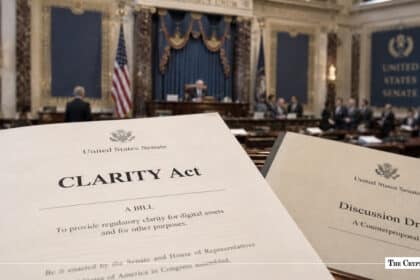
A day ago, Senate Republicans released an updated draft of the CLARITY Act that introduced new ethics restrictions on public officials while preserving the bill’s core market structure framework for digital assets.
Lawmakers continue negotiating several unresolved issues, including stablecoin provisions, decentralized finance, software developer protections, regulatory oversight, and illicit finance safeguards ahead of an expected Senate floor vote.
The updated draft reflects months of bipartisan negotiations as lawmakers attempt to finalize one of the most significant crypto regulatory bills ever considered by Congress.
Support for CLARITY Act continues to build
Despite renewed criticism, support for the legislation has continued to expand across both the crypto industry and parts of traditional finance.
As previously reported, Coinbase has described the CLARITY Act as essential to its vision of becoming an “Everything Exchange,” arguing that clear rules would enable broader adoption of tokenized assets and digital financial products.
More recently, Goldman Sachs CEO David Solomon publicly backed the bill, saying that while improvements could still be made, establishing a clear market structure would provide the regulatory certainty needed for digital asset markets to mature and allow regulated financial institutions to participate more actively.
Meanwhile, CFTC Chairman Mike Selig has repeatedly urged Congress to move the legislation forward. Earlier this week, following a meeting with Senator Ashley Moody, Selig again stressed that regulatory clarity is necessary to ensure “the new frontier of finance is built in the United States.”
What’s next for the CLARITY Act
With new opposition emerging alongside growing institutional support, the CLARITY Act remains at the center of Washington’s debate over the future of digital asset regulation.
Supporters argue the bill would finally establish clear federal rules for crypto markets and encourage innovation to remain in the United States. Critics continue to warn that certain provisions could reshape traditional banking, lending, and consumer protections in unintended ways.
As senators work toward a final vote, the legislation is attracting input from an increasingly broad coalition of stakeholders from crypto firms and Wall Street executives to trade associations, banking groups, and federal regulators.
Also Read: Lummis Cites BlockFi, Genesis to Push CLARITY Act Protections