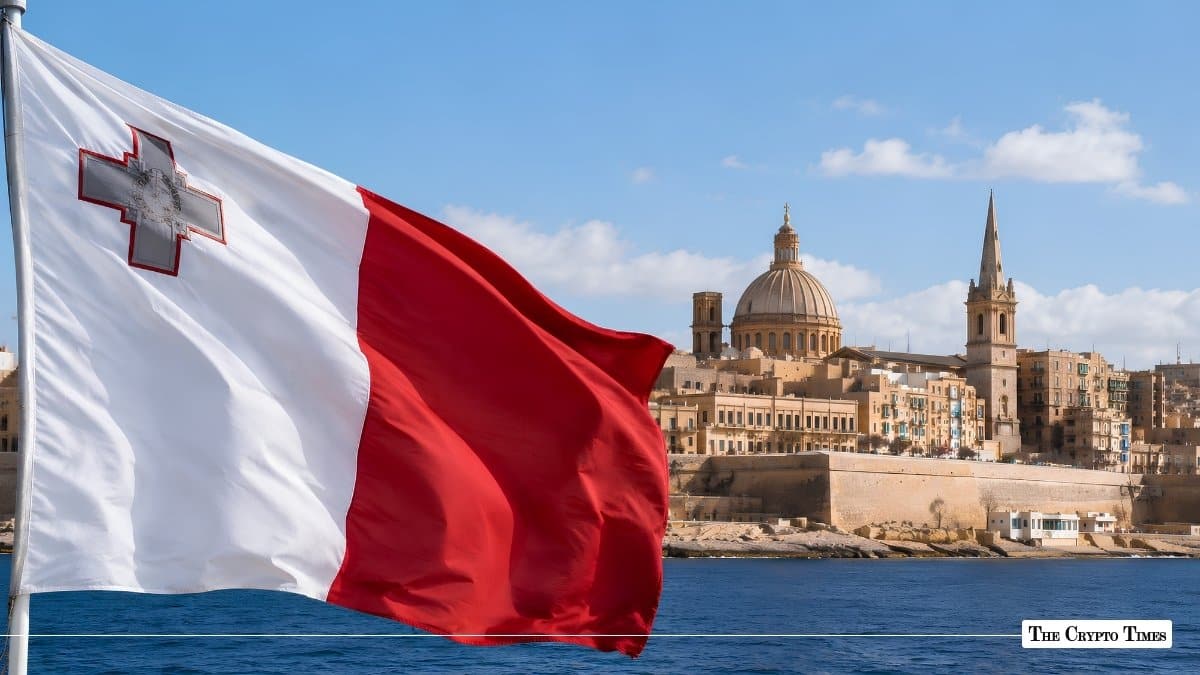
Malta’s financial regulator is spearheading an essential review to determine whether significant portions of the decentralized finance (DeFi) sector should come under the European Union’s MiCA crypto rules. The Malta Financial Services Authority (MFSA) is seeking clearer guidance as regulators try to determine when a DeFi project is truly decentralized and when it still relies on centralized control.
In a discussion paper published on June 17, the MFSA highlighted that many DeFi platforms continue to use features that give certain individuals or groups control over key operations. These include administrator keys, concentrated governance power, protocol upgrade rights, and control over user-facing platforms.
Malta examines DeFi’s place under MiCA
The core tension stems from MiCA’s statutory boundaries. The EU framework explicitly states that its rules do not cover crypto services operating in a“fully decentralized manner without any intermediary.” However, the EU rules do not clearly explain how regulators should decide whether a DeFi platform meets that requirement.
To bridge this gap, the MFSA is now asking whether decentralization should be treated as a gradual scale rather than a simple yes-or-no measure. It also wants feedback on whether regulators need a standard approach to identify which DeFi projects fall outside MiCA’s scope.
The regulator also highlighted concerns about risks linked to DeFi platforms. It is seeking views on whether regulated crypto companies should carry out smart contract audits, governance reviews, and risk assessments before connecting with DeFi protocols.
Additionally, the MFSA is looking at possible legal frameworks for DeFi projects, including decentralized autonomous organizations (DAOs) and segregated cell companies. The regulator also reviewed guardian agents, which can monitor automated systems and help ensure they follow set rules.
The public consultation will remain open until July 10. The feedback will help shape Malta’s approach to how DeFi could be treated under future crypto regulations.
Malta defends Its crypto regulatory position
The timing of the MFSA’s policy paper is no coincidence. Malta is engaged in a broader political pushback against centralized EU efforts aimed at shifting comprehensive crypto supervision under the European Securities and Markets Authority (ESMA). The country has spent years building its digital asset industry through its own licensing framework.
Malta earned its reputation as the European “Blockchain Island” by building an early, robust domestic digital asset licensing framework. A shift to ESMA centralization could diminish Malta’s influence over major crypto institutions that leveraged the MFSA’s early compliance onboarding to secure MiCA-compliant licenses.
Additionally, OKX received a Payment Institution license in Malta. The license allows the exchange to provide stablecoin payment services under EU regulations, including MiCA rules and updated PSD2 requirements.
DeFi market shows continued activity
The regulatory evaluation unfolds against a backdrop of steady on-chain volume. The DeFi sector currently holds around $73.13 billion in total value locked, according to DeFiLlama data. This figure represents the amount of cryptocurrency users have placed in lending platforms, decentralized exchanges, and other blockchain-based applications.
However, the market remains far below its 2021 high of nearly $180 billion. DeFi activity picked up during 2024 and 2025, but the sector as since seen another decline in 2026.
Stablecoins make up the largest part of the DeFi market, with a total market value of about $315.16 billion. Meanwhile, decentralized exchanges have recorded $6.41 billion in daily trading volume, while perpetual trading platforms handled about $26.19 billion.
As the DeFi sector evolves into a mature financial subsystem driven largely by institutional stablecoin architecture, European regulators face a delicate balancing act. The MFSA’s upcoming policy conclusions will play a foundational role in deciding whether the EU can successfully mitigate smart contract risks without completely stifling the open-souce spirit of blockchain innovation.
Also Read: Coinbase CEO: Illinois Crypto Tax Punishes Blockchain & Will Kill Tech Jobs