Key Highlights
- Ethereum remains the strongest large-cap altcoin bet, with a market cap above $200 billion and more than $157 billion in stablecoin value on Ethereum.
- Solana, XRP and BNB offer different recovery angles, backed by active users, ETF flows, strong market caps and network utility.
- Chainlink, Avalanche and Hyperliquid carry higher risk, but each has a clear catalyst in tokenization, institutional blockchain infrastructure or on-chain derivatives revenue.
Crypto investors looking for altcoins to buy now are entering a market that is very different from the easy rallies of previous cycles.
The total crypto market cap is around $2.18 trillion, while Bitcoin dominance is still near 58.4%. That means Bitcoin continues to absorb most of the market’s safety bid, while altcoins are fighting for selective capital. This is not a market where every token moves together. It is a market where investors must separate strong networks from weak narratives.
That is why the better question is not “which altcoin can pump?” The better question is: which altcoins have enough liquidity, network usage, institutional demand, ETF access, fee generation or ecosystem growth to justify buying during weakness?
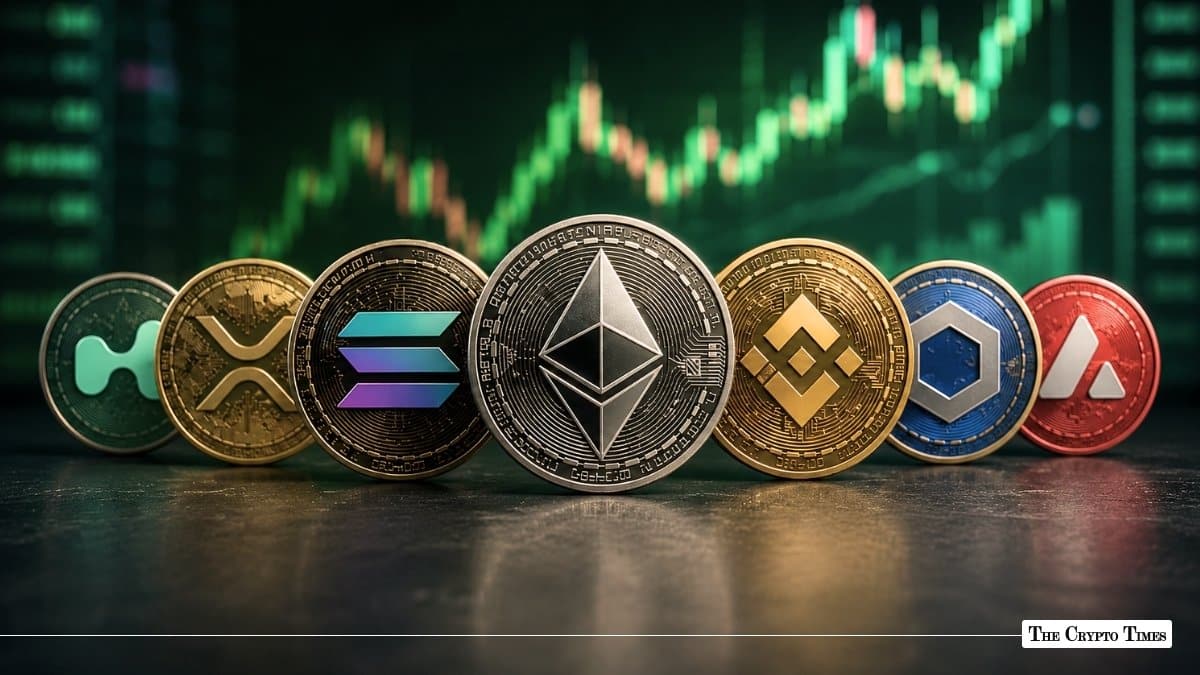
Based on that filter, seven altcoins stand out right now: Ethereum, Solana, XRP, BNB, Chainlink, Avalanche and Hyperliquid.
These are not risk-free buys. Altcoins remain volatile, and a deeper Bitcoin correction can still pull the entire market lower. However, these seven tokens have stronger data behind them than most of the market.
Market Snapshot: Why Altcoins Are Still High-Risk but Attractive
Before looking at individual tokens, the broader market setup matters.
The global crypto market cap is around $2.18 trillion, while 24-hour market volume is near $78.26 billion. Bitcoin dominance is around 58.4%, showing that traders are still defensive and are not fully rotating into altcoins yet.
That makes this an early-selection phase, not a full altseason.
The strongest altcoins to buy now should meet at least three of these conditions:
- They should have deep liquidity.
- They should have strong market cap support.
- They should show real network activity.
- They should have a clear institutional catalyst.
- They should generate meaningful fees, volume or stablecoin activity.
- They should be trading far below previous highs, giving room for recovery.
- They should not depend only on hype.
- The seven tokens below meet more of these conditions than most other altcoins.
Altcoin Snapshot
| Token | Price | Market Cap | 24h Volume | Main Buy Reason |
|---|---|---|---|---|
| Ethereum | ~$1,680 | ~$203B | ~$12.8B | ETF access, DeFi base, stablecoins, institutional demand |
| Solana | ~$66–67 | ~$38.7B | ~$2.7B | High activity, ETF momentum, strong DEX and app usage |
| XRP | ~$1.11–1.14 | ~$70.4B | ~$1.7B–$1.8B | ETF inflows, RLUSD growth, payments narrative |
| BNB | ~$604 | ~$81.5B | ~$1.1B | Exchange utility, BNB Chain activity, token burn model |
| Chainlink | ~$7.9 | ~$5.7B | ~$300M+ | Tokenization, CCIP, DTCC collateral catalyst |
| Avalanche | ~$6.6 | ~$2.9B | ~$300M | Institutional/RWA setup, C-Chain address growth |
| Hyperliquid | ~$58 | ~$14.7B | ~$1B | Perps revenue, buyback-linked fee model, DeFi product-market fit |
Ethereum: Best Altcoin to Buy for Institutional Recovery
Ethereum remains the strongest altcoin to buy now for investors who want exposure to a crypto rebound without taking excessive small-cap risk.
ETH is trading around $1,680, with a market cap near $203 billion and 24-hour trading volume around $12.8 billion. Its circulating supply is around 120.68 million ETH. That makes Ethereum the largest and most liquid altcoin in the market.
The main reason to buy Ethereum now is that its price has corrected sharply, but its core network metrics remain stronger than most competing chains.
Ethereum still dominates the institutional layer of crypto. DeFiLlama data shows Ethereum has around $157.45 billion in stablecoin market cap on-chain. It also has around $14.35 billion in active RWA market cap. That gives Ethereum one of the strongest combinations of stablecoin liquidity, tokenized assets and institutional infrastructure in crypto.
Ethereum’s 24-hour DEX volume is around $866 million, while seven-day DEX volume is around $10.3 billion. App fees are around $5.81 million over 24 hours, and app revenue is around $1.27 million.
These numbers matter because ETH is not only a speculative asset. It is tied to DeFi, stablecoins, tokenized funds, staking, rollups and institutional ETF products.
The right-now buy argument is that Ethereum is trading like a damaged asset, but its ecosystem still has the deepest financial activity among altcoins. If institutional flows return to crypto, ETH is likely to be one of the first assets to benefit after Bitcoin.
Ethereum also has an ETF advantage. Spot ETH ETFs give institutions a regulated route to exposure. In weak markets, ETF flows can become a cleaner signal than social media hype. When ETH ETF outflows slow or turn positive, it can act as an early sign of renewed institutional demand.
Why Buy ETH Now?
Ethereum offers the best risk-adjusted altcoin setup because it combines liquidity, institutional access and real economic activity. The market cap is still above $200 billion, but the token trades far below its previous peak. That gives ETH a recovery setup without forcing investors into illiquid small-cap risk.
Key Stats Supporting ETH
- Price: Around $1,680
- Market cap: Around $203 billion
- 24h volume: Around $12.8 billion
- Circulating supply: Around 120.68 million ETH
- Ethereum stablecoin market cap: Around $157.45 billion
- Ethereum RWA active market cap: Around $14.35 billion
- Ethereum 24h DEX volume: Around $866 million
- Ethereum 7d DEX volume: Around $10.3 billion
Main Risk
ETH still needs stronger price momentum. If ETF flows remain weak and investors continue favoring Bitcoin, Ethereum may underperform smaller high-beta altcoins in the short term.
Solana: Best Altcoin to Buy for High-Beta Recovery
Solana is one of the strongest high-beta altcoins to buy now.
SOL is trading around $66 to $67, with a market cap near $38.7 billion and 24-hour trading volume around $2.7 billion. Its circulating supply is around 579.7 million SOL.
Solana’s price has fallen sharply from its all-time high, but the network continues to show meaningful activity. That is what makes the current setup interesting.
DeFiLlama data shows Solana has around $15.19 billion in stablecoin market cap, with USDC dominance near 49.28%. Its RWA active market cap is around $1.69 billion. Solana also recorded around $1.65 billion to $1.68 billion in 24-hour DEX volume and roughly $14.8 billion in seven-day DEX volume.
That is a major number for a chain trading far below previous highs.
Artemis data also shows Solana with around 3.4 million daily active users, 115.4 million transactions and around $16.5 billion in stablecoin supply. These are the kind of usage numbers that justify Solana’s place as a leading Layer 1.
The right-now buy argument for SOL is that the token has both real activity and strong market memory. Traders still view Solana as one of the main altcoin beta plays. If the market rebounds, SOL can move faster than ETH because it has a smaller market cap and a more aggressive investor base.
Solana also has an ETF and institutional-access narrative. Spot Solana ETFs have increased attention around the asset, and any fresh inflow cycle can strengthen the case that SOL is no longer only a retail-driven token.
Why Buy SOL Now?
Solana looks attractive because it combines strong network usage with a deep price correction. The chain is still doing billions in weekly DEX volume and millions of daily users, while the token trades far below its previous highs. That creates a strong risk-reward setup if market sentiment improves.
Key Stats Supporting SOL
- Price: Around $66–67
- Market cap: Around $38.7 billion
- 24h volume: Around $2.7 billion
- Circulating supply: Around 579.7 million SOL
- Stablecoin market cap on Solana: Around $15.19 billion
- RWA active market cap: Around $1.69 billion
- 24h DEX volume: Around $1.65 billion–$1.68 billion
- 7d DEX volume: Around $14.8 billion
- Daily active users: Around 3.4 million
- Transactions: Around 115.4 million
Main Risk
Solana remains heavily tied to speculative retail cycles. Meme coins, trading apps and launchpads have helped drive activity, but they can also reverse quickly when liquidity dries up.
XRP: Best Altcoin to Buy for ETF and Payments Exposure
XRP deserves a place among the best altcoins to buy now because its current setup is supported by ETF flows, RLUSD growth and renewed institutional interest in the XRP Ledger.
XRP is trading around $1.11 to $1.14, with a market cap near $70.4 billion and 24-hour volume around $1.7 billion to $1.8 billion. Its circulating supply is around 62.05 billion XRP out of a maximum supply of 100 billion.
That makes XRP one of the largest and most liquid altcoins in the market.
The right-now buy case is based on three factors: ETF inflows, RLUSD growth and XRPL activity.
SoSoValue data shows U.S. XRP spot ETFs recorded around $7.44 million in single-day net inflows on June 9. XRP ETFs also saw around $2.62 million in net inflows last week. These are not massive numbers compared with Bitcoin ETFs, but they matter because they show XRP is gaining regulated investment access.
RLUSD is another major catalyst. Ripple USD has grown into a stablecoin with a market cap around $1.65 billion. Ripple says RLUSD is issued on XRP Ledger and Ethereum and is backed 1:1 by cash and cash-equivalent reserves. For XRP, this matters because stablecoin liquidity can increase settlement use, transaction activity and institutional interest in XRPL.
XRPL activity has also improved. Reports based on Messari and XRPL data showed daily transactions on XRP Ledger rising 35.3% quarter-over-quarter to around 2.48 million in Q1 2026. XRPL addresses also reached a record high above 8.18 million, while AMM pools increased during the quarter.
Why Buy XRP Now?
XRP looks attractive because it has moved beyond being only a legal-case trade. The current thesis is based on ETF access, stablecoin growth and payments infrastructure. If RLUSD adoption continues and ETF inflows remain positive, XRP could attract investors looking for a regulated payments-focused altcoin.
Key Stats Supporting XRP
- Price: Around $1.11–$1.14
- Market cap: Around $70.4 billion
- 24h volume: Around $1.7 billion–$1.8 billion
- Circulating supply: Around 62.05 billion XRP
- Max supply: 100 billion XRP
- Single-day XRP ETF inflow: Around $7.44 million on June 9
- RLUSD market cap: Around $1.65 billion
- XRPL Q1 daily transactions: Around 2.48 million
- XRPL total addresses: Above 8.18 million
Main Risk
Ripple’s business growth and XRP token demand are not always the same thing. XRP still needs stronger proof that institutional settlement activity creates direct and sustained token demand.
BNB: Best Altcoin to Buy for Utility and Defensive Strength
BNB is one of the strongest defensive altcoins to buy now.
BNB is trading around $604, with a market cap near $81.5 billion and 24-hour trading volume around $1.1 billion. Its circulating supply is around 134.78 million BNB, with nearly the full supply already circulating.
The buy case for BNB is different from Solana or Hyperliquid. BNB is not mainly a high-growth narrative. It is a utility and ecosystem token backed by exchange-related demand, BNB Chain activity and burn mechanics.
BNB is used for gas fees on BNB Chain, governance and Binance ecosystem benefits such as trading fee discounts, token airdrops and VIP-related use cases. That gives it clearer utility than many altcoins whose only function is speculation.
BNB Chain also has strong network data. Its 2026 roadmap highlighted a 40.5% increase in TVL, a peak of 31 million daily transactions and 150% year-over-year transaction growth. The same roadmap cited stablecoin market capitalization reaching around $14 billion at its peak and RWA market cap exceeding $1.8 billion.
VanEck’s June 2026 BNB Chain data also showed around $5.2 billion in chain TVL and roughly 3.6 million daily active users on a seven-day average as of June 7.
This is why BNB remains attractive in a weak market. It has liquidity, utility, exchange-linked demand and real chain usage. It may not move as aggressively as smaller tokens, but it can act as a stronger large-cap altcoin holding during volatile periods.
Why Buy BNB Now?
BNB looks attractive because it is one of the few altcoins with both exchange utility and active-chain demand. Its market cap above $80 billion shows strong investor confidence, while BNB Chain’s user and transaction data show the token is connected to a real ecosystem.
Key Stats Supporting BNB
- Price: Around $604
- Market cap: Around $81.5 billion
- 24h volume: Around $1.1 billion
- Circulating supply: Around 134.78 million BNB
- BNB Chain TVL: Around $5.2 billion
- Daily active users: Around 3.6 million on a seven-day average
- Daily transaction peak: Around 31 million
- Transaction growth: Around 150% year-over-year
- BNB Chain stablecoin market cap peak: Around $14 billion
- RWA market cap: Above $1.8 billion
Main Risk
BNB’s biggest risk is concentration. Any regulatory, operational or market issue around Binance can directly affect BNB sentiment.
Chainlink: Best Altcoin to Buy for Tokenization Infrastructure
Chainlink is one of the best altcoins to buy now for investors who want exposure to tokenization and institutional blockchain infrastructure.
LINK is trading around $7.9, with a market cap near $5.7 billion and 24-hour trading volume around $300 million to $320 million. It has a circulating supply of around 727.1 million LINK and a maximum supply of 1 billion LINK.
The reason LINK is interesting now is that the market may be undervaluing its role in tokenized assets and cross-chain infrastructure.
Chainlink is no longer only a DeFi price-feed project. It has become a major infrastructure layer for oracles, CCIP, tokenized assets, financial market data and institutional blockchain connectivity.
The strongest near-term catalyst is DTCC. In May 2026, DTCC announced it was collaborating with Chainlink to advance its Collateral AppChain, a blockchain-based collateral management platform expected to go live in Q4 2026. The platform is designed to support collateral providers, receivers, managers, triparty agents and custodians.
This is important because collateral management is a real institutional finance problem. DTCC’s AppChain is designed to support use cases such as intraday repo, cross-border collateral movement and tokenized collateral pools.
Chainlink’s own ecosystem metrics also support the thesis. Chainlink-related reports show more than $110 billion in Total Value Secured across cross-chain tokens and DeFi markets, including around $60 billion in cross-chain tokens over CCIP and $50 billion in DeFi data feeds.
That gives LINK a strong “picks and shovels” argument. Instead of betting on one app, investors are betting on the infrastructure that connects many apps, chains and financial institutions.
Why Buy LINK Now?
LINK looks attractive because tokenization is becoming one of crypto’s strongest institutional themes, and Chainlink is directly positioned inside that trend. If DTCC’s AppChain moves toward production in Q4 2026, the market may reprice LINK as institutional infrastructure rather than only a DeFi oracle token.
Key Stats Supporting LINK
- Price: Around $7.9
- Market cap: Around $5.7 billion
- 24h volume: Around $300 million–$320 million
- Circulating supply: Around 727.1 million LINK
- Max supply: 1 billion LINK
- Chainlink Total Value Secured: More than $110 billion
- CCIP-related cross-chain token value: Around $60 billion
- DeFi data-feed value secured: Around $50 billion
- CCIP live on: 35 chains
- Total cross-chain tokens: 76
Main Risk
The biggest risk is value capture. Chainlink may be essential infrastructure, but LINK holders still need stronger proof that institutional adoption directly increases demand for the token.
Avalanche: Best Altcoin to Buy for RWA and Enterprise Blockchain
Avalanche is a higher-risk altcoin, but it deserves attention because the gap between its low token price and improving institutional narrative is becoming interesting.
AVAX is trading around $6.6, with a market cap near $2.9 billion and 24-hour trading volume around $300 million. Its circulating supply is around 431.77 million AVAX, while maximum supply is around 715.74 million AVAX.
The first reason AVAX looks attractive is the scale of its drawdown. The token trades far below its all-time high near $146. That means AVAX is deeply discounted, but also damaged from a market sentiment perspective.
The second reason is network activity. Nansen’s Avalanche Q1 2026 report showed Avalanche C-Chain averaging around 527,000 daily active addresses during the quarter. Activity started the year near 25,000–30,000 daily active addresses, then surged above 600,000 around January 12–13. From mid-January through the end of March, daily active addresses stabilized in the 530,000–750,000 range, with multiple peaks above 700,000.
That is not a small improvement. It shows that Avalanche still has active network demand.
DeFiLlama data also shows Avalanche has around $1.39 billion in stablecoin market cap and around $539 million in active RWA market cap. Avalanche’s 24-hour DEX volume is around $80 million, while seven-day DEX volume is around $589 million.
The RWA angle is important. Avalanche has been positioning itself as infrastructure for institutions, custom L1s and tokenized assets. Its subnet/L1 architecture allows organizations to build application-specific blockchain environments without relying only on a shared general-purpose chain.
Why Buy AVAX Now?
AVAX looks attractive because it is priced like a weak altcoin, but the network still has meaningful address growth and institutional/RWA activity. If investors rotate back into infrastructure tokens, Avalanche could recover faster than its current market sentiment suggests.
Key Stats Supporting AVAX
- Price: Around $6.6
- Market cap: Around $2.9 billion
- 24h volume: Around $300 million
- Circulating supply: Around 431.77 million AVAX
- Max supply: Around 715.74 million AVAX
- Avalanche stablecoin market cap: Around $1.39 billion
- Avalanche RWA active market cap: Around $539 million
- 24h DEX volume: Around $80 million
- 7d DEX volume: Around $589 million
- Q1 2026 average daily active addresses: Around 527,000
- Q1 activity range after mid-January: Around 530,000–750,000 daily active addresses
Main Risk
Avalanche still needs stronger fee generation and broader market attention. The network has institutional narratives, but AVAX must show that this activity creates direct token demand.
Hyperliquid: Best Altcoin to Buy for On-Chain Derivatives Revenue
Hyperliquid is the highest-risk token on this list, but it also has one of the strongest product-market fit stories in crypto.
HYPE is trading around $58, with a market cap near $14.7 billion and 24-hour trading volume near $1 billion. Its circulating supply is around 253.6 million HYPE, while max supply is around 954 million HYPE.
The reason HYPE stands out is simple: Hyperliquid is generating real trading activity and real fees.
Hyperliquid is an on-chain derivatives platform with more than 300 perpetual and spot markets. It allows users to trade crypto, commodities, indices and other assets through a fully on-chain, non-custodial platform.
The protocol’s fee model is one of the strongest parts of the HYPE thesis. DeFiLlama notes that 99% of Hyperliquid Perps fees go to the Assistance Fund for buying HYPE tokens, excluding builder fees. For the spot order book, 99% of fees also go to the Assistance Fund, excluding unit protocol fees.
That creates a clearer value loop than most DeFi tokens. More trading activity can mean more fees, and those fees can support buyback-linked demand.
Crypto Times previously reported that Hyperliquid processed around $619.46 billion in perpetual trading volume in Q1 2026, leading decentralized perpetual exchanges by a large margin. That is why HYPE has become one of the strongest revenue-linked DeFi tokens.
The buy-now reason is that Hyperliquid has already proven demand. It is not a roadmap-only project. Traders are using it. Fees are being generated. The token has a visible economic narrative.
However, this is also the riskiest pick. HYPE has already rallied significantly, and token unlocks remain a major concern. Investors should treat it as a high-conviction growth bet, not a defensive holding.
Why Buy HYPE Now?
HYPE looks attractive because Hyperliquid has one of the clearest revenue stories in crypto. In a market where many tokens have weak value capture, HYPE is tied to a platform with real trading volume, strong fees and a buyback-linked Assistance Fund model.
Key Stats Supporting HYPE
- Price: Around $58
- Market cap: Around $14.7 billion
- 24h volume: Around $1 billion
- Circulating supply: Around 253.6 million HYPE
- Max supply: Around 954 million HYPE
- Markets listed on Hyperliquid: 300+
- Q1 2026 perpetual trading volume: Around $619.46 billion
- Fee model: 99% of perps fees go to the Assistance Fund for buying HYPE, excluding builder fees
Main Risk
HYPE is expensive compared with most DeFi tokens and has unlock risk. If trading volume falls or unlocked supply creates sell pressure, the token can correct sharply.
Which Altcoin Has the Best Buy Setup Now?
The answer depends on risk appetite.
For conservative investors, Ethereum is the strongest choice. It has the largest market cap, strongest liquidity, deepest stablecoin base and clearest institutional access.
For high-beta recovery, Solana is the better pick. It has strong user activity, high DEX volume and a large enough market cap to remain liquid while still offering more upside than ETH.
For ETF and payments exposure, XRP stands out. Its market cap is large, ETF inflows are positive, and RLUSD gives XRPL a stronger stablecoin angle.
For defensive utility, BNB is the strongest choice. It has exchange utility, BNB Chain activity and a burn-linked supply story.
For tokenization infrastructure, Chainlink is the best pick. DTCC’s Collateral AppChain gives LINK a strong institutional catalyst for Q4 2026.
For RWA and enterprise blockchain exposure, Avalanche is the recovery play. Its price is deeply depressed, but C-Chain activity improved sharply in Q1.
For on-chain derivatives revenue, Hyperliquid is the aggressive buy. It has real trading volume, a strong fee model and one of the clearest DeFi value-capture stories.
Final Ranking by Risk-Reward
| Rank | Token | Risk Level | Best Reason to Buy Now |
|---|---|---|---|
| 1 | Ethereum | Lower | Best institutional altcoin base |
| 2 | Solana | Medium-high | Strong activity and high-beta rebound potential |
| 3 | Chainlink | Medium | Tokenization and DTCC catalyst |
| 4 | XRP | Medium | ETF inflows and RLUSD growth |
| 5 | BNB | Medium-low | Utility, users and defensive strength |
| 6 | Hyperliquid | High | Strong revenue and perps market leadership |
| 7 | Avalanche | High | Deep discount plus RWA/institutional upside |
Buy Strong Data, Not Just Strong Narratives
This is not the kind of market where investors should buy every altcoin dip.
Bitcoin dominance is still high, liquidity is selective, and weaker tokens can continue falling even if the broader market stabilizes. That makes data more important than hype.
Ethereum has the deepest institutional base. Solana has the strongest high-beta activity profile. XRP has ETF and stablecoin momentum. BNB has utility and chain usage. Chainlink has tokenization infrastructure. Avalanche has RWA and enterprise blockchain upside. Hyperliquid has real revenue from on-chain derivatives.
These seven altcoins stand out because each has a clear reason to buy now beyond simple price speculation.
Still, investors should manage risk carefully. Altcoins can fall harder than Bitcoin during market stress. The better strategy is selective accumulation, not aggressive all-in buying.
For investors willing to handle volatility, these seven tokens offer some of the strongest altcoin setups in the current market.
Also Read: Top 7 Crypto Stocks to Watch in June as Bitcoin Falls to $60K
Disclaimer:
Some elements of this content may have been enhanced with the help of our artificial intelligence (AI) assistants for purposes such as basic refinement, review, image generation, and translation to deliver high-quality news in a shorter time frame. However, all AI-assisted content is reviewed and approved by our team to ensure accuracy, fairness, and editorial integrity.