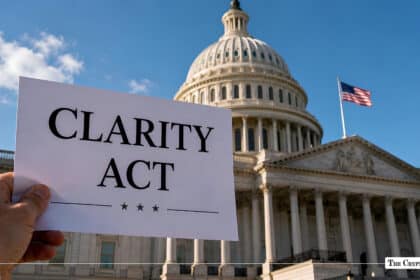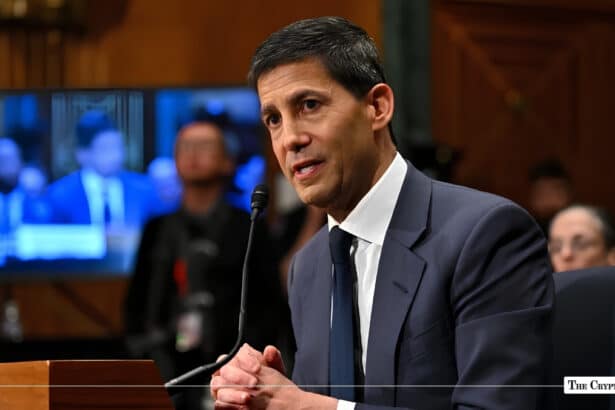
The U.S. House Financial Services Committee will hold a field hearing in New York City on July 17 to examine the Digital Asset Market CLARITY Act, a key piece of legislation aimed at establishing a regulatory framework for digital assets in the United States.
The hearing, titled “Building the Future of Finance: How the CLARITY Act Unlocks Innovation,” was announced by Committee Chairman French Hill and comes as lawmakers continue negotiations over several unresolved provisions within the bill.
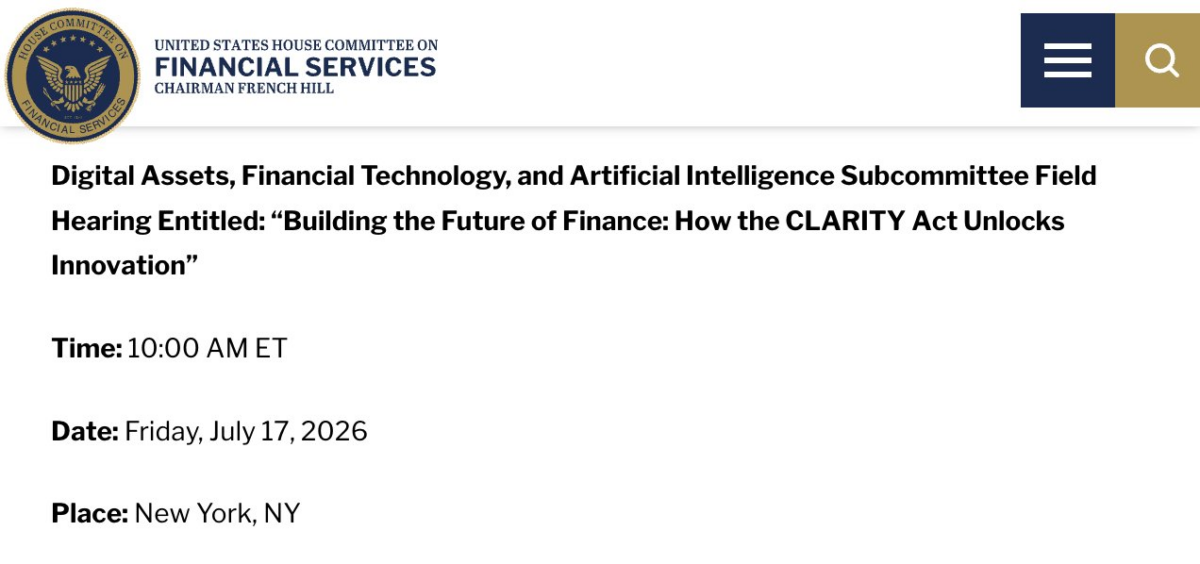
A public livestream will be available, reflecting growing interest from both the financial sector and the digital asset industry as Congress weighs one of the most significant crypto market structure proposals to date.
Why the hearing matters
The CLARITY Act seeks to define regulatory responsibilities across the digital asset sector, including how cryptocurrencies are classified and which federal agencies oversee different parts of the market.
Supporters argue the legislation would provide clearer rules for businesses operating in the United States, while critics have raised concerns about enforcement, investor protections, and potential regulatory gaps. The July hearing is expected to serve as another forum for lawmakers and stakeholders to debate those issues before any final legislative action.
Senate negotiations continue ahead of potential vote
The House hearing comes as Senate lawmakers continue discussions on separate CLARITY Act provisions ahead of a possible floor vote later this summer. Several areas remain under negotiation, including differences between Banking Committee and Agriculture Committee language, ethics provisions, decentralized finance (DeFi) treatment, and stablecoin-related rules.
Industry groups and lawmakers have increased engagement with senators in recent weeks as Congress works through those outstanding issues.
Stablecoin yield debate remains active
One of the most closely watched discussions centers on stablecoin yield provisions. Banking organizations have continued lobbying senators over whether stablecoin issuers should be allowed to offer yield-bearing products that could compete with traditional bank deposits. While public attention has shifted toward other sections of the bill, banking groups remain actively engaged as more senators become involved in the legislative process.
A compromise reportedly negotiated by Senators Thom Tillis and Angela Alsobrooks seeks to prohibit products that resemble bank deposit interest while preserving certain transaction-based incentives.
Law enforcement concerns shape discussions
Another major area of debate involves the Blockchain Regulatory Certainty Act (BRCA), a provision included within the broader CLARITY framework. Earlier this month, administration officials, congressional staff, Treasury representatives, FinCEN officials, and several national law enforcement organizations met to discuss the proposal and its potential impact on crypto-related investigations.
The BRCA would clarify that non-custodial software developers are generally not responsible for how third parties use their software unless they knowingly facilitate unlawful activity.
Law enforcement groups have raised concerns that portions of the language could affect investigative tools used to combat illicit finance involving digital assets. Discussions have also included potential measures to strengthen reporting requirements and enforcement authorities.
Advocacy groups push competing views
The legislation continues to draw lobbying efforts from both supporters and critics. Earlier today, more than 80 anti-trafficking advocates, survivor leaders, and faith-based organizations urged Senate leaders to strengthen safeguards within the bill. The coalition warned that certain provisions could create opportunities for human traffickers, child exploitation networks, and organized crime groups to exploit regulatory gaps.
Advocates called for stronger anti-money laundering protections while emphasizing that innovation should be accompanied by safeguards designed to prevent financial abuse.
Lawmakers continue backing the bill
Despite ongoing debates, several lawmakers have publicly defended the legislation. Senator Cynthia Lummis recently argued that decentralized finance should not be treated as a regulatory loophole and said the CLARITY Act recognizes the role of blockchain-based innovation.
Senator Bill Hagerty has also voiced support for the measure, describing it as a necessary framework for digital assets. Hagerty has compared the effort to the GENIUS Act’s approach to stablecoins, arguing that clear rules are needed to support innovation while maintaining U.S. leadership in financial technology.
With the House preparing for its July hearing and Senate negotiations continuing, the CLARITY Act remains at the center of Washington’s debate over how digital assets should be regulated in the years ahead.
Also Read: ESMA Draws the Line: Unlicensed Crypto Firms Must Exit EU