Key Highlights
- Banking industry groups are increasing pressure on lawmakers ahead of the Senate’s upcoming Clarity Act vote.
- Stablecoin yield provisions have emerged as one of the most contested elements of the legislation.
- Senator Cynthia Lummis defended DeFi innovation, arguing the Clarity Act does not treat decentralized finance as a loophole.
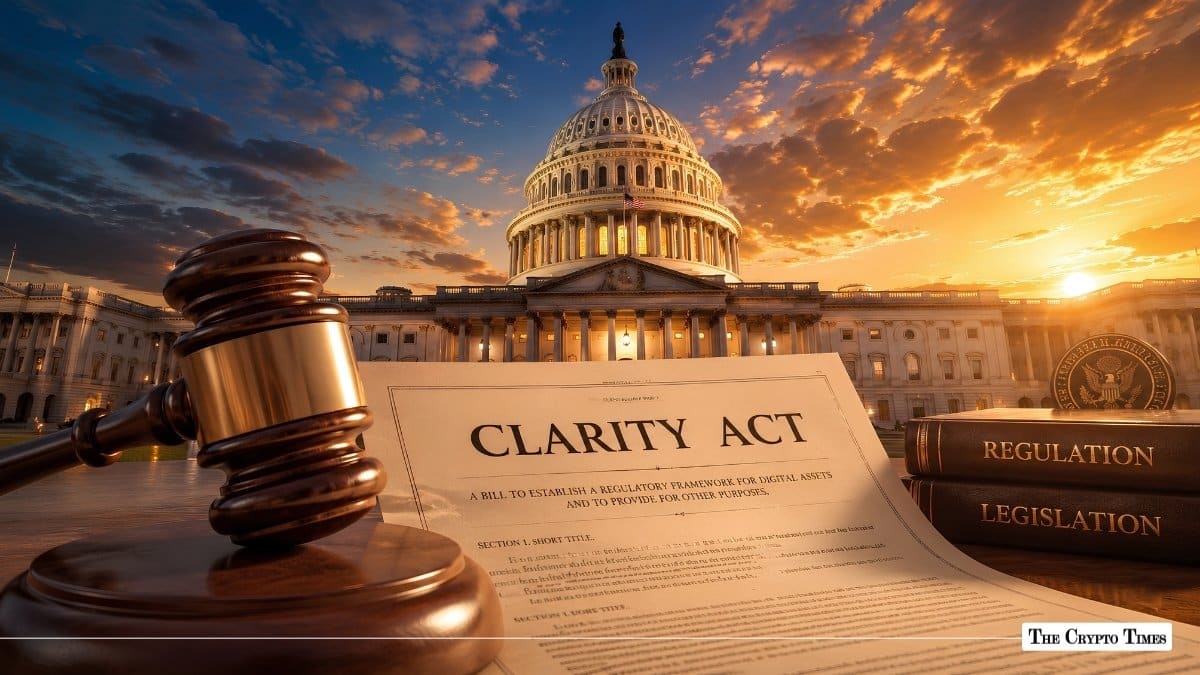
Banking industry groups are intensifying their lobbying efforts in the U.S. Senate as lawmakers prepare for a vote on the Digital Asset Market Clarity Act, commonly known as the CLARITY Act.
In an X post on Friday, journalist Eleanor Terrett highlighted the recent development regarding the bill. She wrote, “The outreach comes as the conversation on Capitol Hill has shifted away from yield and toward securing an ethics deal, bridging gaps between the Banking and Agricultural Committee texts, and the bill’s approach to DeFi ahead of a potential floor vote.”
Why stablecoin yield matters
Stablecoin yield has emerged as one of the most closely watched policy questions in Washington because it could influence how digital asset firms compete with traditional banks. While crypto companies have argued that yield-bearing products expand consumer choice, banking groups have raised concerns that such offerings could draw deposits away from regulated financial institutions.
Although the debate has received less public attention in recent weeks, banking organizations continue to press lawmakers as more senators outside the Banking and Agriculture Committees become involved in the legislative process.
Lummis pushes back on concerns
Recently, Senator Cynthia Lummis (R-WY) defended the crypto bill. In an X post on Friday, Lummis stated, “DeFi is not a loophole. It’s a worthy innovation. The Clarity Act treats it that way.”
Her comments reflect a broader philosophical divide. Pro-crypto lawmakers view the CLARITY Act as an essential framework that provides regulatory certainty for digital assets, including clear distinctions between commodities and securities, DeFi safe harbors, and customer protections. They argue that overly restrictive rules on yield could stifle innovation and push activity overseas.
The stablecoin yield provision has been one of the most heavily negotiated sections of the bill. A compromise brokered by Senators Thom Tillis and Angela Alsobrooks helped unblock the legislation, aiming to prohibit payments that function like bank deposit interest while preserving certain transaction-based incentives.
Proponents remain optimistic despite severe criticism
Senator Lummis and other proponents continue to frame the bill as a balanced commitment to innovation rather than a concession to any single industry. Earlier today, Senator Dave McCormick said negotiations are continuing and voiced strong confidence that the Senate will ultimately advance the bill.
“We need clear rules of the road that protect consumers and ensure this industry remains here in the U.S. instead of moving offshore,” McCormick said. “We need to land this plane—and I believe we will do so in the coming months.”
While critics from the traditional finance sector, such as JP Morgan CEO Jamie Dimon, criticized the bill, saying it lacks necessary legal protections.
Outcome could shape stablecoin regulation
As the Senate approaches a final vote, the outcome on the yield language could shape the future of stablecoins like USDC and USDT in the United States. A more permissive approach could accelerate DeFi adoption and on-chain economic activity. A stricter ban could protect traditional banks but potentially limit the competitiveness of U.S.-based crypto platforms.
With mounting pressure from both banking lobbies and the crypto community, the coming days will be decisive in determining how the U.S. regulates the intersection of traditional finance and decentralized technologies.
Also Read: Schwab Joins Prediction Market Race With New Event Contracts