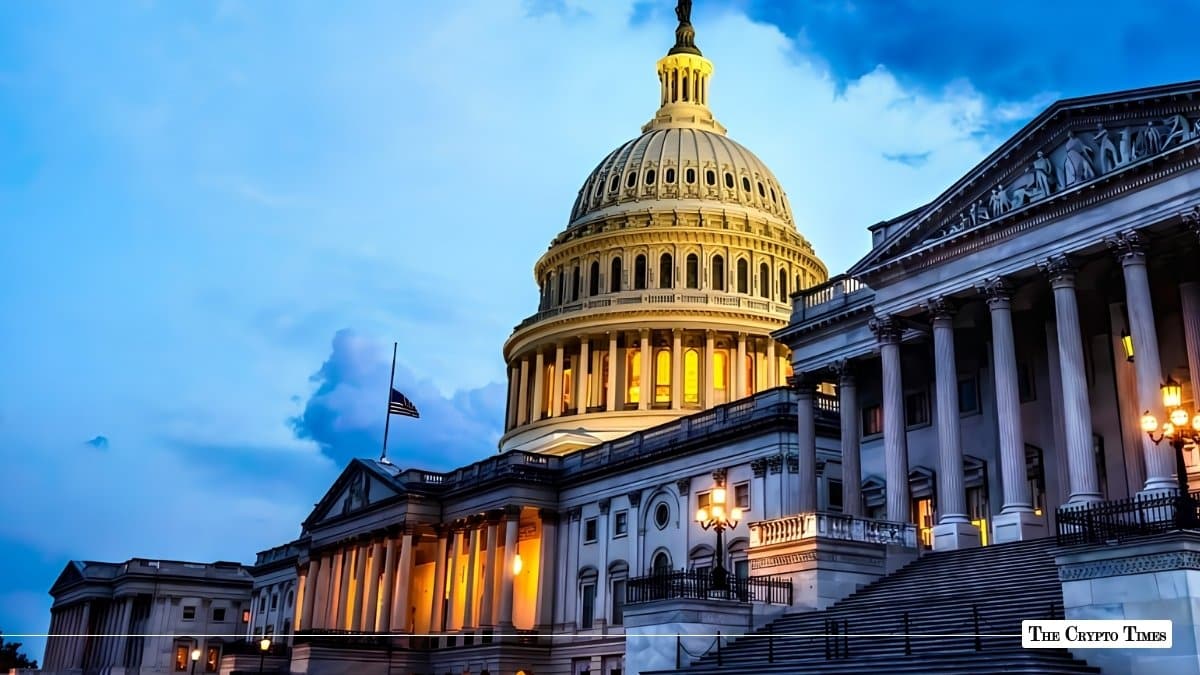
Two of the Senate’s most prominent pro-crypto Republicans, Cynthia Lummis of Wyoming and Bernie Moreno of Ohio, signed on August 7 as cosponsors of the Credit Card Competition Act, a bill opposed by the banking industry, in a move that landed the same week their frustration boiled over about banks helping to stall the crypto sector’s flagship legislation, the CLARITY Act.
According to the congressional record for the bill (S.3623), Lummis and Moreno joined as cosponsors of the measure, which is led by Senators Roger Marshall (R-KS) and Dick Durbin (D-IL). The timing is what has drawn attention: it came as the CLARITY Act missed its pre-recess deadline and was pushed to September, and as Lummis publicly voiced her exasperation over the delay. While neither senator framed the cosponsorship explicitly as a response to the banking industry’s crypto stance, the sequence has been widely read as a pointed signal to a sector that has fought both bills.
What the Credit Card Competition Act Would Do
The Credit Card Competition Act is not a crypto bill. Reintroduced in January 2026 by Durbin and Marshall, and endorsed by President Donald Trump, it targets the fees merchants pay to process card payments. The legislation would require large banks with more than $100 billion in assets to enable at least two unaffiliated card networks on their credit cards, including at least one outside the dominant Visa-Mastercard pair, so that merchants could route transactions over the cheaper option.
Its backers frame it as an antitrust and cost-of-living measure. According to Durbin’s office, Visa and Mastercard control roughly 85% of the credit card market, the average American family pays close to $1,200 a year in swipe fees, and banks collect about $111.2 billion annually from those fees. Supporters, including merchant groups and small businesses, argue competition would lower those costs and pass savings to consumers. Banks counter that the change would squeeze the revenue that funds popular credit card rewards programs, pointing to the effect of an earlier law that capped debit card fees. The bill has long drawn an unusual bipartisan and cross-ideological mix of cosponsors, and it faces heavy lobbying from the financial industry.
The CLARITY Act Connection
What makes the cosponsorship notable for crypto is who is behind it and when it happened. Lummis chairs the Senate Banking Subcommittee on Digital Assets and has been the leading Senate champion of the Digital Asset Market CLARITY Act, which would divide U.S. oversight of digital assets between the SEC and the CFTC. Moreno worked alongside her, and the two negotiated the bill’s ethics provisions with the White House.
Throughout that effort, the banking industry has been one of the most significant sources of resistance, particularly to provisions touching stablecoins, where banks and credit unions have warned that allowing stablecoin “rewards,” or yield, could pull deposits out of traditional accounts and hurt community banks’ ability to lend. Lummis has repeatedly pushed back, publicly urging banks to “embrace” stablecoins as a new product rather than fight them. That friction contributed to the CLARITY Act’s markup being pulled earlier in the year and to its failure to reach a floor vote before the Senate’s August recess.
On August 7, the same period as the cosponsorship, Lummis vented that frustration directly, writing that after fighting so long and hard for the bill, “you can imagine how frustrated I am,” while pledging that “we’ve come too far to quit now.” Against that backdrop, two crypto-aligned senators joining a bill the banking lobby is spending heavily to defeat has been interpreted as applying pressure on an industry they see as obstructing their priority.
How It’s Being Read, and the Caveats
The “retaliation” framing is an inference, and it deserves qualification. The Credit Card Competition Act predates the current CLARITY fight by years and has its own long-standing, bipartisan rationale centered on swipe fees and card-network competition, issues unrelated to digital assets. Lummis and Moreno may simply support that underlying policy, and neither has publicly tied the cosponsorship to the crypto standoff in explicit terms. Reading it purely as a crypto power play risks overstating a link that the senators themselves have not spelled out.
What is fair to say is that the two developments share a common adversary. The banking industry opposes the Credit Card Competition Act and has been a key obstacle to the parts of the CLARITY Act that most affect banks. For senators frustrated with that industry on one front, lending weight to a bill it opposes on another is, at minimum, a notable alignment, whether or not it is formal retaliation.
Why It Matters
The episode underscores how much the fate of U.S. crypto legislation has become entangled with a broader power struggle between the crypto industry and traditional banks. With the CLARITY Act now facing a narrow September window before an election-year calendar crowds it out, the relationships between its key sponsors and the banking sector will shape what is achievable. Whether a show of pressure like this softens bank resistance or hardens it is an open question, and one that will play out when the Senate returns.
Also Read: Thune Still Plans CLARITY Act Cloture Filing With No Democrats