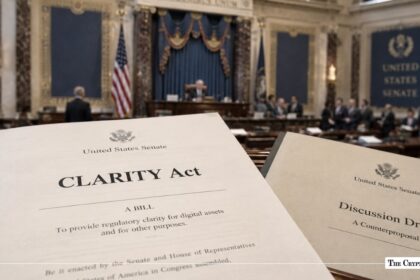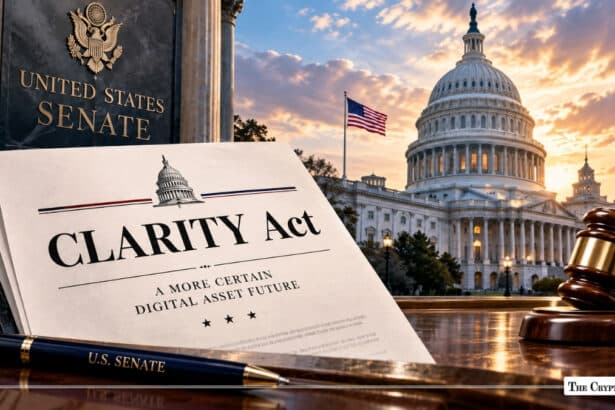
Supporters of the Digital Asset Market CLARITY Act reportedly met with major law enforcement organizations, administration officials, and congressional staff this week as efforts intensify to build support for the legislation before a potential Senate floor vote.
According to details shared by journalist Eleanor Terrett via an X post, the meeting, held on Wednesday at the Eisenhower Executive Office Building and hosted by White House crypto adviser Patrick Witt and the White House Crypto Council, brought together officials from law enforcement associations, the Treasury Department, FinCEN, congressional offices, and the Department of Justice.
Discussions focused heavily on the Blockchain Regulatory Certainty Act (BRCA), a key provision within the broader CLARITY Act that seeks to clarify regulatory obligations for non-custodial software developers and infrastructure providers.
Law enforcement groups enter the CLARITY debate
Representatives from several national law enforcement organizations attended the meeting, including the Fraternal Order of Police, the National Association of Police Organizations, the International Association of Chiefs of Police, the National District Attorneys Association, and the National Association of Assistant U.S. Attorneys. The National Sheriffs’ Association was invited but did not participate.
According to attendees familiar with the discussions, the nearly 90-minute meeting included a detailed debate over how the legislation would affect crypto-related investigations, compliance requirements, and enforcement authorities.
The conversations also explored potential measures to strengthen reporting requirements and investigative tools used to combat illicit activity involving digital assets.
Why the push matters
The meeting highlights a growing effort by CLARITY Act supporters to address concerns that parts of the legislation could weaken oversight of the crypto industry. Securing public neutrality, or support, from major law enforcement organizations could prove influential as lawmakers seek votes from moderate Democrats who have expressed concerns about anti-money laundering safeguards and enforcement authority.
Supporters argue that the bill’s developer protections are designed to distinguish between software providers and financial intermediaries, while preserving tools for prosecutors and regulators to pursue illicit actors. However, critics have questioned whether certain provisions could create regulatory gaps for decentralized finance platforms and other blockchain-based services.
Focus turns to Blockchain Regulatory Certainty Act
Much of the discussion reportedly centered on the BRCA, which would clarify that developers of non-custodial software and blockchain infrastructure are not treated as money transmitters solely because they create or maintain decentralized technologies. The provision has become one of the most debated sections of the broader market structure legislation.
Industry groups argue that legal certainty for developers is necessary to prevent innovation from moving offshore. Opponents have raised concerns about whether the language could complicate enforcement efforts against actors operating within decentralized ecosystems. The meeting suggests lawmakers are attempting to address those concerns before the legislation reaches the Senate floor.
White House signals momentum
The outreach effort comes as negotiations over the CLARITY Act continue behind the scenes. Earlier this week, Patrick Witt said discussions surrounding the legislation had narrowed key areas of disagreement and moved closer to resolution, signaling growing momentum for the bill.
More than 200 digital asset companies, trade associations, and advocacy organizations have also urged Senate leadership to advance the legislation, arguing that it would establish clearer regulatory boundaries for digital asset markets and provide legal certainty for developers and market participants.
Enforcement tools remain part of the negotiations
Participants at Wednesday’s meeting also discussed ways to strengthen crypto crime reporting requirements and enforcement mechanisms without altering the core developer protections contained in the legislation.
The approach reflects an ongoing balancing act for lawmakers: creating clearer rules for software developers and digital asset businesses while ensuring regulators and law enforcement agencies retain sufficient authority to investigate money laundering, fraud, sanctions violations, and other illicit activity.
As Senate negotiations continue, support from law enforcement stakeholders could become an important factor in determining whether the CLARITY Act can secure the bipartisan votes needed to advance.
Also Read: ICBA Campaign Reignites CLARITY Act Fight Over Stablecoin Rewards