One of crypto’s most prominent legal voices says CME Group’s decision to sue its own regulator has backfired, framing the lawsuit not as a defense of market integrity but as the panicked move of an incumbent losing ground to crypto-native competition.
A ‘Shocking Miscalculation’
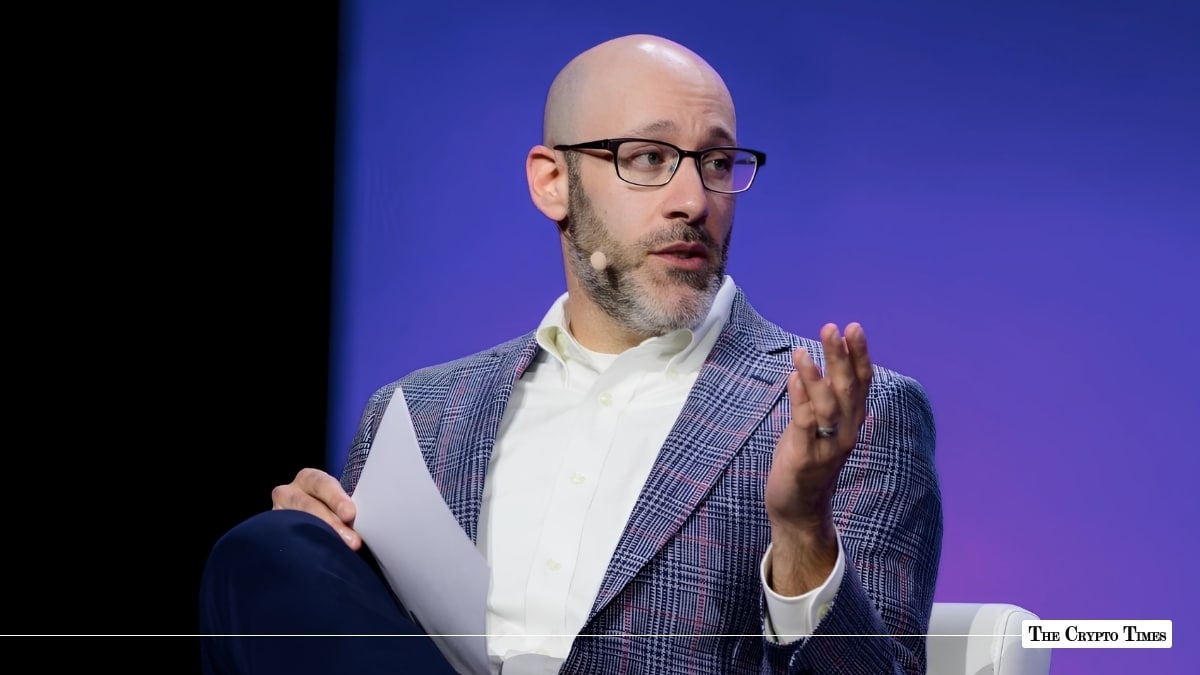
In a post on June 19, Jake Chervinsky, chief legal officer at Variant Fund and one of the most-followed lawyers in crypto policy, called CME’s suit against the Commodity Futures Trading Commission a “shocking miscalculation” and an “unforced error.” Long regarded as the dominant force in Washington on derivatives, CME had, in his telling, revealed that “the emperor has no clothes,” outing itself as a “petty incumbent monopolist afraid of competition.” He closed with a pointed jab: competition, he wrote, is here.
The reaction captures a view spreading across the industry: that by going to court, CME drew attention to its own vulnerability rather than to any flaw in the products it opposes.
Why Critics Say It Backfired
The numbers give the argument teeth. CME sued the CFTC and its chairman to void the agency’s approval of Kalshi’s Bitcoin perpetual futures, yet its own perps volume on the day of filing was under $6 million—less than 1% of Kalshi’s. CME has also struggled in event contracts, where partners DraftKings and FanDuel now route customers to Crypto.com.
Critics read CME’s own complaint, which warns of “textbook competitive injury,” as effectively conceding the point: that the real grievance is competition for its retail customers.
It also marks a notable rupture. As the world’s largest derivatives exchange, with a dominant share of the market, CME’s interests had long aligned with the CFTC’s—until it chose to sue the regulator, now opening the door to rivals. Chervinsky is not alone in the critique; decentralized exchange Hyperliquid also fired back at CME, casting the suit as an attempt to preserve dominance after regulators cleared regulated crypto perps.
CME’s Case, and the CFTC’s Rebuttal
The framing as pure protectionism, however, skates past a genuine legal dispute. CME argues that perpetual futures are swaps under the 2010 Dodd-Frank Act, not futures. It points out that the CFTC itself applied that classification before, including in its 2023 Binance enforcement action.
CME also says the agency acted “arbitrarily and capriciously” in approving Kalshi’s contract as a future, completing its review of a novel, complex product in under 24 hours. Outgoing CEO Terry Duffy has called perps a “disaster waiting to happen” and noted CME holds exclusive licenses on the underlying benchmarks.
The CFTC, for its part, called the lawsuit “frivolous,” and Chairman Michael Selig has defended the approval, pointing to extensive industry feedback and arguing that the funding-rate mechanism keeps perps aligned with spot prices.
Legal observers are split, and the picture is genuinely unsettled: after the Supreme Court’s Loper Bright ruling reduced deference to agencies, CME’s swap argument gains force — but so does the point that the CFTC’s own past classification of perps as swaps now carries less weight. In short, Chervinsky’s “no clothes” verdict is a rhetorical read, not a courtroom one.
What’s Actually at Stake
Beneath the sparring is a consequential question for crypto traders. The case targets the CFTC’s late-May approval that let Kalshi list a Bitcoin perpetual future inside the US regulated system alongside the policy statement enabling similar products. Whether perps are deemed futures or swaps carries real consequences, including sharply different margin requirements, and the outcome will shape whether US users gain broad access to regulated crypto perps or remain boxed out.
For now, the optics have run ahead of the law. Whatever a judge eventually decides on the swap-versus-future question, the industry’s loudest voices have already cast CME as an incumbent on the defensive — and the spectacle of the world’s largest futures exchange suing the regulator it once moved in lockstep with is, on its own, the story crypto is choosing to tell.