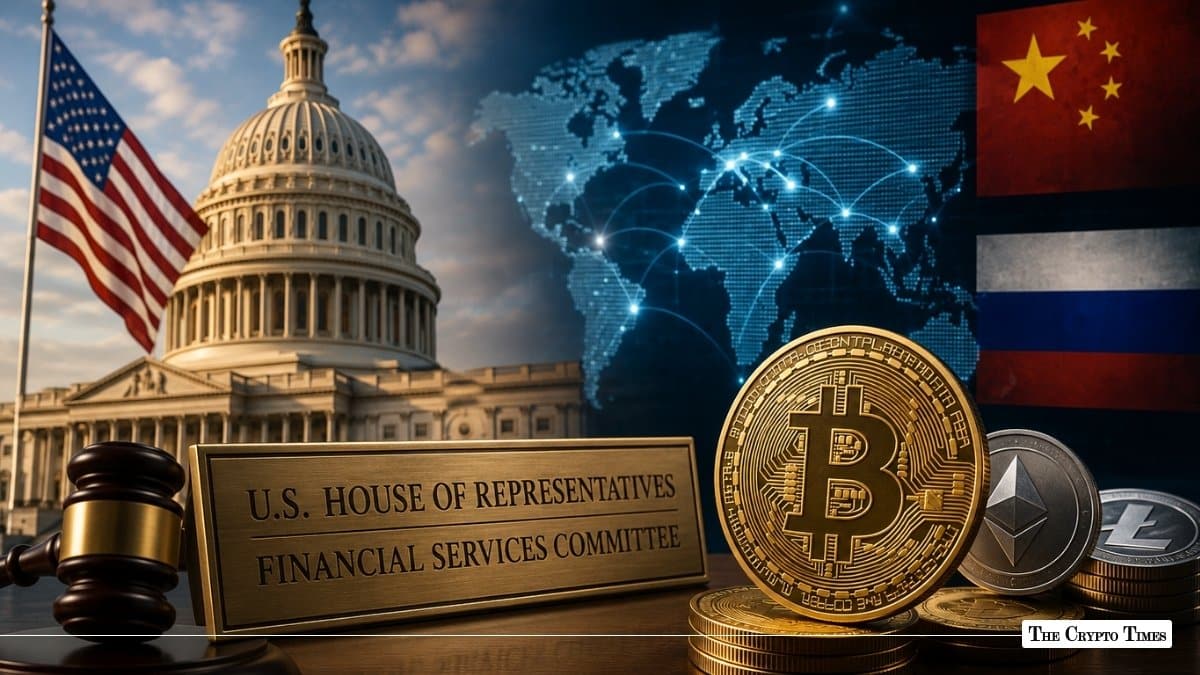
U.S. lawmakers are preparing to examine whether cryptocurrencies and other digital assets can play a role in reducing the financial influence of countries such as China and Russia. The discussion comes as policymakers increasingly assess how decentralized financial networks fit into broader economic and geopolitical competition.
The House Oversight Subcommittee on Military and Foreign Affairs has scheduled a roundtable for June 25, 2026, titled “Two Sides of a Digital Coin: Protecting U.S. Security by Challenging the Power of Repressive Foreign Regimes. The session will focus on the use of digital assets in nations facing severe economic instability or authoritarian financial crackdowns. Lawmakers are expected to discuss whether these tools can help individuals protect their savings, receive financial assistance, and access financial services when traditional banking options are limited or heavily restricted.
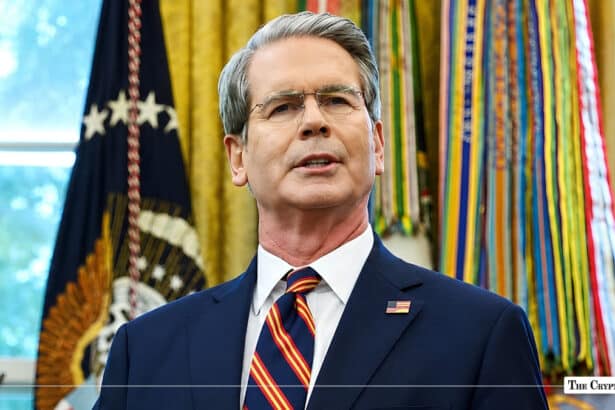
Chairman William Timmons said the hearing will explore digital assets alongside U.S. national security and global financial competition.
Washington links crypto policy to national security
The congressional review comes at a time when governments around the world are increasingly exploring digital finance as both an economic and strategic tool. Chairman William Timmons has argued that countries such as China and Russia are using financial systems and digital currencies to expand surveillance capabilities and strengthen state control.
He also stated, “Individuals living under these oppressive regimes are increasingly turning to decentralized digital assets as a means of preserving financial freedom and circumventing government control. This roundtable will examine the intersection of these trends with U.S. national security interests and explore how our nation can lead in financial innovation, promote economic liberty, and empower vulnerable populations as they challenge the power of repressive foreign regimes.”
The upcoming roundtable meeting will focus on the appropriate response by the United States to these trends, while maintaining its dominant position within the fast-changing field of digital finance. Moreover, participants will be Dustin Palmer, Bank Secrecy Act officer at Anchorage Digital Bank; Jorge Jraissati, President of Economic Inclusion Group; and Cody Carbone, Chief Executive Officer of The Digital Chamber.
The broader debate around China
The debate is unfolding alongside a broader push in Washington to establish clearer rules for the crypto industry. Senator Cynthia Lummis has advocated for regulatory clarity through the CLARITY Act, warning that the United States risks losing influence if it does not help shape global standards for digital assets.
“If the United States doesn’t establish the global standard for digital asset regulation, someone else will,” Lummis wrote on X. She added, “China is not waiting.”
China’s growing interest in real-world asset tokenization has also attracted attention from industry participants. Speaking at the Consensus Hong Kong conference, Joseph Chee said Chinese assets could potentially be tokenized and offered to investors outside the country through approved channels.
“You can use onshore assets, tokenize them, and do your RWA crypto business outside of China. All you have to do is make a filing,” Chee said.
Crypto adoption shifts amid global financial pressure
The debate comes as countries look to digital assets as alternatives to traditional financial infrastructure. Russia, for example, has explored alternative payment channels after sanctions limited access to conventional financial networks. Reports suggest crypto-linked payment systems are gaining traction in regions including Africa as countries and businesses seek new ways to move money across borders.
On the other hand, the pace of cryptocurrency transactions around the world has slowed down since last year. According to statistics published by TRM, the total value of transactions came to $979 billion in the first quarter of 2026, down 11% compared to a year ago.
The drop in activity occurred amid unfavorable market sentiment such as trade tariff uncertainties, a strong U.S. dollar, and increased real interest rates. In addition, the value of bitcoin dropped 22%, closing at $68,000. As of writing, the top cryptocurrency was trading at $63,640.12 within a 24-hour, up 1.74% in the last 24 hours.
Despite the slowdown in general, the U.S. remained the leading crypto market in terms of volume, with $212 billion in transaction value. South Korea was the runner-up with $69 billion of activity, while Russia ranked third with $48 billion. The leader of growth among the countries that showed considerable activity was Turkey, with 7% growth from the previous year and $40 billion of activity.
Against that backdrop, U.S. lawmakers are examining digital assets through a geopolitical lens rather than solely as investment products. The upcoming congressional discussion is expected to focus on whether cryptocurrencies can influence financial access, economic resilience, and strategic competition between nations.
Also Read: Philippine SEC Explores RWA Tokenization for Overseas Filipino Workers