Key Highlights
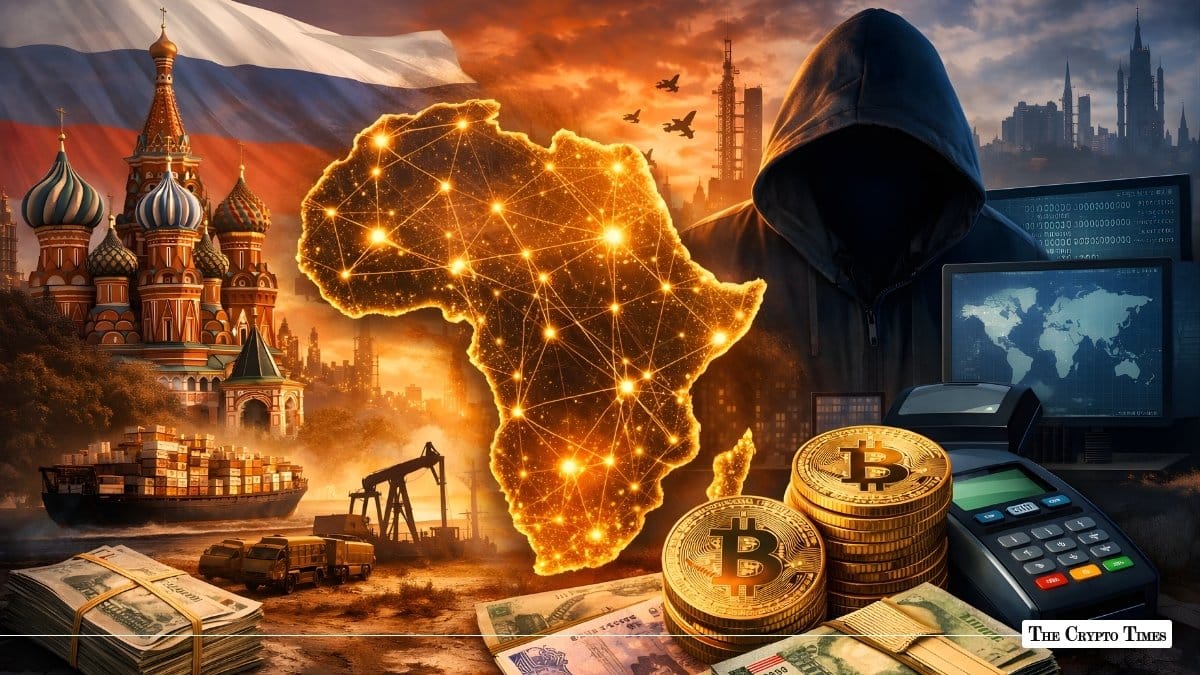
- Russia is building crypto-based payment networks in Africa to bypass sanctions and reduce reliance on systems like SWIFT.
- A7, tied to sanctioned entities, is using stablecoins and alternative rails to facilitate cross-border trade.
- Africa is emerging as a testing ground, though real adoption levels and transaction volumes remain unclear.
After being cut off from global financial rails following the Russia-Ukraine conflict, Russia has been building alternative payment channels.
According to a Financial Times report, a growing part of this effort now runs through Africa, where crypto-linked systems are being positioned as substitutes for traditional banking infrastructure. A job listing for a project manager in Togo, posted by a sanctioned Russian crypto network, offered a glimpse into how these systems are being extended into new markets.
A7 and the search for new payment rails
At the center of these efforts is A7, a crypto-based payments network tied to sanctioned entities, including Promsvyazbank and Moldovan businessman Ilan Șor.
Formed in 2024, A7 combines digital assets, stablecoins, and non-traditional financial instruments to facilitate cross-border transactions. Its stated aim is to keep trade flows moving despite restrictions on Russian banks and limited access to systems like SWIFT.
While some of its claims, such as handling a significant share of Russia’s foreign trade, remain unverified, the model reflects a broader shift toward parallel financial channels.
Africa as a testing ground
Recent activity suggests that Africa has become a key region for these efforts. A7 has announced offices in Nigeria and Zimbabwe, with additional signals pointing to expansion into other markets. On-the-ground visibility remains limited, and local crypto participants report little direct engagement so far. Still, the presence of launch events and outreach efforts indicates an attempt to establish footholds in multiple jurisdictions.
The appeal is practical. Several African economies maintain active trade relationships with Russia, particularly in sectors such as agriculture and energy. Payment systems that bypass dollar-based channels could simplify these transactions.
Blending crypto with geopolitics
The expansion of alternative payment networks aligns with Russia’s broader engagement across the continent. Diplomatic, military, and trade ties have deepened in recent years, including agreements and security cooperation with governments in regions affected by political instability.
At a recent Russia-Africa forum, Sergei Lavrov said that a large share of trade with African partners was already being conducted in roubles, underscoring a push toward non-dollar settlements.
Crypto infrastructure fits into this strategy by offering a parallel layer—one that can operate alongside national currencies and outside traditional financial oversight.
Crypto trails in military supply chains
Meanwhile, findings from Chainalysis add another layer to how digital assets are being used within these parallel systems. The firm reports that cryptocurrency is increasingly tied to the procurement of low-cost drones and components linked to networks associated with Russia and Iran.
While most purchases still rely on traditional finance, blockchain data is beginning to expose parts of these supply chains that were previously difficult to trace. Since 2022, pro-Russia groups have raised more than $8.3 million in crypto donations, with some campaigns explicitly earmarking funds for drones.
Transaction patterns, often in the $2,200 to $3,500 range, closely match the cost of commercially available drones or key components, indicating that small, distributed crypto contributions can translate directly into equipment procurement.
Limited visibility, open questions
Despite announcements and promotional activity, details about actual transaction volumes and operational scale remain scarce. Some reported offices have minimal public presence, and local awareness appears uneven.
This opacity makes it difficult to assess how widely such systems are being used or whether they are functioning at scale. It also reflects the nature of alternative financial networks, which often operate with limited transparency.
Also Read: Not Legal Tender: Rwanda Issues Warning Over Bybit’s FRW P2P Trading