Key Highlights
- Ripple Prime raised $275 million in senior unsecured notes to expand its U.S. business.
- The new deal brings its debt financing to $475 million in about three months, including a $200 million facility secured in May.
- KBRA gave the notes a BBB investment-grade rating, while Ripple Prime plans to expand into areas including Delta1 and equity prime brokerage.
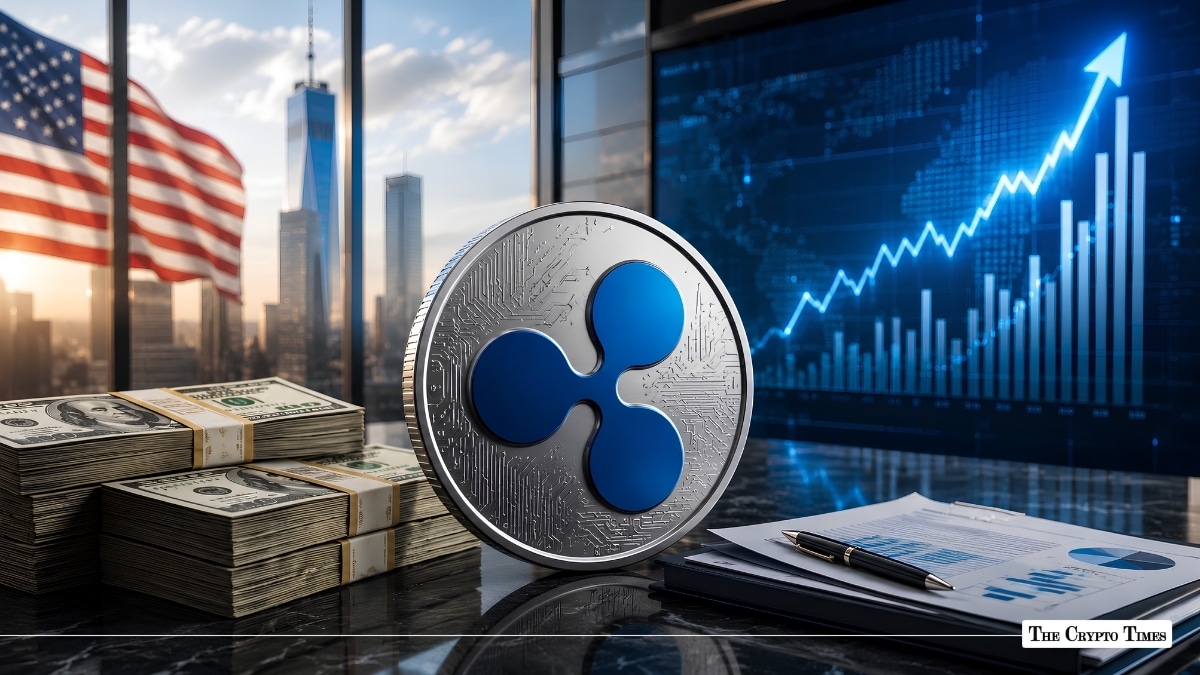
Ripple Prime, the institutional prime brokerage arm of Ripple, has closed an upsized $275 million private placement of senior unsecured notes to support the expansion of its U.S. business.
According to a blog post, the deal closed on August 18, 2026, and received a BBB investment-grade rating from global credit rating agency KBRA, with the money going toward working capital and the growth of its financial services.
The new funds will help Ripple Prime expand its multi-asset clearing, financing and prime brokerage services in the U.S.
The company said the offering attracted institutional investors, while the decision to increase its size shows that demand was higher than the amount first planned. Ripple Prime will also invest in its team and technology as it grows its business.
New debt builds on May financing
The latest deal adds to a busy year for Ripple Prime. In May 2026, the company secured a $200 million asset-backed debt facility from Neuberger Specialty Finance to increase its lending capacity. When combined with the new $275 million notes, Ripple Prime has raised $475 million in debt financing in about three months.
Ripple Prime’s U.S. business has also been growing since it launched digital asset spot prime brokerage services in November 2025. The business is built to give institutional clients access to services that help them trade, clear transactions and obtain financing across different assets.
From hidden road to Ripple Prime
The company was not always known as Ripple Prime. Ripple acquired Hidden Road Partners in 2025, gaining an established institutional brokerage business, its client relationships and regulatory infrastructure.
The business was later rebranded as Ripple Prime and now operates as a non-bank prime brokerage serving clients across traditional and digital asset markets.
KBRA gives the notes a BBB rating
The BBB rating adds another important part to the deal. KBRA said Ripple Prime’s business is still in a scaling phase, with its main activities including clearing and intermediation through its exchange-traded derivatives platform and fixed-income repo business. The derivatives platform launched in 2024, while the repo business reached meaningful scale in 2025.
Crypto commentator Chad Steingraber also highlighted the KBRA rating in a post on X, pointing to the agency’s assessment of Ripple Prime’s business.
He said the company’s operations are focused on clearing and intermediation, while its fixed-income repo business is centered on short-duration U.S. Treasuries and agency securities.
According to the KBRA assessment shared in the post, Ripple Prime’s earnings profile remains in an early growth stage. The agency expects margins to improve in 2026 as the company’s balance sheet grows and it gains more from operating at a larger scale. Revenue is currently concentrated in spread-based financing and remains sensitive to balance-sheet size and interest rates.
New services could grow revenue
Ripple Prime is also working to add new sources of revenue. Its planned areas include Delta1, which covers total-return swaps and synthetic equity financing, as well as equity prime brokerage. KBRA said these businesses could help the company spread its revenue across more activities over time.
Ripple Prime President Noel Kimmel said the support for the notes offering shows confidence in the company’s business and its long-term plans. “With the completion of this offering, we have an additional source of capital to invest in our team and technology,” Kimmel said.
Risks remain as the business scales
KBRA also pointed to counterparty and liquidity risks as areas the company must manage as it grows. The agency said Ripple Prime uses a matched-principal model, high-quality repo collateral, centrally cleared derivatives, exposure limits and real-time monitoring to manage those risks.
It also said the company maintains substantial excess net capital above SEC requirements as it expands its financing and clearing activities.
Also Read: a16z Backs SEC Proposal to Rescind Rule 611 for Onchain Markets