Goldman Sachs has trimmed its gold price target after concluding the Federal Reserve will not cut interest rates this year, a shift in the macro backdrop that lands on Bitcoin through the same channel, even though the call itself is about bullion.
According to a Bloomberg report, in a note from analysts Lina Thomas and Daan Struyven, Goldman lowered its December gold forecast by $500 to $4,900 an ounce, down from $5,400. The cut stems from a lower forecast for inflows into gold-backed ETFs after the bank’s economists pushed expected US rate cuts out to June and December 2027, from December 2026 and March 2027 previously. The analysts described their view as “structurally constructive but tactically cautious,” flagging near-term downside risk and medium-term upside.
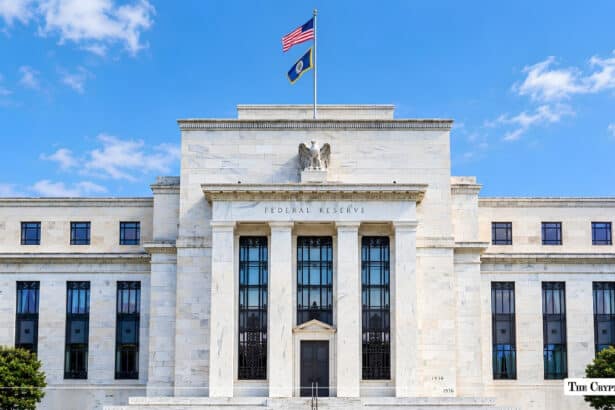
Crucially, Goldman tied the revision to the central bank’s new leadership, citing the “surprisingly hawkish” first Fed meeting under Warsh’s leadership. The bank warned that if the Fed were to actually hike, which vice chairman and former Dallas Fed president Rob Kaplan has said could come as soon as September if inflation stays high, gold’s demand as a macro hedge could unwind toward $4,400 by year-end.
The Read-Through to Bitcoin
Goldman did not publish a Bitcoin call. But the logic it applied to gold maps directly onto crypto. Goldman estimates that every 50 basis points of Fed easing adds roughly $120 an ounce to gold by lowering the opportunity cost of holding a non-yielding asset and weakening the dollar — and Bitcoin, a non-yielding “hard money” asset, sits in that same bucket. Strip the cuts out, and the tailwind disappears for both.
That is not a theoretical link. Warsh’s hawkish debut already crushed crypto’s rate-cut hopes, with Bitcoin sliding toward $64,000 in the days around the meeting as a firmer dollar and higher yields sapped risk appetite. The same no-cuts repricing that prompted Goldman to trim gold is the one weighing on Bitcoin, a read-through, not a downgrade of crypto by the bank.
Anchored in a Hawkish Warsh Fed
The common thread is the Fed. At its June 17 meeting, Warsh’s first as chair, the FOMC held rates at 3.50%–3.75% but dropped its easing bias, shortened its statement to a pledge to “deliver price stability,” and published projections in which several officials now pencil in hikes this year, a sharp turn from March, when none did.
The committee does not see inflation returning to its 2% target until 2028, with consumer prices up 4.2% in May, the steepest annual rise since 2023, driven by an energy shock from the US–Iran war.
The reaction was a cross-asset risk-off move: crypto, equities, gold, and silver all sold off together once it was clear no easing was coming. Goldman’s gold cut is, in effect, a sell-side institution formalizing that same regime shift in its models.
Digital Gold, Diverging
The episode sharpens a question hanging over Bitcoin’s identity. Warsh himself has called Bitcoin a “generational alternative to gold,” and the “digital gold” thesis holds that the two should move together as debasement hedges.
Yet through this cycle, gold ran to records on central-bank buying and the debasement trade while Bitcoin lagged well below its highs, a divergence that already strained the comparison. Now Goldman is trimming even gold’s bull case, leaving the more rate-sensitive, risk-on asset with a tougher backdrop still.
Bulls vs. Bears
The case for both assets is not closed. Debasement bulls argue that gold and Bitcoin can keep grinding higher even without rate cuts, supported by structural central bank gold buying, de-dollarization, ballooning fiscal deficits, and the geopolitical fear premium from the Iran conflict, forces independent of Fed policy. Goldman itself remains “structurally constructive” on gold over the medium term, and its framework leaves room for upside.
The bears counter that higher-for-longer rates and a firmer dollar are direct, reliable headwinds for non-yielding assets. The precedent is unkind: the 2022 hiking cycle helped drive Bitcoin from roughly $69,000 to below $16,000, while the 2023–2024 pause-and-cut phase fueled the subsequent bull run. In that reading, the Fed’s trajectory, not any crypto-native narrative, is the dominant variable for Bitcoin right now, just as Goldman says it is for gold.
Also Read: Fidelity Joins Wall Street’s Race to Manage Stablecoin Reserves Under the GENIUS Act