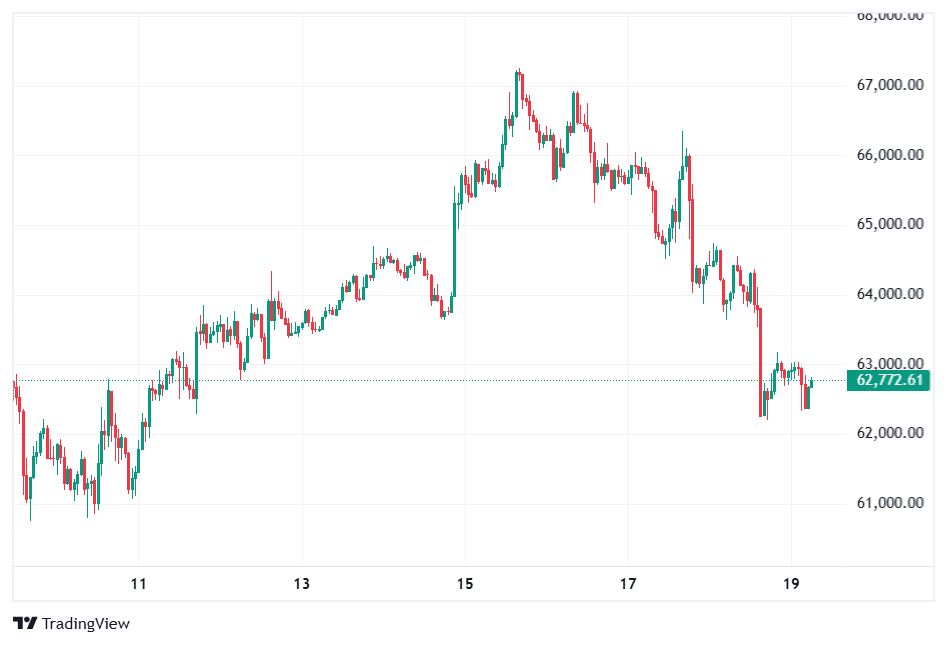
Bitcoin is trading around $62,700–$63,000, down roughly 2% in the last 24 hours, while the broader cryptocurrency market follows with similar losses across major altcoins.
Despite the landmark US-Iran peace deal signed earlier this week, risk assets including crypto have turned lower as traders shift from initial optimism to caution over implementation risks and conditional terms.
The “Islamabad Memorandum,” a 14-point framework agreement reached on June 17–18, ended active hostilities, reopened the Strait of Hormuz, and provided limited sanctions relief for Iran. While the news initially fueled a relief rally, the market is now digesting the complexities of turning a ceasefire into lasting stability. This has triggered short-term profit-taking and position adjustments across crypto.
Geopolitical Relief Gives Way to Implementation Uncertainty
The US-Iran deal represents a major de-escalation after months of conflict that disrupted oil shipments and raised global inflation concerns. By lifting the naval blockade and allowing toll-free commercial shipping through the Strait of Hormuz for at least 60 days, the agreement has already started restoring energy flows. This should, in theory, support risk assets by reducing supply shocks and easing macroeconomic pressures.
However, the initial euphoria has faded quickly. Traders are now focused on the deal’s phased and conditional nature. Minor logistical delays in naval withdrawal, diplomatic friction over verification timelines, and uncertainty surrounding the 60-day negotiating window have created hesitation.
Iran has signaled it will respond forcefully to any perceived US breaches, while American officials emphasize strict compliance checks. This back-and-forth has kept a residual geopolitical premium in the market, prompting investors to unwind leveraged positions built during the ceasefire announcement.
Bitcoin, which surged above $66,000 on early peace hopes, has since broken below the $64,000–$66,000 support zone. The breach triggered stop-losses and cascading liquidations, amplifying the downside move.
Ethereum and other major cryptocurrencies are mirroring this pattern, behaving as high-beta assets highly sensitive to global stability narratives. The current dip reflects a classic “buy the rumor, sell the news” reaction, where the reality of messy diplomatic execution replaces the simpler relief of war ending.
Sanctions Relief Dynamics Fuel Mixed Trader Sentiment
Limited and phased sanctions easing forms a central part of the memorandum. Iran can immediately resume oil exports and unlock some frozen assets, with potential for wider relief linked to nuclear compliance over the next 60 days. This includes verifiable uranium stockpile reductions and stronger IAEA oversight.
For crypto markets, these sanctions dynamics create a double-edged sword. Successful full implementation could boost global liquidity, stabilize energy prices, and foster a more favorable environment for risk-taking. Historically, lower and more predictable oil costs have correlated with reduced inflation expectations, which in turn support looser monetary policy, a tailwind for Bitcoin and growth-oriented altcoins.
Yet the conditional structure has introduced meaningful hesitation. Full sanctions termination is not immediate; it remains tied to progress in nuclear talks. Traders appear wary that disputes over compliance or delays could stall momentum, keeping uncertainty elevated. Many market participants had front-run the peace breakthrough with aggressive long positions. As the deal moves from headline to implementation phase, these positions are being adjusted, contributing directly to today’s selling pressure.
This dynamic explains why crypto is underperforming relative to traditional markets. While oil and equities show modest stabilization after initial pops, crypto’s amplified volatility has led to sharper retracements.
Technical Pressure and What Lies Ahead for Crypto
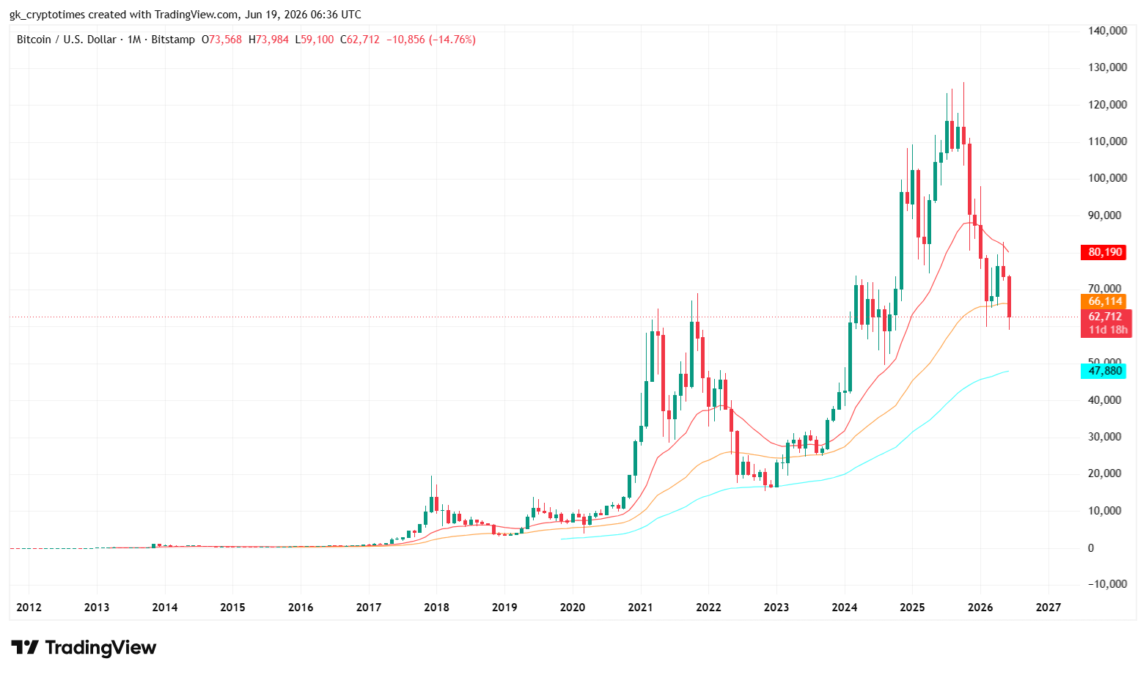
Technically, today’s decline fits into a broader correction that began earlier in June. Bitcoin remains significantly below its 2025 peak near $126,000 and is now testing the $60,000–$62,000 support band that proved resilient during prior volatility.
Daily chart indicators show oversold conditions, but short-term momentum stays bearish with elevated selling volume in perpetual contracts.
Altcoins are feeling the pain more acutely, with many tokens down 4–7% as capital flows toward perceived safer corners of the market. The overall crypto sector continues to trade in lockstep with global risk sentiment, making it especially vulnerable to geopolitical headlines and macro crosscurrents.
Looking forward, the next few days will be pivotal. Clear progress in follow-up negotiations, potentially involving high-level talks in Switzerland, on nuclear issues and sanctions relief could remove uncertainty and spark a sustained recovery. Lower energy costs and reduced global tension would likely reinforce Bitcoin’s narrative as a hedge against instability while supporting Ethereum and altcoins through improved liquidity.
Conversely, any setbacks in the ceasefire or stalled sanctions rollout could push Bitcoin toward lower supports and heighten volatility. Market participants are watching key levels closely, along with ETF flows, on-chain metrics, and any fresh diplomatic updates.
Also read: Will America Get Its GENIUS Act Stablecoin Rulebook?