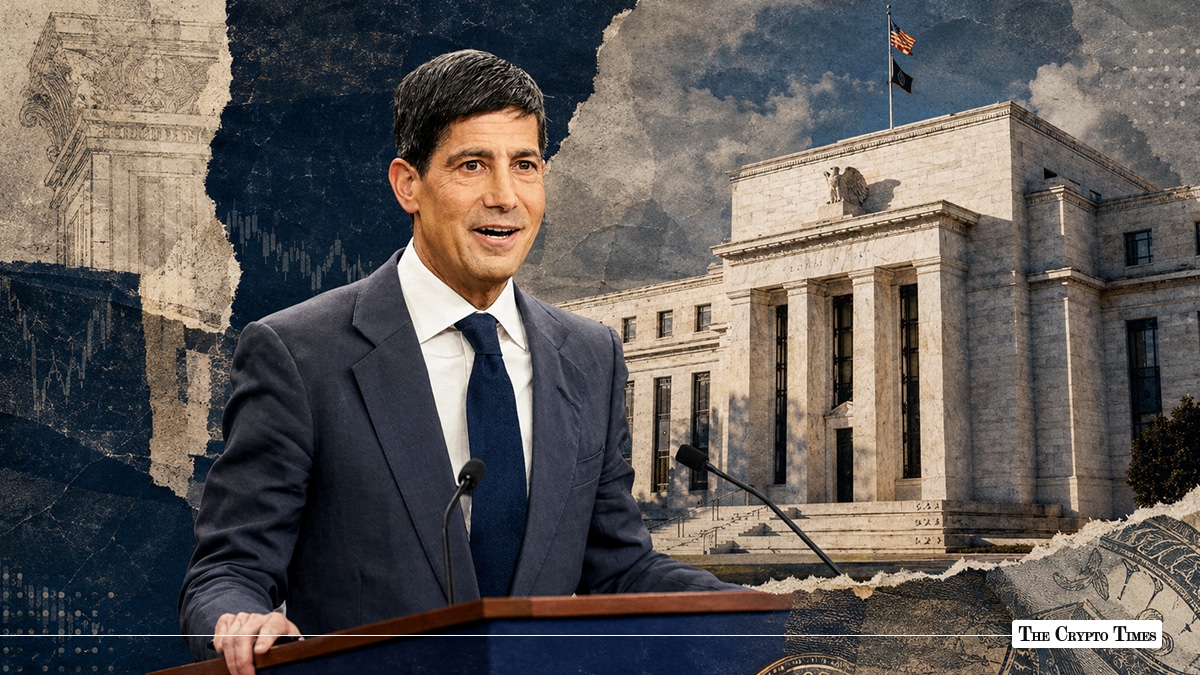
In the high-stakes world of crypto, Federal Reserve decisions aren’t just macro noise, they’re the ultimate liquidity dial. When the FOMC speaks, Bitcoin and altcoins don’t just listen; they often bleed or surge in lockstep with risk appetite. Yesterday’s conclusion of Kevin Warsh’s inaugural FOMC meeting (June 16-17, 2026) delivered a masterclass in why.
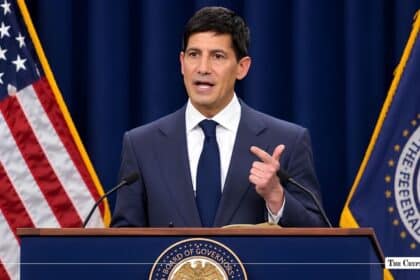
The new Fed Chair, sworn in just weeks earlier on May 22 after replacing Jerome Powell, following the most divisive Senate confirmation vote in Fed history (54-45 on May 13, with only Pennsylvania Senator John Fetterman crossing party lines), presided over a unanimous 12-0 decision to hold the federal funds rate steady at 3.50%-3.75%. On the surface, this was the widely expected “no change.” Markets had priced in a hold with near-certainty. But beneath the surface? A deliberate hawkish pivot that stripped away forward guidance, hiked rate-hike odds for 2026, and signaled a full operational overhaul. Crypto felt it immediately.
Notably, the 12-0 unanimous vote included Powell himself, who remains on the Fed’s Board of Governors until the Department of Justice’s investigation into the Fed headquarters is, in his words, “fully resolved with transparency and finality.” Powell voting in lockstep with the man who replaced him was one of the meeting’s most striking institutional signals.
The Mechanics: Why FOMC Decisions Move Crypto Like a Puppet on Strings
FOMC meetings shape crypto through three primary channels:
- Liquidity and Borrowing Costs: Higher-for-longer rates tighten financial conditions. Crypto thrives on cheap capital, leveraged trading, DeFi yields, institutional inflows into spot Bitcoin and Ethereum ETFs. When the Fed signals restraint, that fuel dries up.
- Risk Sentiment: Bitcoin behaves like a high-beta tech stock or Nasdaq proxy. Dovish signals (rate cuts ahead) spark “risk-on” rotations into volatile assets. Hawkish ones trigger flight to safety.
- Dollar Strength and Correlation: A stronger USD (often from tighter policy) pressures crypto priced in dollars. Historical precedent is brutal: the 2022 hiking cycle crushed Bitcoin from ~$69K to sub-$16K lows amid the Terra-Luna and FTX collapses. The 2023-2024 pause-and-cut cycle fueled the 2024-2025 bull run.
Warsh’s debut wasn’t just another data point: it was a regime signal.
What Actually Happened Yesterday
The FOMC kept rates unchanged but made three pivotal shifts:
- Forward guidance removed. The policy statement dropped any easing bias. It became shorter and blunter: the Committee will “deliver price stability.” Warsh explicitly ditched the old habit of telegraphing future moves. The statement also referenced economic activity “expanding at a solid pace despite elevated uncertainty that owes, in part, to the conflict in the Middle East,” explicitly tying the inflation backdrop to the U.S.-Iran-Israel war.
- Hawkish economic projections (SEP/dot plot). The median projection for the end-2026 federal funds rate rose to 3.8% (from 3.4% in March). Nine of 18 officials now see at least one rate hike this year. Crucially, six of 18 project TWO 25-basis-point hikes; a far more hawkish position than just “one hike.” Another 8 of 18 see rates unchanged, and just one official penciled in a cut. The reversal from March is even sharper than the headline suggests: in March, ZERO officials projected hikes and the committee as a whole forecast one cut in 2026. The June dot plot is a unanimous repudiation of that March view. Markets responded by fully pricing in one quarter-point rate hike by year-end. Inflation is seen at 3.6% PCE for 2026, up sharply from the 2.7% projected in March, before easing further, with full return to the 2% target pushed out.
- Five new task forces launched. Warsh is overhauling the Fed’s toolkit: communications (including the dot plot and SEP), balance sheet policy, data sources/methodology, productivity/jobs in the AI era, and inflation frameworks from first principles. This isn’t incremental, it’s structural change under a chair who has long criticized excessive Fed talk. In an interview last year, Warsh explicitly called for “regime change” at the central bank, language that this FOMC’s actions are starting to operationalize.
Warsh’s personal signal: no dot plot from the chair himself. In an unprecedented move, Warsh did not submit his own forecast for where rates should go. He told the press conference that he encouraged his colleagues to submit dots, but personally abstained, explaining that he has long been skeptical that such projections “potentially lock the Fed into a specific policy outlook.” This is a philosophical signal aligned with the forward-guidance removal: even while letting the SEP continue, the chair himself opts out of the forecasting machinery.
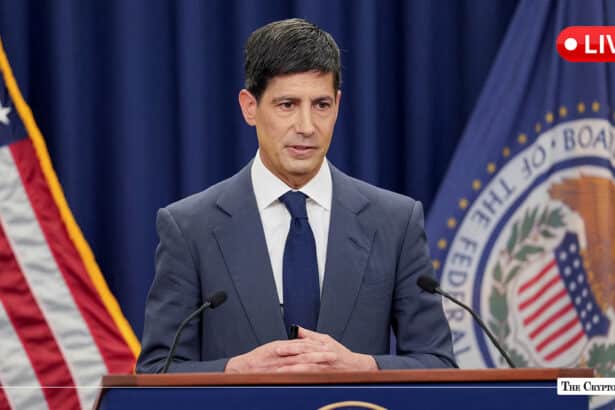
Warsh, in his first press conference, was unapologetic: inflation remains a burden after five-plus years above target, price stability is non-negotiable, and he’s “not particularly intrigued” by short-term market reactions.His most quoted line: “We’ve missed (on inflation) for five years and we’re going to fix that.”
Context matters: This meeting unfolded against the worst inflation print in three years. Consumer prices rose 4.2% in May from a year ago, the biggest annual increase since April 2023, driven mostly by costlier gas tied to the Iran war, which began February 28, 2026. The Fed isn’t ignoring it. A parallel survey of 32 former Fed officials and staff (conducted between June 5-12 by Jon Hilsenrath at Duke University ahead of this meeting) found 17 of 32 believed an interest rate hike would be appropriate in 2026, with 14 saying no increase was warranted and one supporting a cut, reinforcing that Warsh’s hawkish tilt reflects a broader institutional reading, not just one chair’s preference.
Immediate Crypto Market Reaction: The Dip That Spoke Volumes
Crypto didn’t crash, but the reaction was telling and classic “sell the news.”Bitcoin, trading around $66,000-$66,400 in the lead-up, dipped roughly 1-1.6% intraday post-decision and press conference, touching lows near $64,600 before a modest recovery toward $65,300-$65,600.
Altcoins Tumble After FOMC: Smaller Caps Bear the Brunt
While Bitcoin showed relative resilience with a modest single-digit percentage decline, altcoins tumbled more sharply in the risk-off cascade that followed Warsh’s hawkish tone. Ethereum dropped around 2.4%, XRP fell approximately 2.6%, and Solana declined about 2.1% in the immediate aftermath. This pattern is textbook: in environments where the Fed signals tighter or less predictable policy ahead, capital flees high-beta, narrative-driven altcoins first.
Leveraged positions in smaller caps unwind faster, DeFi yields compress under higher borrowing costs, and speculative pumps deflate as investors rotate toward “safer” crypto like Bitcoin or stablecoins. The broader altcoin market felt the pressure as total crypto market cap contracted alongside equities. On-chain data still showed accumulation in Bitcoin, but altcoin flows turned notably quieter, highlighting how Warsh’s debut amplified the classic crypto hierarchy during macro stress.
This fits a persistent pattern: Bitcoin has declined after the majority of recent FOMC meetings regardless of the actual decision, as “priced-in” moves give way to reality and positioning unwinds. The hawkish tilt, higher rate-hike odds, no easing language, dampened hopes for near-term cuts that many had baked into prices.
Why This Matters More Than “Just Another Hold”
Warsh’s changes aren’t cosmetic. Removing forward guidance makes policy less predictable in the short term, which historically spikes volatility, both painful and opportunistic for crypto traders. The task forces hint at a more data-driven, less narrative-driven Fed. If they lean into AI/productivity as disinflationary forces, it could eventually support easier policy. But the immediate message is clear: the inflation fight isn’t over, and rate cuts aren’t a given in 2026.For crypto specifically:
- Leveraged positions and DeFi face higher funding costs and margin pressure.
- Institutional flows into ETFs could slow if macro uncertainty rises.
- Altcoin season gets delayed, capital rotates to safety or stays sidelined.
- Yet the accumulation signals and Bitcoin’s resilience below recent highs suggest the market is maturing. Dips are being bought by long-term holders.
This isn’t 2022. Crypto now has spot ETFs, corporate treasuries, and clearer institutional infrastructure. But it remains exquisitely sensitive to the Fed’s liquidity regime.
The Road Ahead: What Crypto Traders Should Watch
Warsh’s Fed is still in its honeymoon (or trial-by-fire) phase. Next data points, inflation prints, jobs reports, and how those task forces evolve, will matter more than ever. A cooler inflation trajectory could revive cut hopes and fuel another leg up. Persistent energy-driven or broad-based inflation keeps the hawkish pressure on.
The most immediate near-term catalyst is the US-Iran formal peace signing scheduled for June 19, 2026 in Switzerland. If oil prices continue retracing toward the $75 range as the deal is implemented and the Strait of Hormuz fully reopens, that disinflationary signal is one of the few near-term data points that could push back on the hawkish dot plot trajectory. A breakdown in the Iran framework, by contrast, would reignite the energy-shock inflation narrative and likely entrench the higher-for-longer regime.
History shows crypto rarely moves in straight lines around FOMC events. The real alpha lies in positioning before the noise and understanding the why behind the moves.
Warsh’s first meeting didn’t deliver the dovish relief some hoped for. It delivered clarity: the new regime prioritizes price stability over market-pleasing signals. Crypto markets digested that message with a modest but meaningful dip, with altcoins taking the hardest hit, and now the real work begins for traders navigating a less predictable, higher-for-longer world.
The liquidity dial just got turned a notch tighter. Crypto is listening. Are you positioned for what comes next?