The Federal Open Market Committee (FOMC) on June 17, 2026, unanimously decided to maintain the federal funds rate at 3.50%–3.75%, marking the fourth consecutive hold and the first meeting presided over by new Fed Chair Kevin Warsh.
While the rate decision itself was priced in, the accompanying hawkish shift in economic projections and dot plot triggered a sharp risk-off reaction across global markets—with Bitcoin and altcoins bearing the brunt of the selling pressure.
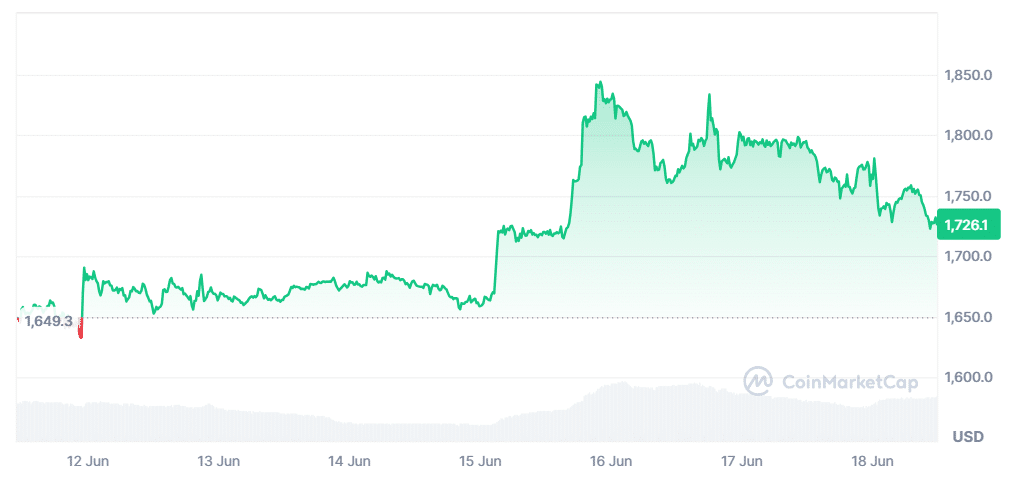
Bitcoin (BTC) dropped roughly 2–4% in the immediate aftermath, sliding from around $65,000–$66,000 pre-announcement levels toward $63,850–$64,400. Ethereum (ETH) followed suit with a 2.5–3.5% decline, trading near $1,730–$1,750. However, the broader altcoin sector—already struggling with subdued seasonal performance—experienced amplified losses, heightened volatility, and a noticeable contraction in market breadth.
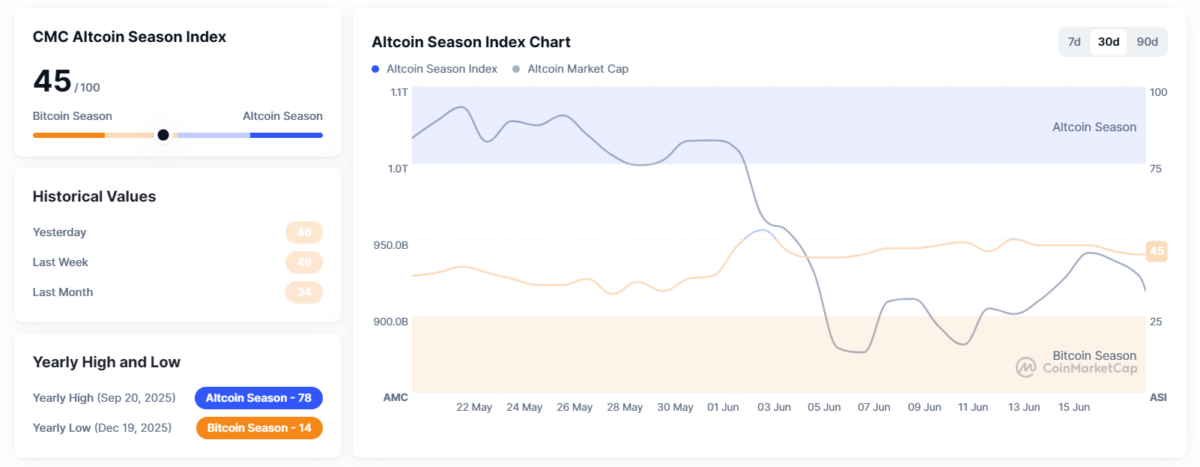
Total crypto market capitalization fell by nearly 3%, with altcoin-specific segments showing outsized weakness. The CMC Altcoin Season Index, which tracks performance of top 100 cryptocurrencies by market cap and compares it to Bitcoin dominance, fell to 45—suggesting Altcoins are navigating through a buffer zone currently.
The altcoin market, often characterized by higher beta to macroeconomic shifts, felt the aggressive tone particularly acutely. Solana (SOL) declined around 2–3.5%, hovering near $72, while XRP shed similar ground, dipping below $1.20 amid broader risk aversion. Smaller-cap tokens and DeFi-related assets fared worse, with many posting 4–7% losses in the 24 hours surrounding the announcement. This underperformance highlights the sector’s sensitivity to liquidity expectations and opportunity costs in a “higher-for-longer” rate environment.
Why Altcoins Suffered Disproportionately
Several factors explain the outsized impact on altcoins. First, the updated dot plot signaled a more persistent inflationary outlook, with inflation not projected to reach the Fed’s 2% target until 2028. Several officials even penciled in potential rate hikes for late 2026, a notable pivot from prior guidance. This reduced hopes for near-term easing, strengthening the U.S. dollar and pushing Treasury yields higher—dynamics that typically pressure high-risk, growth-oriented assets.
Altcoins, unlike Bitcoin which retains some “digital gold” narrative, derive much of their value from ecosystem activity, DeFi yields, swapping volumes, and speculative narratives. In a tighter liquidity backdrop, capital flows away from these speculative plays.
Bitcoin dominance ticked higher post-meeting as investors rotated toward perceived safer crypto havens, further squeezing altcoin liquidity. The total altcoin market capitalization faced renewed downward pressure, stalling any nascent rotation that analysts had hoped for in mid-2026.
Specific sectors within altcoins were hit hard. Layer-1 smart contract platforms like Solana and Avalanche saw selling as staking yields became less attractive relative to rising bond rates. DeFi tokens, including governance tokens on Uniswap and Aave, declined sharply as expectations for increased on-chain activity dimmed. Meme coins and high-volatility narratives—already fragile—experienced even steeper drops, exacerbating fear in retail-heavy segments.
Ethereum, the cornerstone of much altcoin activity, faced particular scrutiny. Despite mild ETF inflows, ETH rejected resistance near $1,800 and retreated.
Its underperformance relative to some prior cycles underscores broader challenges, including high gas fees in certain conditions, competition from faster chains like Solana, and sensitivity to macro headwinds.
Broader Market Context and Historical Patterns
This reaction fits a familiar post-FOMC pattern for crypto. Markets frequently “sell the news” even when decisions align with expectations, as positioned traders unwind bets.
Under Warsh’s leadership, the Fed also shortened its policy statement and dropped previous forward guidance, emphasizing a purely data-dependent stance. This increased uncertainty, prompting deleveraging across leveraged altcoin positions.
On-chain metrics provided mixed signals. While some Bitcoin holders accumulated during the dip, altcoin wallets showed net outflows in certain ecosystems. Total value locked (TVL) in DeFi protocols dipped modestly, reflecting caution.
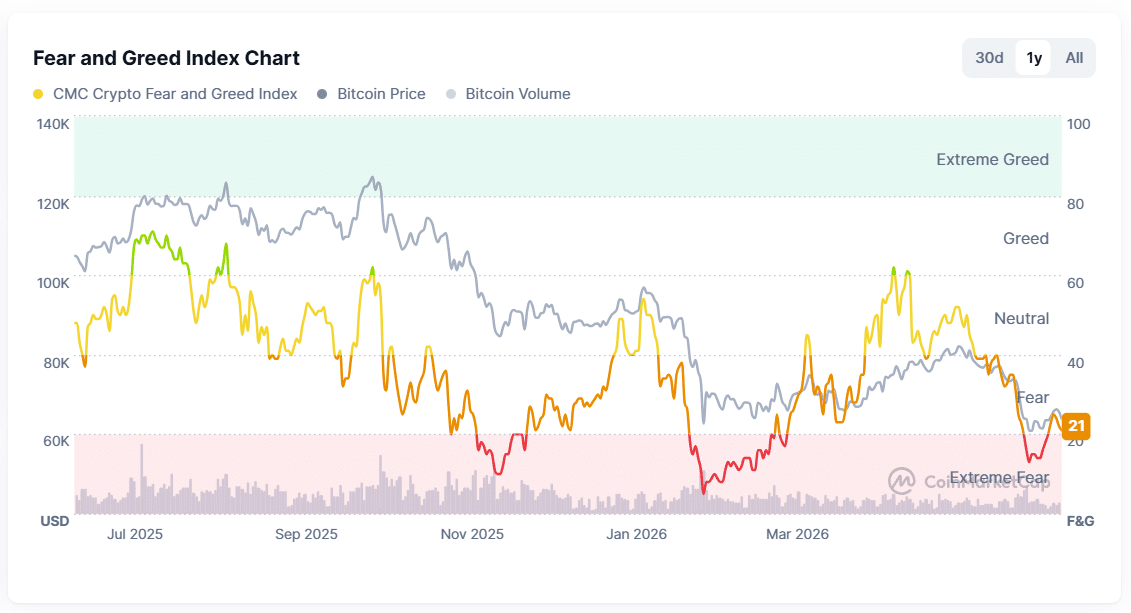
Crypto Fear and Greed Index slid deeper into “fear” territory, with altcoin sentiment particularly pessimistic.
Geopolitical positives, such as the U.S.-Iran peace deal, offered limited counterbalance as Fed signals dominated headlines. Equities saw some resilience, but crypto’s high-beta nature amplified the negative spillover.
Read: Fed Shock Hits Crypto Stocks as MSTR, COIN, MARA, BMNR Crash
Outlook: Challenges and Potential Catalysts for Altcoins
Looking ahead, altcoins face a challenging near-term environment. Persistent hawkishness could test key supports: SOL toward $65–$68, ETH near $1,650, and XRP below $1.10 in bearish scenarios. A continued rise in Bitcoin dominance would further delay any altseason.
However, longer-term dynamics offer hope. Institutional interest in Ethereum and Solana remains structural. Regulatory clarity, potential ETF expansions, and eventual monetary easing (even if delayed) could catalyze a strong rebound.
For now, the June 2026 FOMC serves as a reminder of crypto’s macro tether. Altcoin investors must navigate heightened volatility, focusing on projects with strong fundamentals, real utility, and robust treasuries. The next FOMC meeting in late July will be closely watched for any softening in tone.
As markets digest Warsh’s debut, the path forward for altcoins hinges less on individual narratives and more on the trajectory of global liquidity. In this environment, patience and selective positioning may prove essential.
Also read: CME to Sue CFTC Over Kalshi’s Bitcoin Perpetual Futures