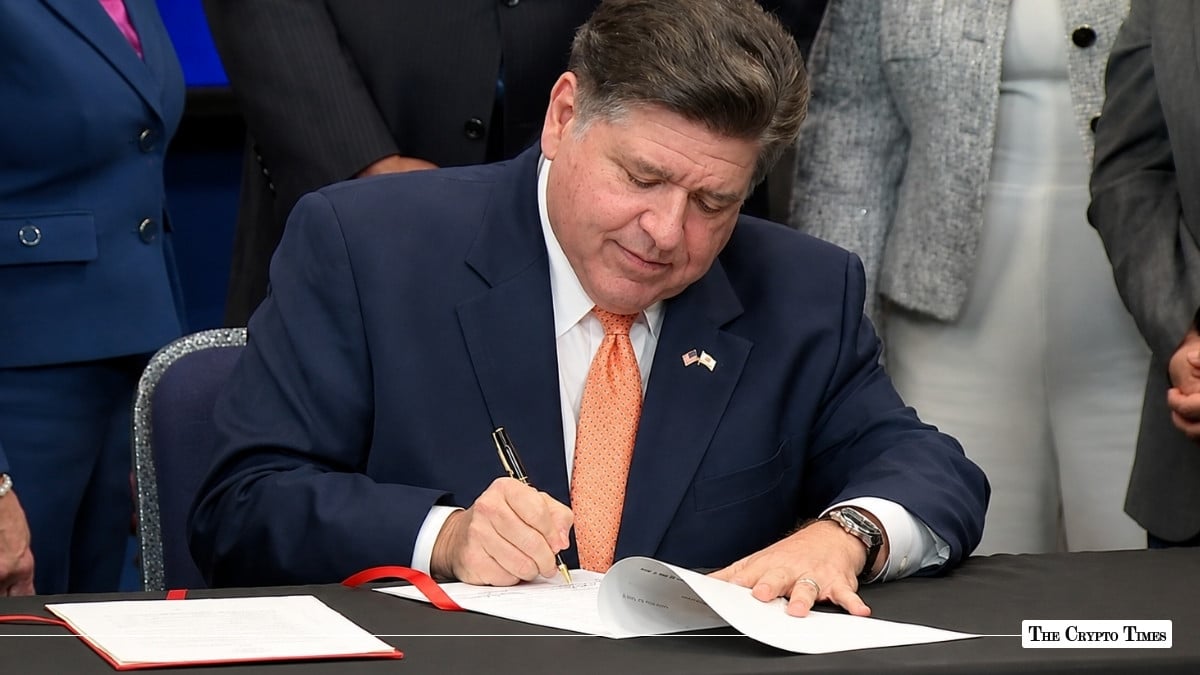
Illinois Governor J.B. Pritzker has signed a $55.9 billion state budget that includes a first-in-the-nation 0.2% tax on digital asset transactions, enacting the measure on Tuesday despite a last-minute appeal from the crypto industry to veto it.
The Digital Asset Privilege Tax Act, tucked into Article 3 of Senate Bill 3019, makes Illinois the first US state to impose a transaction-based tax on digital asset activity. Pritzker did not grant the line-item veto that industry groups had sought, leaving the levy intact as part of the fiscal 2027 revenue package.
Industry Had Urged a Veto
Hours before the signing, the Crypto Council for Innovation (CCI) sent Pritzker a letter urging him to issue a line-item veto of Article 3, warning the tax “could have severe consequences for Illinois’ digital asset industry and consumers.”
Signed by CCI Chief Executive Officer Ji Hun Kim, the letter argued the measure would make Illinois the only state to punitively tax customers simply for receiving covered digital asset business activity, and warned it would seriously impair digital asset use and investment in the state.
CCI’s central objection was one of parity. Unlike traditional taxes tied to income, gains, or profits, the group said, the levy targets digital assets based solely on the technology used to process them.
“Like assets should be taxed alike,” the letter stated, comparing the approach to taxing a letter differently depending on whether it arrives by email or by post. The group also flagged the law’s lack of exemptions for routine activity, including transfers between a user’s own accounts.
What the Tax Does
The levy applies a 0.2% charge on the value of digital asset business activity received by Illinois customers, collected and remitted by registered brokers rather than individual users. It captures exchanges, wallet providers, custodians, and firms facilitating transfers and reaches out-of-state brokers that clear at least $100,000 in annual receipts from Illinois customers, as when the budget passed. The tax takes effect on January 1, 2027, and state officials project it will raise roughly $60 million a year.
The law also carries enforcement teeth: brokers that fail to register or comply could face a Class 3 felony, punishable by two to five years in prison and fines up to $25,000. Illinois is home to several major crypto firms — including Zero Hash, Jump Crypto, Bitnomial, and Apex Crypto — that fall within the law’s reach.
A Broader Industry Backlash
CCI was not alone. The Digital Chamber and the Illinois Blockchain Association sent their own letter opposing the Digital Asset Privilege Tax Act on June 3, and a16z Crypto’s head of policy, Miles Jennings, called the statute “one of the most anti-crypto laws in the US,” noting there is no comparable state financial transaction tax on stocks, bonds, or derivatives.
CCI also criticized the process, arguing a first-of-its-kind tax on an entire industry was advanced without meaningful stakeholder engagement or public input.
The group also expressed concern that the legislation contains few meaningful exemptions, meaning routine transactions — including transfers between personal wallets or accounts — could potentially be taxed.
“We fear this proposal would seriously impair digital asset use and investment, as well as the state’s ability to attract new entrepreneurs and maintain its burgeoning startup community,” the letter stated.
According to CCI, no other U.S. state currently imposes a comparable transaction-based tax on digital asset activity, raising concerns that Illinois could place itself at a competitive disadvantage in attracting blockchain companies and investment.
Federal digital asset tax efforts gain momentum
The letter also highlighted ongoing efforts in Washington to establish a national framework for digital asset taxation.
CCI pointed to recent congressional discussions surrounding digital asset tax modernization and argued that Illinois should avoid creating its own unique tax structure before federal standards are finalized.
The organization further noted that the proposal arrives as digital asset companies are already preparing for marketplace changes associated with the implementation of the Digital Assets and Consumer Protection Act (DACPA), and that Congress is separately racing to build a national tax framework — pointing to the bipartisan PARITY Act and a June Ways and Means push on digital asset taxation.
The group urged Illinois to defer its own measure until a national consensus emerged, to avoid “inadvertently kick-starting a fifty state patchwork on digital asset tax policy.”
With the tax now law, attention turns to whether it survives. Legal and tax advisers expect the measure to draw challenges, and other states weighing crypto-specific revenue could look to Illinois as a model. For the crypto industry, the signing is a pointed defeat in its push for tax parity with traditional financial markets — and a sign that state capitols may not wait for Washington to act.
Also read: Bipartisan Senators Press Treasury to Clarify State Stablecoin Oversight