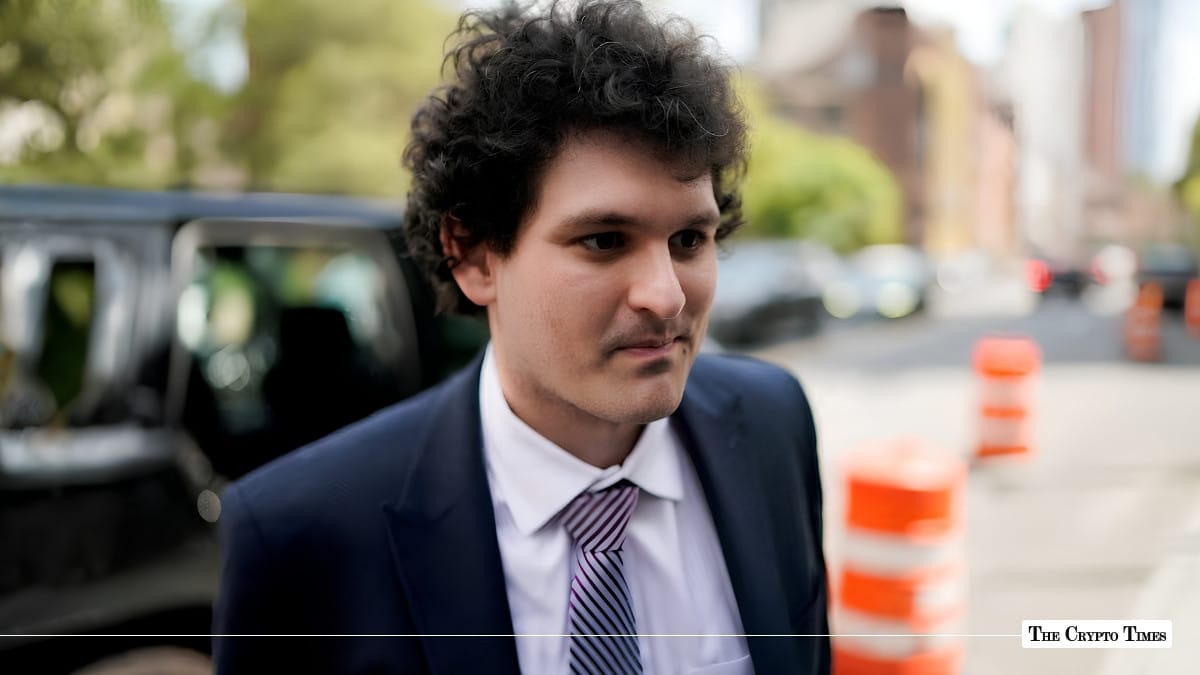
In a low-security federal facility northwest of Santa Barbara, Sam Bankman-Fried (also known as SBF) is mapping out what comes after a 25-year sentence for one of the largest financial frauds in history.
According to a detailed profile in New York Magazine, the former FTX founder told a fellow inmate that making real money after release would require substantial starting capital—$50 million to $100 million—and that he would “start my own coin” once free, predicting that “everyone’s gonna jump on it.”
The comment, relayed by David Bunevacz during conversations at FCI Terminal Island before SBF’s transfer to FCI Lompoc, came with a caveat from the other man: “He may have been joking, and they probably won’t flock to it. But who knows.”
Bunevacz is an entrepreneur from Calabasas, California, who met Bankman-Fried at TI while serving a 17-and-a-half-year sentence for defrauding investors in a cannabis start-up.
At 34, Bankman-Fried remains focused on reversing his conviction or securing a presidential pardon while documenting his experiences in a serialized memoir titled Manfred.
Daily Life and Strategic Positioning at Lompoc
Bankman-Fried’s current routine at FCI Lompoc reflects both continuity from his pre-prison habits and adaptations to confinement. He takes daily medication for clinical depression and ADHD, follows a strict vegan diet assembled from commissary items like dehydrated beans and rice, and spends hours on a locked-down tablet playing Shattered Pixel Dungeon—sometimes thousands of rounds as the Mage character with multiple simultaneous challenges. Phone calls with journalists are limited to 15 minutes and often interrupted.
He continues writing Manfred, an allegorical and at times humorous account sent via the prison email system CorrLinks to a limited circle of contacts. Chapters explore themes of mental trivialization in prison and draw on concepts from the TV series Severance to describe how incarceration risks turning one’s mind inward toward petty concerns. He has described fearing the loss of his broader “usefulness” to the world.
The convinced FTX co-founder’s legal and public efforts have intensified. He formally submitted a pardon application to the Trump administration on June 8. Polymarket odds on a pardon before 2027 roughly doubled to around 14% after the news.
His mother, Barbara Fried, has published essays questioning aspects of the case, and his parents have engaged Republican lobbyists. Bankman-Fried has also used proxies to post pro-Trump messages on X, framing his prosecution as part of a broader crackdown on crypto under the previous administration. An unsanctioned prison interview with Tucker Carlson earlier led to a stint in solitary confinement.
He maintains his innocence, arguing that FTX’s issues stemmed largely from an accounting issue and that customer funds could have been repaid with more time. The bankruptcy estate has so far distributed more than $10 billion to victims, with additional assets recovered.
The “Start My Own Coin” Remark in Context
Bunevacz’s account of the conversation highlights Bankman-Fried’s characteristic blend of grand ambition and detachment. The former FTX CEO reportedly emphasized that serious wealth requires meaningful seed capital to build a legitimate business before scaling aggressively. Launching a new token, in this framing, would leverage his name recognition and presumed network in crypto.
Bankman-Fried’s track record includes both visionary early bets and catastrophic misuse of customer deposits, which a jury found constituted fraud on a massive scale. His pivot toward Republican messaging and public rehabilitation efforts has drawn accusations of opportunism from critics who see it as inconsistent with his prior effective-altruism persona.
Still, the remark resonates in crypto circles where founder narratives and community momentum can drive rapid adoption—or rapid collapse. A new project tied to Bankman-Fried would face intense regulatory scrutiny, potential lawsuits from victims or regulators, and questions about whether past conduct would taint any venture. Bunevacz’s “who knows” leaves room for the unpredictable nature of both markets and public memory.
A Portfolio of Missed Billions
Bankman-Fried’s investment decisions through FTX and Alameda Research produced some of the most discussed “what if” scenarios in tech and finance.
A recent X post by investor Alex Finn that gained significant traction highlighted several early positions and their hypothetical current values if the assets had remained in the portfolio rather than being liquidated during bankruptcy proceedings.
Fin shared that Sam Bankman’s roughly a $500 million investment in 2021 for what became an approximately 8% stake (after dilution) in Anthropic. At recent private-market valuations approaching or exceeding $1 trillion for the AI company, that position could be worth around $80 billion in some estimates. The FTX estate sold the stake in tranches for merely $1.3 billion.
Similarly, a $648 million investment for a roughly 7.6% stake in investment platform Robinhoob in 2022, would be valued now near $5 billion. Among other notable bets, Sam had exposure through K5 Global included SpaceX-related holdings estimated in the hundreds of millions that could now represent billions in value.
A smaller early check of $200,000 into AI coding tool Cursor (founded 2022) drew fresh attention after SpaceX announced a $60 billion acquisition of the company in mid-June 2026. Genesis Digital Assets and other positions round out the list of high-upside calls.
Finn and others have calculated that retaining these marquee holdings could have made Bankman-Fried’s portfolio worth on the order of $100 billion, placing him among the world’s wealthiest individuals. The numbers underscore the scale of early conviction in AI and fintech winners before the broader market recognized their potential.
However, these were not personal investments in the conventional sense. They were funded in significant part by customer deposits at FTX that a court determined were misused. The bankruptcy process prioritized repaying victims, and the estate has recovered substantial sums—enough, according to reports, to cover most customer claims with interest in many cases.
Defenders of Bankman-Fried’s acumen point to the prescience of the bets; critics emphasize that the capital originated from others and that numerous other investments performed poorly or contributed to the overall collapse.
The contrast is stark. While Bankman-Fried sits in prison contemplating a potential new token, the companies he backed early have generated enormous value for whoever held the equity through the bankruptcy sales and subsequent growth. Especially the recent Cursor and SpaceX deal, which values the AI coding platform at a level that would have turned a modest seed check into life-changing returns for its early backers.
Broader Implications and Lingering Questions
Bankman-Fried’s comments from prison about launching a new coin arrive at a moment when crypto regulation, AI integration, and political dynamics around clemency are all in flux.
The U.S. Appeals Court recently rejected his main appeal, further narrowing his legal options. While a pardon remains a long shot, the filing itself and associated lobbying keep the possibility alive. Any post-release venture would operate under intense scrutiny.
For now, the 34-year-old continues his routine at Lompoc—meds, meals, gaming, writing, and legal maneuvering—while the markets he once dominated price in the value created by companies he helped fund years ago.
Whether the “start my own coin” remark represents genuine intent, idle speculation, or something in between may only become clear if and when he regains his freedom. In the meantime, it adds another layer to a narrative defined by extraordinary ambition, profound failure, and unresolved questions about accountability and second chances.
Also read: Bitcoin Could Slide From $65K Back to $60K: Wintermute