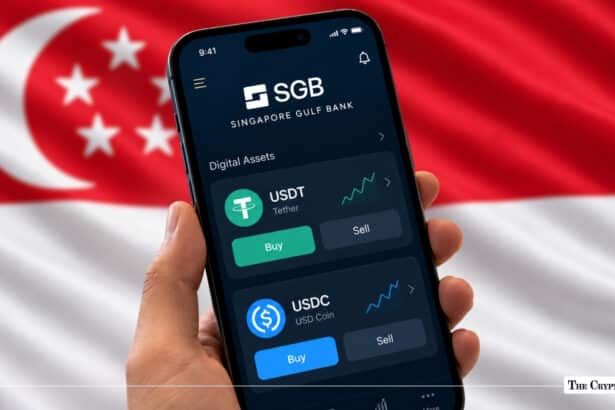
The Monetary Authority of Singapore (MAS), the city-state’s central bank and financial regulator, on September 1, 2026 proposed a set of amendments to the Payment Services Act 2019 that would move its stablecoin framework from finalized policy into enforceable law.
The consultation, numbered P015-2026 and accompanied by draft legislative text, is open for feedback until 11.59 PM SGT on October 16, 2026, and would establish a dedicated stablecoin issuance license and reserve the label “MAS-regulated stablecoin” for tokens whose issuers meet the full regime.
This is a proposal, not a law: MAS is seeking industry comment, has not set an implementation date, and stressed that the designation does not amount to a government guarantee, deposit insurance or a removal of redemption risk.
What MAS is proposing
The framework targets Single-Currency Stablecoins (SCS) issued in Singapore and pegged to the Singapore dollar or a G10 currency, and would introduce stablecoin issuance as a regulated activity. Under the core requirements, largely carried over from the policy MAS finalized in 2023, a licensed issuer would need to:
- Hold reserve assets covering at least 100% of outstanding tokens at all times, in liquid, low-risk instruments, segregated from the issuer’s own assets, held with approved custodians and subject to independent monthly attestation.
- Support redemption at par, with the earlier framework setting a five-business-day window.
- Meet capital and solvency standards (previously set at the higher of S$1 million or 50% of annual operating expenses) and disclosure obligations.
MAS states that only issuers meeting the full framework could market their tokens as “MAS-regulated stablecoins.” Tokens outside the regime would continue to be treated as Digital Payment Tokens (DPTs) under Singapore’s existing crypto rules. Non-bank issuers above a S$5 million threshold would need a Major Payment Institution license; banks are exempt from licensing but must follow the substantive rules.
The interest ban and a global pattern
A new safeguard is a proposed prohibition on issuers paying interest, yield, or benefits calculated by reference to a customer’s stablecoin holdings. MAS framed the move around financial stability, saying trusted, well-regulated stablecoins can serve as a “credible settlement asset” in tokenized markets while limiting risks to users and the system.
That puts Singapore in step with a clear international convergence. The US GENIUS Act bars stablecoin issuers from paying yield, the EU’s MiCA prohibits both issuers and service providers from granting interest, and Hong Kong’s regime bans interest on holdings. The rationale across jurisdictions is similar: to stop stablecoins from functioning as unregulated, interest-bearing deposit substitutes that could pull funds away from banks; the same “deposit flight” concern at the heart of the ongoing fight over the yield provisions in the US CLARITY Act.
MAS Deputy Managing Director Ho Hern Shin said well-regulated stablecoins “can serve as a credible settlement asset in tokenised financial markets, while mitigating risks to users and the broader financial system.”
New safeguards: Stress tests, wind-downs, and foreign issuers
Beyond the interest ban, MAS proposed additional requirements aimed at wider adoption risks: mandatory stress testing, recovery, and orderly wind-down plans for issuers that run into financial or operational trouble, and safeguards for money received from customers before stablecoins are issued. The consultation also opens a cross-border dimension, floating limited recognition for a small number of foreign stablecoins supervised under regimes MAS deems comparable, and a route for qualifying jointly issued foreign-and-Singapore tokens to carry the MAS-regulated designation, focused on wholesale cross-border use.
The MAS’ proposals also include quarterly stress tests, capabilities to trace, freeze or burn tokens linked to illicit activity, and potential circulation restrictions, including delisting by licensed DPT providers, for systemically important stablecoins that fail to meet requirements.
What’s next
Industry participants have until 11.59 PM SGT on October 16, 2026 to submit feedback on consultation P015-2026. After that, MAS would move to finalize the legislative amendments; a process with no announced completion date. The Crypto Times will report the outcome of the consultation and any legislative timeline, and makes no market or price forecast.
Also read: Japan FSA Seeks Tax Filing Exemption for Trust Based Stablecoins