Key Highlights
- Hunter Biden’s post-mortem attributes $LAPTOP’s launch-day volatility to thin initial liquidity and market-maker activity, rather than founder token sales.
- Per the Groom Lake report, the opening liquidity pool held about 29,885 $LAPTOP tokens and 35,662.83 USDC.
- The report identifies transactions and liquidity movements associated with two unnamed market makers.
- Biden has called for the market maker to buy back and burn tokens.
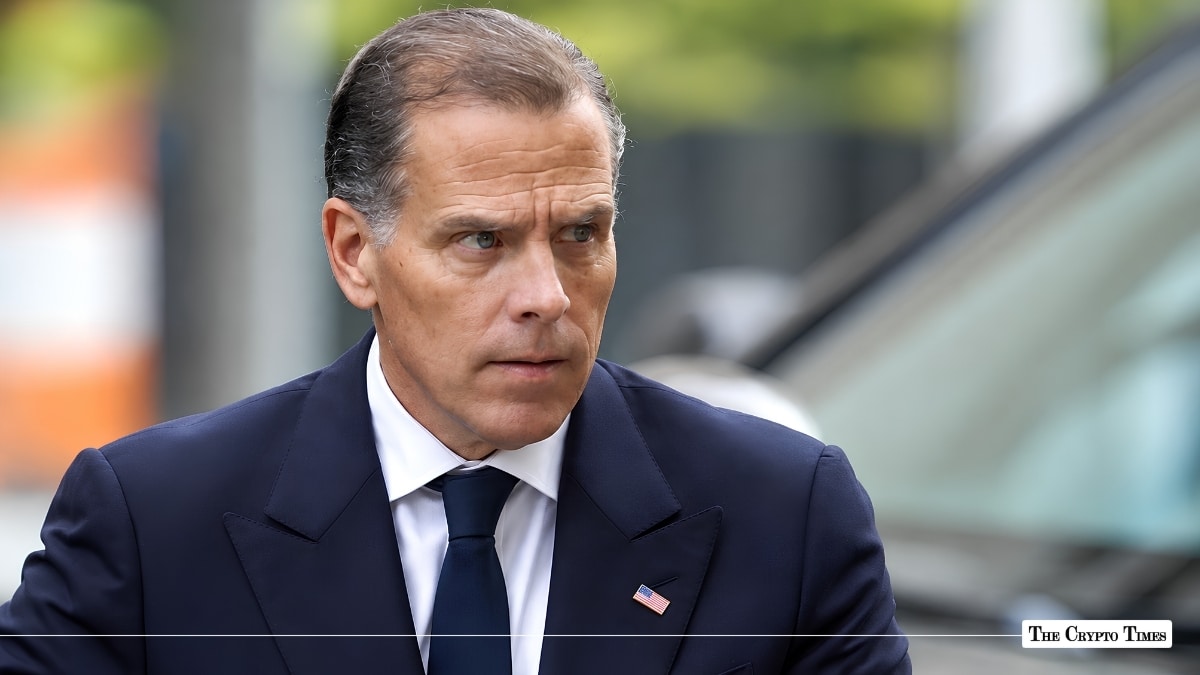
On September 9, Hunter Biden’s $LAPTOP token went from a few cents to hundreds of dollars within minutes before collapsing almost as quickly. Nearly a month later, Biden has published the accounting he promised, arguing that the collapse was not caused by founder selling but by a combination of thin liquidity, intense early trading, and failures involving the market makers hired to support the launch.
His explanation is supported by a forensic report from Groom Lake, but the report does not establish that any market maker intentionally manipulated the token’s price. The identities of the firms are also not disclosed.
The launch that lasted minutes: Hunter Biden’s explanation
Nearly a month after the $LAPTOP token’s chaotic debut, Hunter Biden has offered his most detailed public explanation of what he says went wrong. In an October 7 thread on X, Biden shared findings from a review commissioned from Groom Lake, a Delaware-based intelligence consultancy, arguing that the token’s extraordinary early price move and rapid collapse were driven by thin launch liquidity and the conduct of unnamed market makers, not by a sale from the project’s founders.
$LAPTOP briefly surged from around $0.05 to roughly $317 in less than two minutes after it began trading on Base. Within the first hour, the token fell more than 98%.
Biden said the chart resembled the kind of collapse typically associated with celebrity-token controversies, but maintained that founder-linked wallets did not sell their allocations.
His post-mortem shifts the focus from the token’s headline-grabbing price swing to a more specific question: whether the liquidity providers engaged for the launch deployed sufficient capital, managed the pool responsibly, and disclosed their trading role clearly enough for participants to understand the risks. The account is based on a review commissioned by the project; its conclusions, including wallet attribution, the calculation of market-maker gains, and the reasons for liquidity withdrawals, remain claims that require independent verification.
The forensic review
The review was prepared by Groom Lake Technology Corp., a Delaware-registered intelligence, security, and incident-response firm. Commissioned by the $LAPTOP project, it reconstructs the token’s launch using blockchain records covering the first 36 hours of trading, from September 9 through September 10, 2026. The investigation examined wallet activity, liquidity-pool positions, and trading records to explain why the token’s price rose rapidly and then fell.
The report identifies two unnamed market makers as central to the launch dynamics, alleging that Market Maker 1 received $500,000 before trading began but deployed only about $5,200 and fewer than 30,000 tokens into the initial pool, approximately 0.003% of the total supply.
Further, it claims that Market Maker 1 withdrew its funds 84 seconds after the price peaked, causing the cash available to sellers near the prevailing price to drop from roughly $16,157 to zero.
The report therefore provides an on-chain reconstruction of what happened during the launch, while leaving questions about identity, intent, and responsibility separate from the transaction record itself.
The liquidity imbalance
The launch pool was not simply small in dollar terms; its liquidity was distributed in a way that made the opening price far more sensitive to buying than to selling.
Per Groom Lake, the main Aerodrome pool contained 35,662.83 USDC and about 29,885 LAPTOP tokens immediately before the first trade. A purchase of just 6.02 USDC would have moved the initial quoted price upward by 5%, while sellers could receive 7,376.43 USDC before moving the price down by the same 5%, it added.
The report attributes this difference to the concentrated-liquidity structure, where token and cash reserves are available only within particular price ranges. As a result, the total amount held in the pool did not represent the amount of liquidity available. Groom Lake also notes that the opening pool contained only 0.002989% of the original one-billion-token supply, while recording 22,475 swaps in its first hour.
The report gives high confidence to these measurements. It noted the combination of limited token inventory and intense trading helps explain the gap between the displayed price and what holders could actually have received by selling substantial amounts.
The market makers’ reported gains
The Groom Lake report distinguishes the outcomes of the two market-maker-linked activities rather than treating them as a single pool of profits.
It assesses the Safe identified as likely controlled by Market Maker 1 with moderate confidence and found that its main-pool liquidity positions ended with 685,872.85 USDC and 59,235.947 LAPTOP before gas. Groom Lake cautions that this figure includes collected fees and remaining position principal, and that the full amount should not be characterized as unrestricted income because the underlying loan agreement reserved certain DEX swap fees for the lender.
Separately, the report’s expanded accounting for Market Maker 2-linked transactions found 2,184,461.39 more USDC received than paid across the covered LAPTOP-containing transactions, or approximately 2,184,227.55 USDC after recorded group-paid gas. Groom Lake says the first identified standalone Market Maker 2-linked USDC sale occurred after the initial decline and the liquidity withdrawal, and assigns moderate confidence to its assessment that later selling contributed to downward pressure during parts of the decline.
The founder wallet question
One of the clearest findings in the Groom Lake report concerns the project’s designated founder-allocation wallet, 0xd81bf90a51b7ffe69722c62168416fa2654fa818. The report identifies the wallet as holding the founders’ 300 million LAPTOP tokens, equivalent to 30% of the original one-billion-token supply, and says the balance remained unchanged throughout the period examined. Biden says these tokens are subject to a six-month lockup followed by two years of vesting.
On-chain data from block explorers can confirm that the identified wallet has not moved its balance during the reviewed period, but blockchain records alone cannot establish who ultimately controls a wallet, whether all founder-related holdings were included in the analysis, or whether off-chain arrangements existed. The wallet inactivity supports the narrower claim that the identified founder-linked tokens did not move, but it does not by itself resolve questions about beneficial ownership, related-party wallets, or undisclosed agreements.
What the blockchain can prove, and what it can’t
The $LAPTOP launch generated a detailed on-chain record that documents transfers, swaps, and liquidity movements, but the blockchain cannot by itself resolve every question raised by the collapse.
Public transaction data can show the balance of identified wallets, whether tokens moved from those addresses after launch, the timing of liquidity deposits and withdrawals, and the sequence of trades that produced the displayed price.
However, the report cautions that a blockchain address does not itself establish the corporate identity of its controller or that person’s intent.
What the chain cannot establish on its own is the real-world identity behind a wallet, the ultimate beneficial owner of funds, whether off-chain agreements or side payments existed, whether a liquidity withdrawal breached a contract, or whether conduct amounted to manipulation, fraud or another violation.
Further, the report offers a mechanical explanation for the launch collapse, but it does not fully resolve the question of responsibility. Hunter Biden has accepted responsibility for the project while separately arguing that the market-making arrangements contributed to the launch failure.
The core unresolved issue is not merely whether liquidity was too thin, but whether the parties responsible for supplying it acted within their mandate and whether the project disclosed enough about those arrangements for participants to understand the risks.
What happens next?
The immediate next steps remain tied to actions rather than the token’s price. Biden has called for the market maker to buy back and burn tokens, but a public demand is not equivalent to a completed remedy or a legally enforceable finding.
He has also reaffirmed plans to burn most unclaimed tokens from the initial 10% airdrop allocation after the 30-day claim window closes around October 9.
The wider questions that remain unresolved include whether the full Groom Lake report and underlying transaction data will be published, whether the market makers will respond or dispute the account, whether any contractual breaches can be established, and whether any affected traders will receive compensation.
For now, the report provides a detailed reconstruction of the trading and liquidity events, while questions about the identities, intentions, and potential responsibility of the parties involved remain open.
Also Read: Cardano (ADA) Price Prediction 2026, 2027-2030: Can It Hit a New All-Time High?