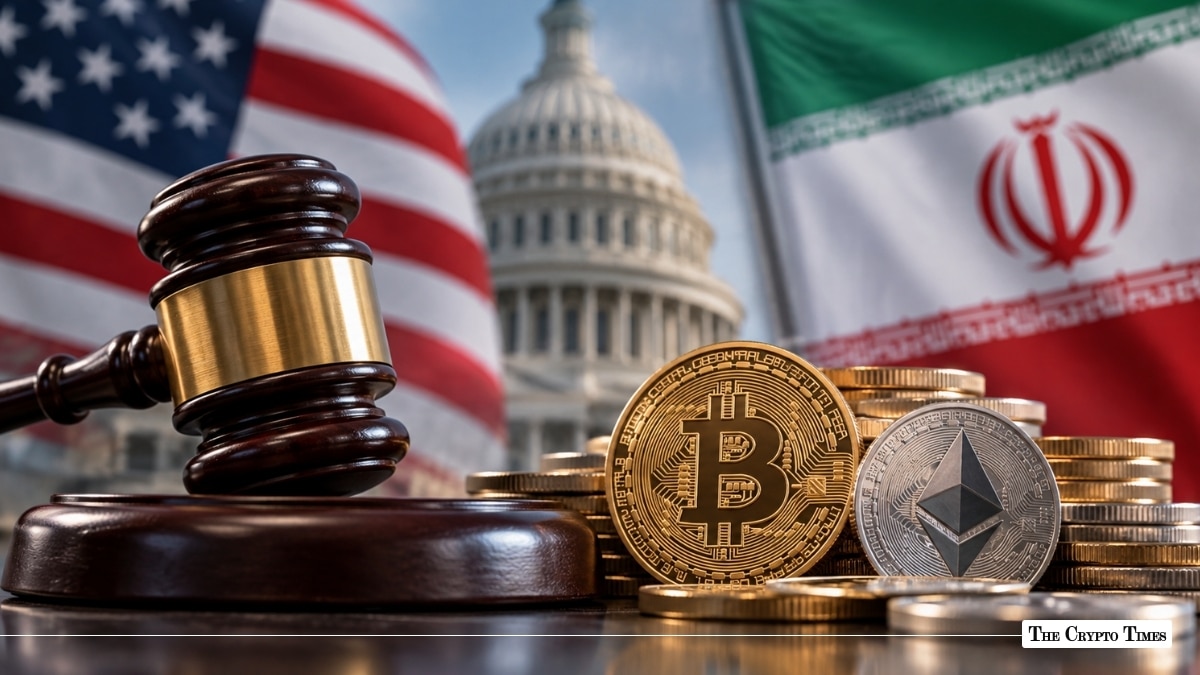
U.S. Treasury Secretary Scott Bessent said the administration expects to seize about $1 billion in cryptocurrency assets linked to Iran this week as part of an expanded effort to restrict the regime’s access to international markets and financial channels.
Speaking in an interview with Greta Van Susteren at Newsmax’s NPolicy Summit in Washington on Thursday, Bessent described the steps as elements of an “absolute isolation campaign.” The approach includes naval measures, limits on air travel, and attempts to close land routes, alongside actions against assets held outside conventional banking systems.
“We’re probably gonna seize a billion dollars of crypto this week,” he said, adding that authorities “know where it is and we are isolating them,” according to the Newsmax report of the interview.
The remarks come amid ongoing tensions and mediation efforts involving Qatar and Pakistan. Bessent framed the measures as intended to limit revenue streams the administration associates with the Iranian government and related entities.
Isolation Measures and Digital Asset Focus
Bessent indicated that the campaign seeks to quarantine access to transportation networks and financial resources. He noted coordination with the United Arab Emirates and Oman, along with discussions involving Pakistan and Turkey on land routes. The comments positioned cryptocurrency seizures as one component of broader pressure that also targets oil-related shipping and official travel.
Earlier Treasury actions under related initiatives have included designations of digital asset platforms. On September 17, the Office of Foreign Assets Control designated BitBank, described as a digital assets venture linked to previously designated Iranian financier Babak Zanjani, along with associated individuals and a developer company. The Treasury release stated that the designations address infrastructure used to move funds connected to the regime.
A separate October 8 Treasury announcement targeted vessels and companies in what it called the remnants of Iran’s shadow fleet used for petroleum shipments. That action cited Executive Order 13902 and formed part of the same operational framework.
Earlier Freezes and Forfeiture Cases
Prior public figures from Bessent placed cumulative seizures of Iranian-linked cryptocurrency at roughly $1 billion as of late May, following an April estimate near $500 million. Those statements referenced wallets that authorities said had been accessed, with some holders potentially unaware of the status of the assets.
Stablecoin issuer Tether has reported supporting freezes totaling approximately $550 million in USDT during 2026 across wallets U.S. authorities identified as connected to Iran’s central bank and related networks. In an April action, more than $344 million was frozen on two addresses; a July expansion covered additional amounts exceeding $130 million. Tether’s September 28 statement noted cooperation on more than 1,600 U.S. law enforcement investigations globally.
On September 14, the U.S. Attorney’s Office for the Southern District of New York filed a civil forfeiture complaint seeking about $61 million in cryptocurrency alleged to represent proceeds of black-market sales of sanctioned Iranian oil.
The Justice Department release described a wider set of addresses that prosecutors said handled more than $1.5 billion in such proceeds, with funds directed toward government and military-linked entities including the Islamic Revolutionary Guard Corps. Deputy U.S. Attorney Sean S. Buckley stated that the action aimed to deprive those entities of funds otherwise available for military and related activities. Related coverage of that filing appears in prior reporting on the oil-sales forfeiture case.
Iranian exporters have continued to use digital assets for trade settlement in some cases, according to accounts of central bank practices that reduced scrutiny of repatriation methods. Coverage of those shifts has noted reliance on Tether alongside other tokens through domestic platforms, even as issuer-level freezes have affected specific wallets, a pattern also examined in reporting on exporter settlement practices. Separate Treasury steps have targeted networks used to move funds, including actions against a Russia-linked structure described in coverage of the A7 network designations.
The latest comments from Bessent do not identify particular tokens, addresses, or the precise legal mechanisms for the anticipated seizures this week. Official releases have not yet detailed execution of the figures referenced in the October interview. Enforcement to date has combined OFAC designations, issuer freezes on stablecoins, and civil forfeiture filings in federal court.
Also read: Thailand SEC Approves Bitcoin and Ethereum ETFs Under New Rules Starting October 16