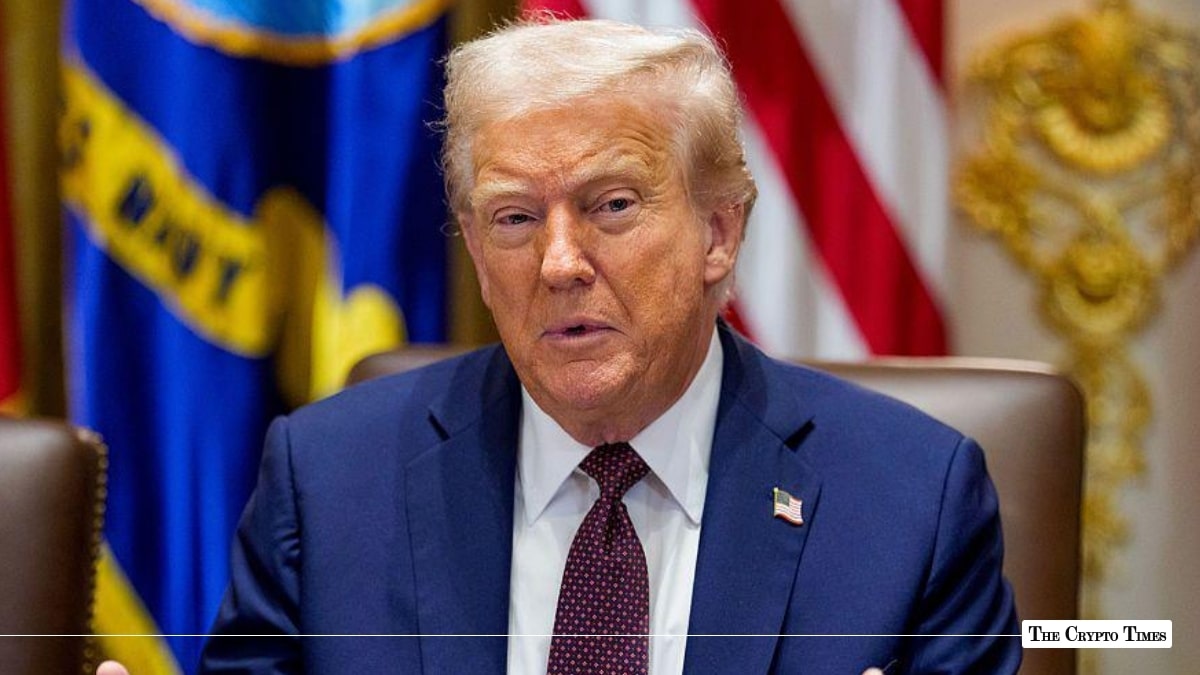
On October 8, the White House announced more than $6 billion in science initiatives spanning artificial intelligence, space nuclear power, biology and quantum computing at its “Science: A New Golden Age” summit. The administration described the package as a major push to strengthen U.S. scientific leadership.
One part of the announcement is relevant to cryptocurrency security. The White House highlighted the Department of Energy’s Quantum Genesis Q Competition, which was announced separately on September 17 and has up to $215 million in planned funding to support teams demonstrating fault-tolerant, scientifically relevant quantum computers. The October 8 White House fact sheet includes the competition among the administration’s broader science initiatives, while the Department of Energy’s announcement outlines its goals and funding structure.
The competition is aimed at advancing quantum computing for scientific applications, not at attacking cryptocurrency networks. However, sufficiently powerful quantum computers could eventually threaten some of the public-key cryptography used to authenticate transactions and protect digital assets. That possibility, commonly called “Q-Day” in crypto discussions, is why developers and security researchers are exploring post-quantum cryptography before such machines become available.
Quantum Computing and Crypto’s Post-Quantum Challenge
Bitcoin, Ethereum, and nearly every other blockchain use digital signatures to establish that a transaction has been authorized by the holder of the relevant private key. Bitcoin has used the Elliptic Curve Digital Signature Algorithm (ECDSA) and, through Taproot, Schnorr signatures. Ethereum externally owned accounts also use ECDSA.
A sufficiently powerful, fault-tolerant quantum computer running Shor’s algorithm could, in principle, solve the mathematical problems underpinning these signature schemes. That could allow an attacker to derive a private key from a corresponding public key and forge a valid signature. The National Institute of Standards and Technology explains that large-scale quantum computers could undermine some public-key cryptographic systems and that migration to quantum-resistant alternatives requires advance planning. Its post-quantum cryptography guidance outlines the underlying risk and available defenses.
Exposure would vary by address type and protocol design. In Bitcoin, public keys that have already been exposed on-chain could be more directly vulnerable to a future quantum attack than outputs whose public keys remain concealed behind a hash, although spending those outputs can reveal the key. Older pay-to-public-key outputs and address reuse are among the cases often discussed in assessments of Bitcoin’s quantum exposure. A draft proposal, BIP 361, discusses possible post-quantum migration and the risks associated with legacy signatures; it remains a proposal, not an adopted Bitcoin rule.
This is a prospective security risk, not evidence that existing wallets can currently be cracked by quantum computers. No publicly demonstrated machine is known to have the capability required to break Bitcoin’s or Ethereum’s deployed signatures at scale.
The Department of Energy competition seeks quantum computers capable of scientifically relevant fault-tolerant operations. That milestone is not the same as demonstrating a machine capable of recovering private keys from blockchain public keys. The program’s stated goals do not establish when, or whether, a cryptographically relevant quantum computer will become available.
The Quantum Funding Is Part of a Wider Policy Push
The October 8 package is not the administration’s first move on quantum technology or cryptographic security. On June 22, President Donald Trump signed two relevant executive orders. The first, “Ushering in the Next Frontier of Quantum Innovation,” directs federal agencies to accelerate quantum research and commercialization, including the development of a quantum computer for scientific applications.
The second, “Securing the Nation Against Advanced Cryptographic Attacks,” sets migration deadlines for covered federal information systems to adopt post-quantum cryptography. It directs agencies to transition specified high-value assets and high-impact systems to quantum-resistant methods for key establishment by December 31, 2030, and for digital signatures by December 31, 2031.
Those dates are federal-government migration deadlines, not a deadline imposed on Bitcoin, Ethereum, or all crypto networks. The order also calls for relevant agencies to assist critical-infrastructure owners and operators in developing migration plans.
The policy reflects a broader cybersecurity concern: sensitive information can be collected today and decrypted later if sufficiently powerful quantum hardware becomes available. NIST describes this as “harvest now, decrypt later” and recommends preparing for post-quantum cryptography ahead of time.
That concern applies most directly to encrypted information that could remain valuable for years. It is related to, but distinct from, the threat quantum computers could pose to blockchain digital signatures.
The crypto industry has been discussing the issue independently of the new funding. Earlier this year, Google issued a warning about the quantum threat to Bitcoin and a Coinbase analyst has argued that quantum computing poses deeper risks to Bitcoin than many assume. These are industry assessments of a future risk, rather than proof that Q-Day is imminent.
For background, The Crypto Times’ Q-Day explainer explains the concept and the challenge of preparing blockchain networks for a possible cryptographic transition.
How Crypto Is Preparing for a Post-Quantum Future
Crypto developers and security firms are considering different ways to reduce future exposure, although proposals and company initiatives are at different stages of development.
Bitcoin’s potential migration path remains a subject of debate. A SHRINCS signature proposal reviewed by Ledger’s CTO is one example of work on alternative signature approaches. Meanwhile, Samson Mow has cautioned against rushing a Bitcoin post-quantum upgrade, reflecting concerns about the risks and trade-offs of changing a mature protocol’s cryptography.
Other projects are taking different approaches. Algorand has called for shared post-quantum security standards, while Coinbase has discussed making its custody vault quantum-safe, noting that securing a company’s own infrastructure is different from changing a public blockchain’s underlying signature system.
Starknet has also said it is considering a transition to its own Layer 1 network, with quantum resistance among its stated goals. The proposal is still under consideration, and the claim that the resulting network would be the “first fully quantum-resistant network” is a project claim, not an independently established industry-wide designation.
These efforts illustrate the range of challenges involved in preparing for a possible quantum threat. Changing a centralized service’s cryptographic systems is not the same as upgrading a decentralized blockchain, where developers, node operators, wallet providers, exchanges and users may all need to coordinate.
The NIST post-quantum cryptography program provides a set of standardized cryptographic tools intended to resist attacks from both classical and quantum computers. However, selecting an algorithm is only one step: integrating it into software, testing implementations and coordinating migrations can take considerable time.
What the $215 Million Competition Means
The Quantum Genesis Q Competition is intended to advance fault-tolerant quantum computing for scientific applications. The Department of Energy says the competition’s technical targets include systems with at least 100 logical qubits capable of performing hundreds of millions of fault-tolerant operations. Meeting those targets would represent a quantum-computing milestone, but would not by itself demonstrate the ability to break the cryptography securing major blockchains.
The White House’s October 8 announcement places the competition within a wider science package that also includes artificial-intelligence infrastructure, space nuclear power and biology research. The package does not directly specifically target Bitcoin or other digital assets. But for crypto, the significance is that government support for quantum research adds resources to a field whose eventual capabilities could have consequences for existing cryptographic systems. The scale and timing of those consequences remain uncertain.
The industry’s challenge is to assess the risk without confusing progress in general-purpose quantum computing with a demonstrated ability to compromise blockchain signatures. The funding does not establish that Q-Day is approaching on a specific schedule, but it reinforces the case for treating post-quantum migration as a long-term security-planning issue.
Also Read: Ethereum Researcher Drake Flags ECDSA Risk for Crypto Holders