Key Highlights
- Ethereum Foundation researcher Justin Drake has urged major crypto holders to prepare for what he calls “bunker mode” amid potential ECDSA risks.
- He recommends moving funds to fresh addresses that have never signed transactions, keeping their public keys hidden behind a hash.
- Drake warned that a hypothetical ECDSA break could enable rapid private-key recovery and said holders should prepare without rushing into a mass migration.
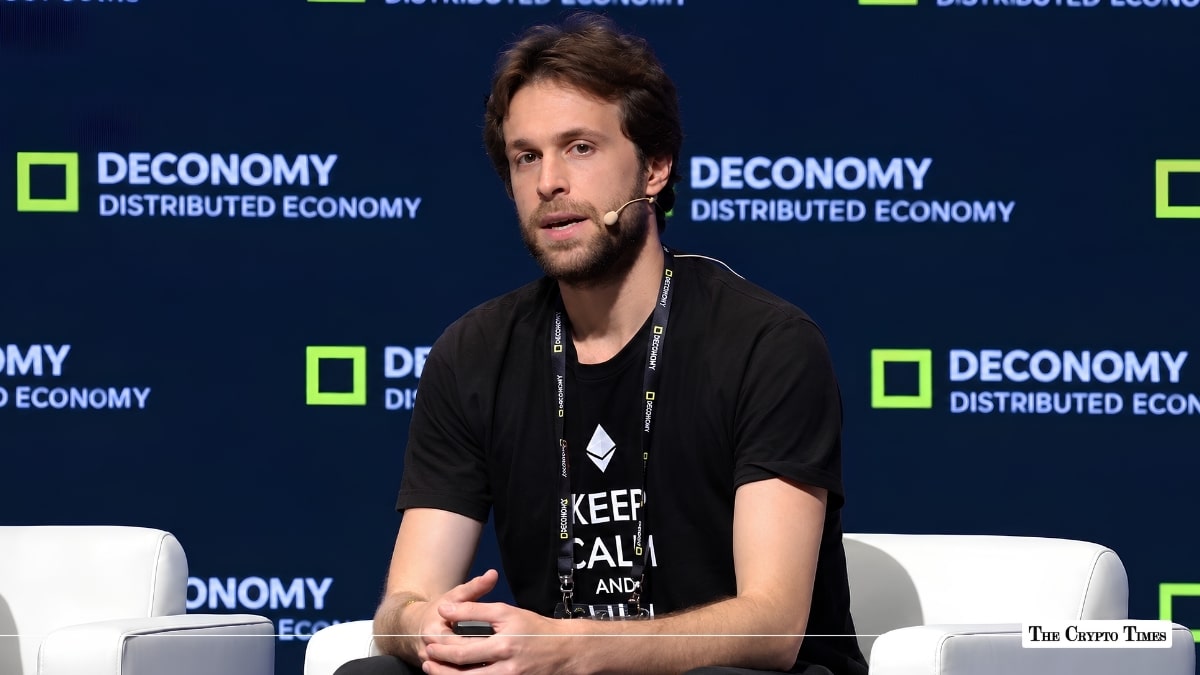
Ethereum Foundation researcher Justin Drake has called on the blockchain industry to begin planning for what he termed “bunker mode.” He recommended a controlled migration of assets to fresh addresses whose public keys remain hidden behind a hash.
In a detailed X post on Wednesday, Drake advised holders, beginning with large and sophisticated ones, to consider moving the bulk of their funds to addresses that have never signed a transaction. When a signature is required, remaining funds should be moved to a new address, which may be generated from the same seed phrase. He said the step does not require new cryptography or new wallets.
He cautioned against rushing the process, saying a rushed migration would do more harm than good, and warned against panic. Drake described the action as a simple, preventative measure.
Assessment of ECDSA vulnerability
Drake said it is now reasonable to prepare for the possibility that ECDSA could break before quantum day. In the worst case he described, a break could occur in months rather than years. By “break,” he specified fast private-key recovery, for example, within one week, on available hardware such as a large GPU cluster.
He pointed to recent mathematical results that overturned long-held hypotheses, including the n log(n) bound for integer multiplication and the 3SUM conjecture. He also referenced the disproof of the Erdős unit distance conjecture. Drake linked these developments to an OpenAI release that, in his view, indicated mathematical superintelligence is approaching.
Elliptic curves, he said, carry rich algebraic structure that includes techniques such as Schoof, Frobenius, and pairings. He contrasted this with hashes, which are designed to minimize algebraic structure. Drake also noted the possibility of a classical counterpart to Shor’s algorithm that could affect both elliptic curves and RSA.
He observed that cryptographic breakthroughs appeared underrepresented among 722 mathematical results published by OpenAI and cited instances of government censorship of academic quantum cryptanalysis.
Recommendations for holders and institutions
Drake urged large, sophisticated actors to lead by example. He referenced Project11’s “risq list,” which tracks exposed Bitcoin public keys. He named Binance, Bitbank, Robinhood, and Bitfinex Tether as entities that have an opportunity to harden cold storage.
Wallets holding under 50 BTC, he said, enjoy partial cover from what he called “Satoshi’s shield,” referring to approximately 20,000 exposed addresses that each hold 50 BTC.
For load-bearing signers such as oracles and Layer-2 security councils, Drake suggested rotating ECDSA public keys with every signed message and/or adding multi-signatures with a hash-based scheme such as SPHINCS.
Link to Ethereum roadmap
Drake stated that exiting bunker mode safely will require post-AI cryptography. His preference is hash-based cryptography that avoids structured mathematical assumptions from curves, lattices, or isogenies. A single battle-tested hash from the SHA or BLAKE families, he said, offers a basis for post-AI security.
He noted that the Ethereum roadmap published on strawmap.org fully embraces hash-based cryptography together with end-to-end formal verification as a response to the quantum threat. Those timelines, he said, must now be revisited and accelerated in light of mathematical superintelligence. Drake indicated he would push for maximum defensive acceleration.
The strawmap, released earlier by Drake, is a strawmap roadmap outlining a potential sequence of Layer-1 protocol upgrades through 2029. It envisions roughly seven forks at a cadence of one upgrade every six months. Drake described the document as a work-in-progress and a coordination tool rather than a prediction, intended to provide a framework for discussion among developers, researchers, and participants in Ethereum governance.
Drake plans to address institutions in London next month in a live question-and-answer session.
Also Read: Babylon, HashKey Cloud to Enable Native Bitcoin Borrowing via Aave