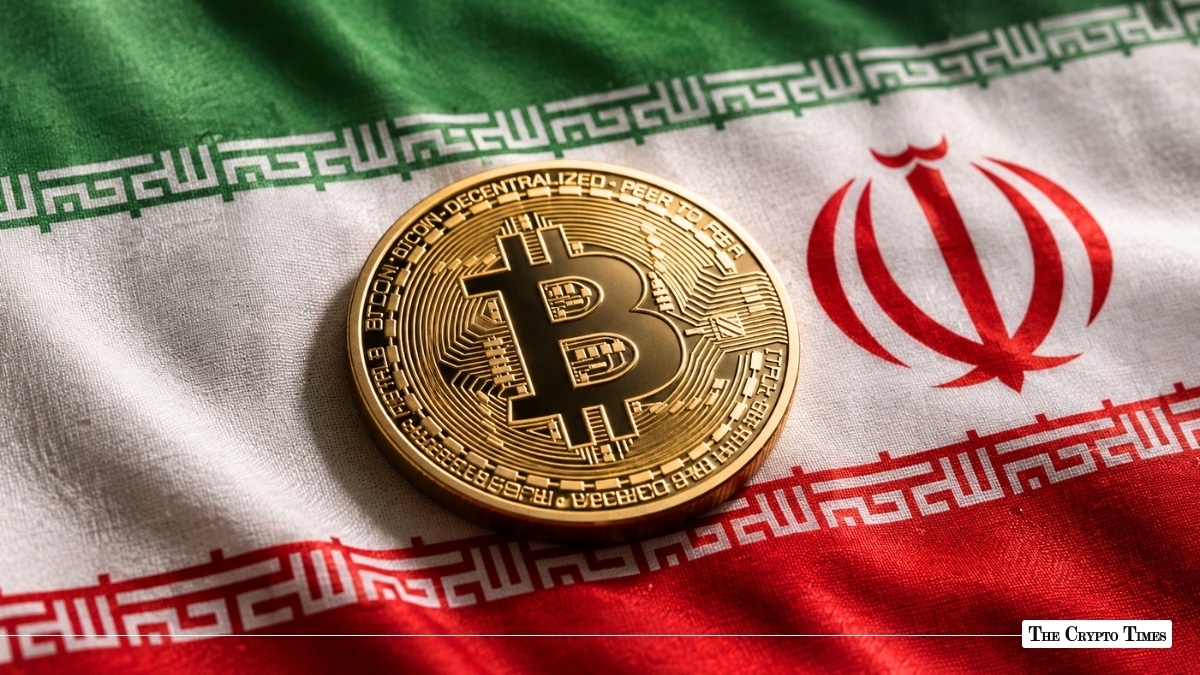
Iran’s central bank has quietly stopped enforcing the rules that governed how exporters bring money home, according to the Financial Times, and cryptocurrency is one of the channels now being used.
Traders can settle cross-border transactions through Iranian crypto exchanges, primarily in Tether but also Bitcoin, and use export proceeds to finance imports directly rather than routing earnings through the official foreign-exchange system.
The FT reported on September 8, citing Iranian businesses, regime insiders, and analysts, that the relaxation has become widespread since the US and Israel launched military action in February.
What the FT Reported
Under the previous system, exporters of oil and other goods had to return a large share of earnings and sell them through a government platform at official rates well below market prices. The newspaper reports that traders may now exchange currency on the open market instead.
One executive described to the FT as close to the regime said the central bank no longer asks how money was transferred. A member of the Iran Digital Transformation Association, Alireza Bozorgmehri, acknowledged that scrutiny of crypto exchanges had loosened while questioning whether transaction volumes could ever meet Iran’s needs.
The Enforcement Record Is Public
What is documented is the pressure running the other way. Tether has frozen close to $475 million across wallets that OFAC has identified as belonging to the Central Bank of Iran.
The first tranche came on April 23, when Tether froze more than $344 million in USDT across two Tron addresses after receiving information from US authorities. On July 14, OFAC added four more addresses to its Central Bank of Iran designation. Chainalysis found those wallets had received over $165 million in stablecoins, and Tether froze $131 million immediately.
The mechanism is the same each time, and it is the structural weakness in settling sanctioned trade in Tether: the issuer can freeze tokens at the smart-contract level regardless of which blockchain they sit on.
A Widening Campaign
The action has extended beyond the central bank. In July, OFAC targeted an Iranian digital insurance firm operating in the Strait of Hormuz that the Treasury said accepts bitcoin and other digital assets and generates revenue for the Islamic Revolutionary Guard Corps.
On August 7, US authorities sanctioned Shelbit and Aban Tether, alleging they processed transactions connected to Iran sanctions evasion, prompting Bitget to restrict access to a series of platforms. Investigators have also traced an operation moving roughly $4 billion through a Dubai-based exchange.
Tehran Is Chasing the Money Too
The relaxation runs alongside enforcement inside Iran. Zabihollah Khodaian, head of the General Inspection Organisation, said last month that more than 20,000 individuals and companies had failed to meet commitments to return the equivalent of €94 billion, and that 219 are under investigation over €23.5 billion.
Among those he named were state-owned energy companies, including the National Iranian Oil Refining and Distribution Company and the National Iranian Gas Company. Judiciary spokesperson Ali Kazemi said this week that 22 people linked to oil traders had been arrested, with warrants issued for 19 more.
Iran’s judiciary has estimated undeclared earnings held at home and overseas at more than $100 billion.
Scale and Limits
TRM Labs data cited by the FT puts crypto moved through Iran at nearly $10 billion during 2025. Chainalysis strategic national security adviser Eitan Danon, previously at the US Treasury, told the newspaper that adoption there has grown as a response to structural geopolitical realities rather than as novelty.
Tehran political economist Saeed Laylaz told the FT that the further the economy goes underground, the greater the need for cryptocurrencies. Bozorgmehri’s skepticism is the counterweight: exchange volumes have risen, but Iranian trade obligations run into the tens of billions, and currency exchange houses in neighboring countries remain the primary channel.