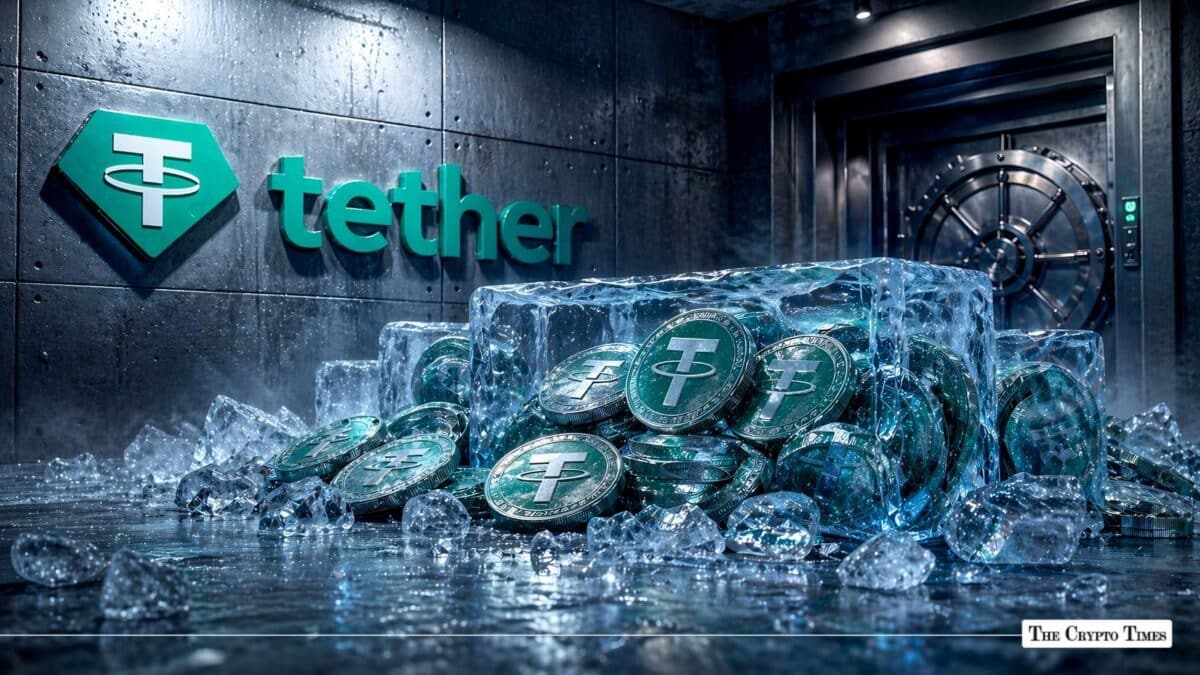
Tether has frozen more than $344 million in USDT on the Tron blockchain in a rapid pair of actions that unfolded within minutes on Thursday.
On-chain monitoring service Whale Alert first flagged the blacklisting of a Tron address holding 212.92 million USDT, valued at roughly $213 million. Minutes later, it reported a second freeze targeting another wallet containing 131.29 million USDT, or about $131.3 million. The combined total exceeds $344 million in immobilized stablecoin.
The moves were executed through Tether’s administrative keys embedded in the USDT smart contract on Tron. Once blacklisted, the affected addresses can no longer send or receive the tokens, effectively locking the funds in place while leaving the underlying blockchain ledger intact.
Tether has not publicly detailed the reasons behind Thursday’s freezes. The company routinely cites compliance with law enforcement requests or suspected illicit activity when it blacklists wallets.
In January, it froze roughly $182 million across five Tron addresses in a single coordinated sweep linked to U.S. authorities. Over the past three years, Tether says it has blocked more than $4.2 billion in USDT tied to crime, including assistance to the Department of Justice on pig-butchering scams and other fraud cases.
Tron remains a favored network for large USDT transfers because of its low fees and speed, but that popularity has also drawn regulatory scrutiny. Advocates argue that these incidents expose the centralized control lurking beneath stablecoins marketed as decentralized alternatives to traditional finance. While users hold the private keys to their wallets, the issuer retains the power to render tokens unusable at will.
These back-to-back alerts have reignited debate over “stablecoin risk” — the uncomfortable reality that even the largest dollar-pegged token can be frozen without warning when authorities or compliance teams flag potential wrongdoing.
Decentralized advocacy but centralized approach
The massive freezing comes just days after Tron founder Justin Sun proclaimed that his network is “the most decentralized blockchain in the world.”
On April 21, Sun took to X to declare Tron’s superiority in decentralization, timing his statement shortly after Arbitrum’s emergency freeze of tens of thousands of ETH tied to the latest Kelp DAO exploit. He positioned Tron as immune to such centralized interventions, highlighting its governance through 27 rotating Super Representatives and lack of issuer-level backdoors on the protocol itself.
Yet on April 23, Tether—exercising its built-in administrative control over the USDT smart contract—blacklisted two large Tron wallets in quick succession, rendering more than $344 million untouchable. The contrast is stark: while Sun champions Tron’s decentralized architecture and criticizes freezes elsewhere as evidence of centralization, the stablecoin layer running atop it remains firmly under Tether’s centralized authority.
While the freezes were executed at the USDT smart contract level rather than on Tron’s core protocol, they still raise fresh concerns about the network’s appeal for large-value transfers.
Critics argue that heavy reliance on a single centralized issuer like Tether undermines Tron’s decentralization narrative, leaving users and whales exposed to sudden asset immobilization regardless of the blockchain’s design.
What’s next?
This latest episode underscores a persistent tension in the ecosystem—Tron may handle billions in USDT transfers with speed and low fees, but the tokens themselves are ultimately subject to the issuer’s compliance decisions, regardless of the underlying chain’s design.
As of now, the two frozen wallets sit idle with their massive balances intact but untouchable. Whether these latest actions stem from sanctions enforcement, hack proceeds, or other investigations remains unclear.
Tether has a track record of cooperating quietly with global regulators while emphasizing that such freezes represent a tiny fraction of its overall supply. Still, for anyone moving significant sums on Tron, the message is clear: your USDT may be “stable,” but it is never fully beyond reach.
Also read: Circle Can’t Have It Both Ways: It Must Choose b/w CeFi Power and DeFi Neutrality