In its glossy “Beyond Stablecoins” 2026 report, Circle paints a future where USDC is the friction-less blood-flow of a global, programmable economy. It’s a vision of a world where finance is open, automated, and borderless. Yet, on April 1, 2026, the industry got a sharp reality check.
As the Drift Protocol exploit saw millions in USDC drained and funneled through bridges, the “programmable” nature of Circle’s ecosystem was nowhere to be found for the victims. While hackers moved with permissionless speed, Circle—the supposed architect of this new world—stood still, paralyzed by its own institutional weight.
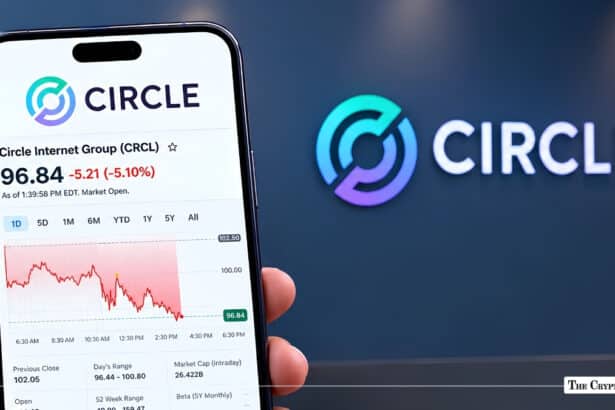
This isn’t just a technical lag; it’s a fundamental identity crisis. Circle is no longer just the issuer of a digital dollar. With its successful 2025 listing on the NYSE (CRCL), it has evolved into a full-stack infrastructure provider, aggressively marketing itself as the “Economic Operating System” for the future of finance. But an operating system is only as good as its neutrality, and Circle is currently attempting the impossible: serving two masters with diametrically opposed interests.
On one side, Circle answers to the US Treasury and a board of directors focused on securing a federal banking charter—a move that requires absolute compliance, surveillance, and “kill-switch” capabilities. On the other side, it serves as the foundational collateral for the DeFi ecosystem, which thrives on neutrality and censorship resistance.
By chasing the status of a regulated US banking utility while simultaneously claiming to power “permissionless” finance, Circle is building a house on shifting sand. The result is a foundation that is functionally “TradFi with a better UI”—a system that looks like crypto on the front end but carries all the gatekeeping and systemic fragility of the legacy banking system on the back end. For the future of finance to be truly stable, we must ask: can a company beholden to a sovereign state ever truly be the bedrock of a neutral global protocol? Or are we just building a more efficient cage?
The “Selective Enforcement” Scandal
The tension between Circle’s marketing and its actions reached a breaking point this month, exposing a “Selective Enforcement” strategy that should terrify any DeFi Founder. When we look at how Circle handles frozen assets; a disturbing pattern emerges: they are remarkably slow to protect the crypto ecosystem from criminals but remarkably fast to protect themselves from US legal pressure.
Case Study A: The Drift Exploit and the “Vigilante” Defense
Following the April 1 Drift Protocol exploit, the crypto community watched in a state of digital paralysis as $232 million in stolen USDC cascaded through Circle’s own Cross-Chain Transfer Protocol (CCTP). Despite the transparency of the theft, the “blackhole” function—Circle’s ability to freeze assets at the smart contract level—remained untouched.
The industry’s backlash was swift, but Circle’s defense was even swifter. During his April 13 press conference in Seoul, South Korea, CEO Jeremy Allaire leaned heavily on the “Rule of Law” argument. He insisted that Circle refuses to play the role of a “real-time vigilante,” arguing that the company only freezes assets upon receiving official mandates from law enforcement. It was a convenient shield: by claiming a lack of “authority,” Circle effectively allowed millions in stolen funds to be laundered into the ether.
Case Study B: The March 23 Freeze and the Ghost of Tornado Cash
Circle’s supposed commitment to “waiting for the authorities” disappears the moment US civil or regulatory interests are at stake. Contrast the Drift inaction with the March 23 incident, where Circle proactively froze 16 business hot wallets—belonging to legitimate exchanges and forex platforms—based on a sealed US civil lawsuit.
There was no criminal heist here; there was merely a domestic legal dispute. Yet, Circle moved with lightning speed to pull the trigger. We saw this same “compliance-first” reflex in 2022 when Circle unilaterally froze USDC in wallets associated with Tornado Cash immediately following OFAC sanctions, even before the legal dust had settled.
This inconsistency suggests that Circle isn’t actually neutral; they are selectively compliant.
- When it’s a criminal hack: Circle hides behind the “Rule of Law,” claiming their hands are tied to avoid the liability of a “wrongful” freeze against a hacker.
- When it’s a US civil court order or a Treasury memo: They move with surgical precision to satisfy domestic interests, even at the expense of legitimate businesses.
For the DeFi ecosystem, this makes USDC a massive liability. If you are a protocol using USDC as collateral, you aren’t just betting on your code—you are betting on the unpredictable whims of Circle’s legal department. A stablecoin that hides behind legal hurdles to avoid helping users but bypasses those same hurdles to please a civil court is not a neutral primitive. It is a permissioned asset masquerading as “money,” and its selective enforcement makes it the single most dangerous point of failure in modern DeFi.
The IPO & The “Economic OS” Trap
Circle’s evolution from a simple stablecoin issuer to a corporate behemoth reached its logical conclusion with its 2025 listing (NYSE: CRCL). But for those still clinging to the dream of USDC as a neutral, decentralized building block, the ticker symbol should serve as a warning. By going public, Circle didn’t just change its tax status—it changed its soul.
The NYSE Reality: Fiduciary Duty vs. Ledger Integrity
When a company goes public, its primary allegiance shifts. Circle no longer answers to the “on-chain commons”; it answers to shareholders, institutional investors, and the SEC. Following a reported $70M net loss for 2025, the pressure to pivot toward profitability is immense.
In this corporate context, “DeFi neutrality” is no longer a core value—it’s a line-item liability. To appease the market and secure its coveted US banking license, Circle must demonstrate absolute control and perfect compliance. Every step Circle takes to protect its stock price and its banking ambitions is a step away from the permissionless ethos of crypto. A public company cannot afford the “regulatory risk” of being truly neutral.
The “Economic OS” Pivot: Building the Walled Garden
In 2026, Circle’s strategy has become clear: they no longer want to be just the “money” in the machine; they want to be the machine itself. The launch of Arc and the Circle Payments Network (CPN) marks a pivot toward becoming an “Economic Operating System.”
By building its own proprietary infrastructure—controlling the mint, the bridge (CCTP), and now the chain (Arc)—Circle is moving from a neutral token to a vertically integrated platform. This isn’t an open protocol; it’s a walled garden. If Circle controls every layer of the stack, the “decentralized” label on any protocol using these tools becomes a marketing fiction. We aren’t building “Open Finance”; we are building a more efficient version of the existing banking system, owned by a single NYSE-listed entity.
The Great Stablecoin Irony
The most stinging critique of Circle’s new direction comes from a comparison with its oldest rival: Tether (USDT). In a bizarre twist of fate, the crypto industry is starting to view Tether as more “reliable” for the very thing Circle once promised: active protection of the ecosystem.
- Tether: Operates with the agility of a crypto-native entity, often intervening quickly to freeze stolen funds and support exploit recovery.
- Circle: Paralyzed by its own corporate structure and the need for “sealed court orders,” Circle has become too slow for the fast-paced world of crypto recovery, yet too risky for global businesses who fear their funds could be caught in a civil litigation crossfire.
A stablecoin that requires a committee of lawyers and a US court order to stop a blatant $200M heist is a failed DeFi primitive. If Circle’s “Economic OS” requires us to sacrifice the speed and neutrality of the ledger for the safety of a corporate balance sheet, then the “OS” is fundamentally broken.
Circle is building a system where “Programmable Money” actually means “Money Circle can program—or de-program—at will.” For an industry built on the idea of Don’t Trust, Verify, the “Economic OS” asks us to do the exact opposite: Trust Circle, and hope the stock price stays up.
The irony is that Tether, long treated as DeFi’s disreputable cousin, has emerged from the Drift affair as the more reliable infrastructure partner. Tether routinely freezes wallets tied to hacks within hours and, within two weeks of the Drift exploit, offered the protocol a $147.5 million recovery package. Drift has since announced that it will replace USDC with USDT as its core settlement asset. Circle has managed the rare feat of being too slow for crypto and too captivated by legitimate business at the same time.
Regulation as a Competitive Weapon
Circle’s vision for the future isn’t just about better technology; it’s about better lobbying. As we navigate the legislative landscape of 2026, it has become clear that Circle is not just following the rules—it is helping write them to ensure that no one else can play the game. By championing a specific brand of “clarity,” Circle is effectively turning the US regulatory apparatus into a competitive moat.
Circle has been among the most enthusiastic advocates for the GENIUS Act, signed into law in 2025, and is now pushing for a specific “safe harbor” inside the pending CLARITY Act that would authorize issuers to take preventive actions under narrow, pre-approved conditions.
Read those bills carefully, and a pattern emerges. The regulatory regime Circle is helping shape tends to foreclose precisely the competitors it cannot beat on the merits: algorithmic stablecoins, over-collateralized decentralized stablecoins, and foreign issuers without U.S. banking relationships. The effect, if not the intent, is to make Circle’s centralized, Treasury-backed, court-order-compliant model the only legally permissible form of “payment stablecoin” in the United States.
This isn’t about protecting consumers; it’s about protecting a monopoly. If the only legal stablecoin is a centralized, non-yield-bearing one, Circle wins by default. They have used regulation to remove the “De” from DeFi, ensuring that their centralized model is the only “Permitted” option left standing.
The Banking Charter: The Death of Neutrality
Circle’s ultimate goal—the “North Star” of its corporate journey—is the Federal Banking Charter. In late 2025, Circle received conditional approval from the OCC to establish the “First National Digital Currency Bank.” While Circle frames this as the ultimate “validation” of the industry, it is actually the final nail in the coffin for USDC’s neutrality. By definition, a bank is an arm of the state’s financial surveillance and control apparatus. A bank:
- Must be able to seize assets without a criminal conviction.
- Must be able to “de-bank” users based on political or regulatory pressure.
- Must prioritize the stability of the sovereign currency over the neutrality of the protocol.
You cannot be a neutral DeFi primitive if your “reserve bank” is subject to the Office of the Comptroller of the Currency (OCC). A bank charter is a surrender of the very decentralization that made USDC useful to begin with. By becoming a bank, Circle has traded its role as a global public utility for the status of a protected US national interest.
For the DeFi ecosystem, the message is clear: Circle is no longer building a bridge to a new financial system; they are building a high-tech entrance to the old one.
The DeFi Reckoning
The events of April 2026 have moved the conversation from theoretical risk to active litigation. We are no longer just debating “decentralization” in Discord servers; we are watching it be defined in federal courtrooms. The fallout from the Drift exploit has triggered a long-overdue reckoning for every protocol that has treated USDC as a neutral, risk-free building block.
The Lawsuit Precedent: McCollum v. Circle
On April 14, 2026, the first major legal shot was fired. The class-action lawsuit McCollum v. Circle, filed in the District of Massachusetts, represents a watershed moment for the industry. Lead plaintiff Joshua McCollum, representing over 100 affected investors, isn’t just suing for lost funds; he is suing for a “duty of care.”
The complaint alleges that Circle’s “reckless indifference” during the 8-hour window following the Drift exploit allowed $232 million in stolen USDC to flow through the Cross-Chain Transfer Protocol (CCTP) and into the safety of Ethereum mixers. The legal argument is simple yet devastating: if Circle has the technical ability to freeze funds—as they’ve proved in civil cases—then they have a legal obligation to exercise that power to prevent a multi-hundred-million-dollar felony in progress.
The Myth of Neutrality
This lawsuit exposes the terminal flaw in the current DeFi landscape. If USDC is “CeFi-Locked Collateral,” then any protocol built on it is merely a high-tech extension of the US civil court system.
When you use USDC as your primary liquidity pair or collateral, you are importing Circle’s entire legal and corporate baggage into your “decentralized” code. As the Drift victims learned too late, Circle’s “duty” is to its NYSE shareholders and its banking license first, and the on-chain user last. We are seeing a “permissionless” world that can be paused, edited, or blacklisted by a board of directors in Boston. This is not DeFi; it is a custodial mirage.
The Solution
The only path forward is a strategic decoupling. The industry’s reliance on “compliant” stablecoins has created a systemic fragility that a single court order can collapse. To survive the next “Drift” or the next “March 23rd Freeze,” the ecosystem must return to truly decentralized, over-collateralized stablecoins.
- Protocols like Sky (formerly MakerDAO) and LUSD offer a blueprint: assets that answer to transparent code and over-collateralized math, not a corporate legal department.
- The Polymarket Shift: The April 6th announcement that Polymarket is moving toward its own collateral token is a bellwether. Major platforms are realizing that relying on USDC means living at the mercy of Circle’s “Selective Enforcement.”
Choosing a Side
The events of early 2026 have stripped away the last layers of marketing ambiguity. For years, the industry treated USDC as a neutral public utility—a digital version of the air we breathe in the DeFi ecosystem. But through its pursuit of a federal banking charter, its NYSE listing, and its “Selective Enforcement” during the Drift Protocol exploit, Circle has made its allegiance undeniable.
Circle has chosen its side: it is a pillar of the US regulatory umbrella.
It is time for the DeFi community to perform a reality check. USDC is not a decentralized primitive; it is a sophisticated corporate product. It is a tool designed to bridge the legacy financial system into the digital age, but it carries with it the very gatekeepers, surveillance, and “kill-switches” that crypto was designed to bypass. To build the future of finance on top of USDC is to accept that your “permissionless” protocol can be turned off by a board of directors in Boston or a civil court in Delaware.
You can be a bank, or you can be a protocol. Circle is trying to be both, and in doing so, it is turning the open internet of money into a permissioned cul-de-sac. The sooner the DeFi ecosystem admits that USDC is a corporate product rather than a public utility, the sooner it can start building again on foundations that will not freeze beneath its feet.
Also Read: Freedom of Money Is CZ’s Attempt to Rewrite History — And It Starts With a Feud
Disclaimer:
Some elements of this content may have been enhanced with the help of our artificial intelligence (AI) assistants for purposes such as basic refinement, review, image generation, and translation to deliver high-quality news in a shorter time frame. However, all AI-assisted content is reviewed and approved by our team to ensure accuracy, fairness, and editorial integrity.