The United States has tightened its financial blockade on Iran’s central bank, and the mechanism is by now familiar: name the wallets, and let the stablecoin issuer do the rest.
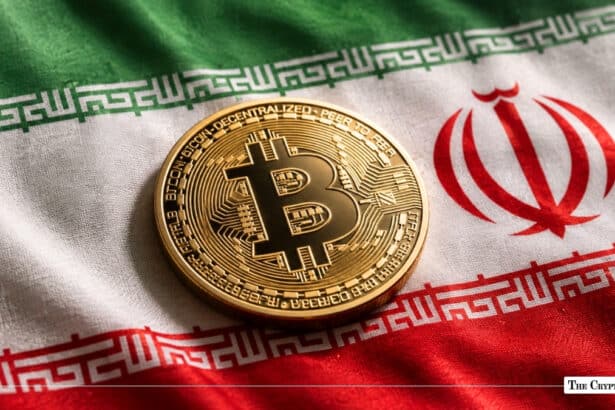
On July 14, the Treasury Department’s Office of Foreign Assets Control (OFAC) updated its Central Bank of Iran designation to include four additional cryptocurrency addresses as identifiers. According to on-chain analysis by Chainalysis, those wallets had collectively received more than $165 million in stablecoins, and $131 million sitting in them was frozen immediately by their issuer, Tether.
That single action would be notable on its own. What makes it remarkable is the running total.
Nearly Half a Billion Immobilized
Tether has now frozen almost $475 million from wallet addresses OFAC has identified as belonging to the Central Bank of Iran, rendering close to half a billion dollars in value inaccessible to the Iranian regime. A freeze prevents an address from spending or sending its balance, the tokens remain on-chain, visible to anyone, and entirely unusable.
It is worth pausing on what that figure represents. A sovereign central bank, sanctioned by the United States, has had roughly $475 million of its reserves neutralized not by a court order, a bank compliance department, or a physical seizure, but by a private company updating a smart contract. No jurisdiction was crossed. No asset was moved. There was nothing for Tehran to appeal.
Why Iran Chose Stablecoins
Chainalysis research into the regime’s crypto habits has consistently shown a preference for stablecoins, and the logic is not mysterious. Stablecoins are highly liquid, dollar-denominated, and accepted globally; the same attributes that make them useful to a small business in Lagos make them useful to a sanctioned central bank in Tehran.
But that choice carries a structural vulnerability that cash never did. Because stablecoin issuers can freeze funds at the direction of law enforcement, every dollar Iran routed through USDT was a dollar held on infrastructure with a kill switch controlled from outside its borders. The regime picked the most liquid instrument available and, in doing so, picked the one most easily switched off.
This is the double-edged property at the center of the stablecoin story. The same issuer control that makes USDT a formidable counter-terror tool, and the same one that let Tether freeze 131 wallets tied to ISIS-Khorasan two weeks ago, is precisely what makes it the opposite of the censorship-resistant money crypto’s founders envisioned. For OFAC, that is the feature. For purists, it is the compromise.
The Upstream Question
The most consequential detail in Chainalysis’ findings is easy to skip past. Using its Reactor tool, the firm found that the newly designated Central Bank of Iran addresses received funds upstream from an institutional liquidity provider and an Asia-based payment processor.
Neither entity is named, and no allegation of wrongdoing has been made against either. But the finding matters, because it means the money did not materialize on-chain from nowhere: regulated-adjacent financial infrastructure sat somewhere in the chain that ended at a sanctioned central bank’s wallet. Whether those intermediaries knew, should have known, or were themselves several hops removed is exactly the question compliance teams across the industry will now be asking about their own counterparties. Sanctions exposure does not require intent, and OFAC has shown a growing willingness to follow chains upstream.
The US-Iran War
The designation does not stand alone. The Central Bank’s crypto operations have drawn intensifying scrutiny since the start of the war with Iran, and OFAC updated the same designation earlier this year in April. Last month, the agency sanctioned major Iranian crypto exchanges that the Central Bank had used to move money in and out of stablecoins, cutting off the on- and off-ramps before freezing the wallets themselves.
OFAC’s case is that the Central Bank has used cryptocurrency to sidestep sanctions, fund the regime, and funnel assets to regional partners, including Hezbollah. And the conflict has produced its own crypto footnote: amid the fighting, Iranian actors proposed levying a toll, payable in crypto, on ships seeking passage through the Strait of Hormuz, with Chainalysis assessing that shipping companies paying such a toll would face significant sanctions exposure.
The Debate This Settles, and The One It Doesn’t
That Hormuz detail is not incidental. It is the exact example Senator Elizabeth Warren has been citing in Washington as she argues that the CLARITY Act is “a ticket to sanctions evasion”, pointing to FinCEN warnings that Iran is using digital currencies to evade sanctions. The crypto industry’s advocates counter that transparent ledgers and cooperative issuers hand investigators tools they never had with cash.
The Iran case is that argument in miniature, and the uncomfortable answer is that both sides are describing something real. Iran is unquestionably using crypto to evade sanctions; that is why there were $165 million in stablecoins in these wallets to begin with. And the United States unquestionably neutralized $131 million of it in a single day, an outcome flatly impossible with dollars in a correspondent bank or cash in a warehouse.
What the case does not settle is the part actually being legislated. Every dollar of this enforcement success ran through a centralized, cooperative, US-facing issuer. None of it speaks to how authorities would handle funds sitting in self-custody, moving through a mixer, or denominated in a privacy coin, the domain where the Section 604 developer-protection fight is genuinely joined. The freeze proves the tool works exceptionally well where it applies. Its limits are precisely where the political argument lives.
Read: Feds Dismantle Darknet Fentanyl Ring and Crypto Laundering Scheme
The Takeaway
For crypto, the takeaway cuts in two directions at once. This is the most vivid demonstration yet that digital assets are not the sanctions-proof haven their critics fear or their earliest evangelists promised; a nuclear-armed adversary’s central bank just lost half a billion dollars to a compliance action it could not contest. That is a genuine argument for the industry’s legitimacy, and it is being made in real time on-chain.
But it also draws the map of where the power now sits. The entity that neutralized Iran’s central bank reserves was not a government. It was Tether. As stablecoins scale past $300 billion and edge toward the plumbing of global payments, the ability to freeze any balance, anywhere, on instruction, is becoming one of the more significant private powers in modern finance, pointed today at a target almost nobody will defend, and available tomorrow for whatever comes next.
Also Read: EU Watchdog Echoes Binance’s MiCA Laundering Risk Warning