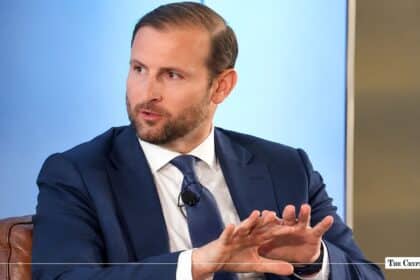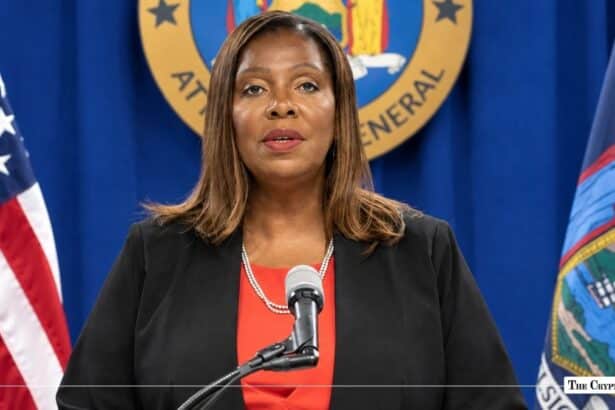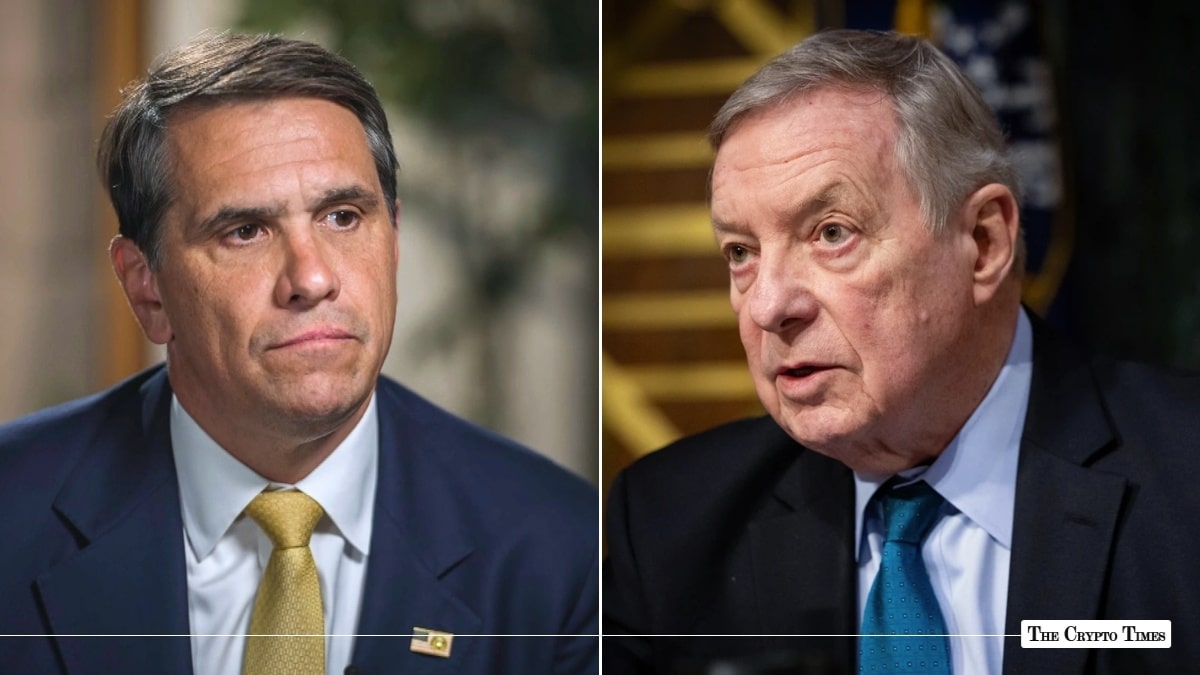
Acting Attorney General Todd Blanche faced questions over his personal cryptocurrency holdings and his dismantling of the Justice Department’s crypto enforcement unit at his Senate confirmation hearing on Wednesday, as Senator Dick Durbin tied the enforcement rollback to gains by President Trump’s crypto ventures.
The Accusation at the Hearing
The exchange came during Blanche’s appearance before the Senate Judiciary Committee, where he is seeking confirmation to lead the Justice Department permanently after serving as acting attorney general since April.
According to the transcript by CNN, Durbin, the committee’s ranking Democrat, pointed to the sequence of Blanche’s early tenure as deputy attorney general. He said that shortly after Blanche was confirmed to that role, he issued an order dismantling the DOJ’s crypto enforcement team and shutting down ongoing criminal investigations of the industry.
According to Durbin, Blanche owned at least $159,000 worth of crypto-related assets at the time, and while he eventually divested, the senator alleged the assets were transferred to his children and grandchild rather than fully removed from the family. TCT could not independently verify the figure or the transfer, which was presented as Durbin’s characterization at the hearing.
Durbin then linked the enforcement change to the president’s finances, saying that “with the crypto enforcement unit out of the way,” Trump brought in $1.4 billion from his family’s cryptocurrency business. He also referenced the pardon of Binance founder Changpeng Zhao, framing it, in his account, as following a deal that channeled funds into the Trump-linked World Liberty Financial. Those causal characterizations were Durbin’s.
Blanche’s Response
Blanche addressed his holdings by pointing to the guidance he had sought. According to an account from Durbin’s office of an earlier private meeting, Blanche said he consulted the Office of Legal Counsel and ethics officials about his cryptocurrency holdings, and Durbin said Blanche “addressed his own situation with cryptocurrency” when the topic arose.
The enforcement change Durbin criticized stems from Blanche’s April 2025 memo, “Ending Regulation by Prosecution.” Blanche has framed that directive not as a retreat but as a reorientation—shifting the department’s focus away from prosecuting cryptocurrency platforms and toward targeting individual bad actors engaged in fraud and other crimes.
The DOJ has been asked to comment on Durbin’s account of the private meeting and his characterization of how Blanche handled the crypto issue.
Why the Enforcement Rollback Matters
The policy at the center of the exchange represents one of the most consequential shifts in US crypto enforcement in years. Blanche’s April 2025 memo disbanded the National Cryptocurrency Enforcement Team, the DOJ unit created to pursue crypto-related criminal cases.
That was a structural change rather than a temporary pause. Rebuilding the capability would require assembling a new team, hiring specialists, and reversing the established policy direction—meaning the posture Blanche set is not easily undone.
For crypto businesses operating in the US, the practical effect has been a reduced threat of platform-level prosecution from the DOJ. The department’s stated emphasis on individual actors rather than platforms creates a materially different risk calculus for exchanges, DeFi protocols, and other digital-asset infrastructure providers. Blanche’s confirmation would help determine whether that posture becomes the settled, long-term approach.
A Broader Confirmation Fight
The crypto exchange was one thread of a contentious hearing that centered largely on other matters. Senators from both parties pressed Blanche on the department’s handling of the Jeffrey Epstein files, a now-canceled $1.8 billion “anti-weaponization” fund, and a settlement resolving a lawsuit over the disclosure of Trump’s tax returns.
Blanche’s path to confirmation is narrow. Democrats appear unified in opposition, leaving his fate with a small number of Republicans—including Judiciary Committee members Thom Tillis and John Cornyn—who have raised concerns about the settlement, in a chamber where the Republican majority is thin. A single Republican “no” vote on the committee could stall the nomination.
Trump has publicly urged all Republican senators to confirm Blanche, calling him “a great lawyer” and “always very fair.” How senators weigh the crypto questions against the hearing’s other flashpoints will shape a vote that remains, for now, unresolved.
Also Read: Senators to Brief Trump on CLARITY Act Path – Here’s What to Expect