Key Highlights
- Fed Chair Kevin Warsh called for closer collaboration among U.S. banking regulators on implementing the GENIUS Act.
- Warsh reaffirmed that Federal Reserve independence should remain focused on monetary policy.
- He emphasized coordinated rulemaking to prevent regulatory arbitrage, where firms seek the least restrictive oversight.
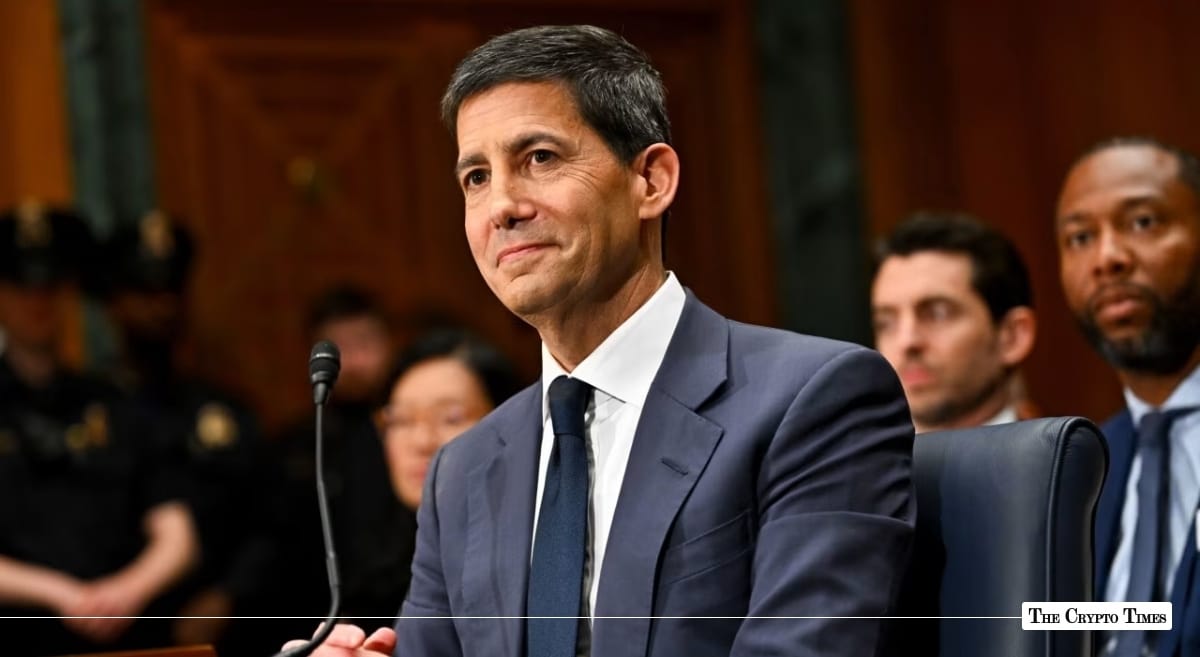
Fed Chair Kevin Warsh addressed questions on Federal Reserve independence and regulatory policy during a Senate Banking Committee hearing on the Semiannual Monetary Policy Report to Congress, chaired by Senator Tim Scott, on Wednesday.
In response to questions from Senator Bill Hagerty about whether the Fed’s independence should remain narrowly tied to its core monetary policy mandate, Warsh expressed support for collaboration with other banking regulators on legislative initiatives such as the GENIUS Act. He highlighted the importance of coordinated rulemaking to prevent regulatory arbitrage, where financial firms might seek out the lightest regulatory environment.
“I believe that when I showed up at the Fed in 2006, I believed it. Seven or eight weeks ago, I believe. Now, in the conduct of bank and regulatory policy on things like the GENIUS Act, my general view is we should be working with our bank regulators,” Warsh stated.
What Warsh’s comments mean for the industry
The GENIUS Act, which aims to modernize the regulatory frameworks for financial innovation, has become a focal point in discussions about balancing innovation with stability. Warsh’s comments signal a pragmatic stance: maintaining the Fed’s independence in monetary affairs while fostering inter-agency cooperation on supervisory and regulatory matters.
Senator Hagerty’s question highlighted the broader debate about the proper scope of the Federal Reserve’s role. By affirming that Fed independence should not extend into broad regulatory competition, Warsh reinforced traditional boundaries while supporting practical collaboration.
Warsh also praised his former colleagues at the Fed for their approach to these issues. “I’ve got some extraordinary colleagues at the FED. They’ve been able to think hard about these issues. I think those discussions should happen and do happen,” he added.
Warsh pledges Fed reforms, no crypto bailouts, and timely GENIUS Act rules
Warsh also faced questioning during Tuesday’s House Financial Services Committee hearing on the Fed’s semiannual monetary policy report. He committed to reforms aimed at eliminating political influence in banking supervision and said the central bank should limit its role to responding to genuine crises rather than routinely supporting fiscal policy.
He also said the Fed has “no intention” of bailing out crypto or stablecoin projects. “We do not want to be in the bailout business full stop,” he said. “We want to be in a position where we’re not bailing out anybody, including crypto.”
On the regulatory front, Warsh confirmed the Fed is “racing” to meet this Saturday’s rulemaking deadline under the GENIUS Act. Responding to Rep. Bryan Steil, he assured lawmakers the central bank is working to publish proposed rules on time.
Possible implications
Warsh’s views on regulatory coordination are likely to draw attention from lawmakers from both parties. His emphasis on teamwork among regulators may appeal to those seeking more efficient government operations without compromising the Fed’s core mission of price stability and maximum employment.
The hearing also provides insight into how U.S. financial regulators may approach emerging technologies as digital assets continue to challenge existing regulatory frameworks.
Also Read: Aave Rolls Out V4 on Avalanche as First Deployment Beyond Ethereum