Key Highlights
- Fed Chair Kevin Warsh ruled out bailouts for crypto and stablecoin projects.
- Warsh said the Fed’s priority is preventing systemic risks, not emergency rescues.
- The remarks came during his first congressional testimony before the House Financial Services Committee.
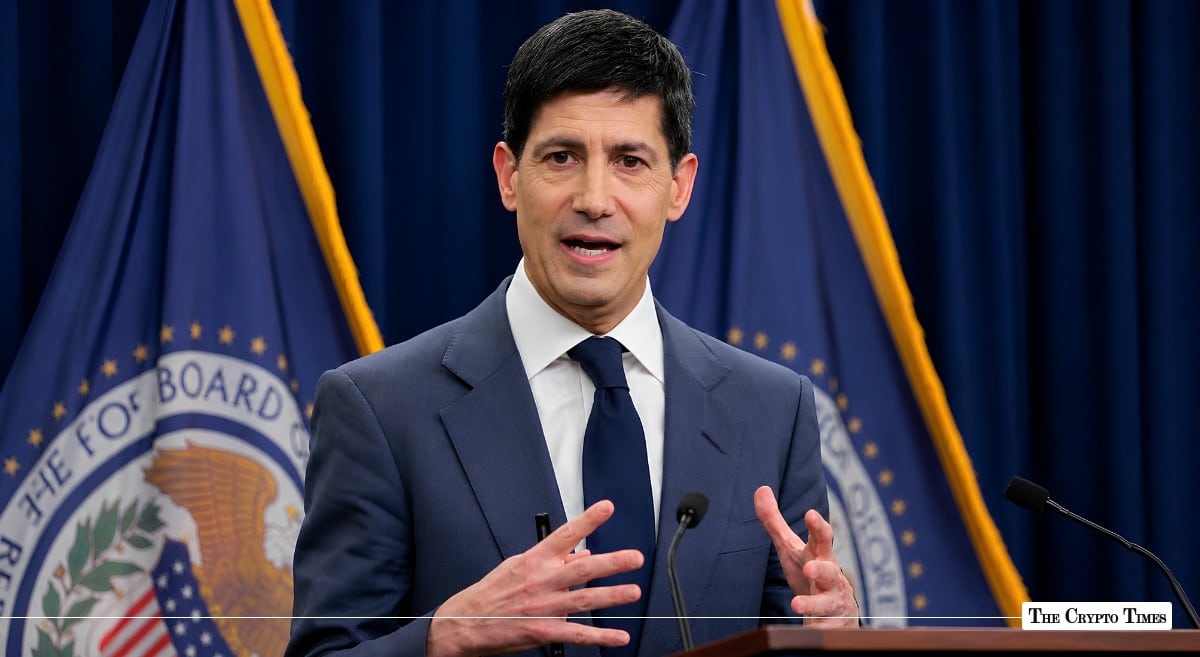
Federal Reserve Chair Kevin Warsh delivered a firm message to the cryptocurrency industry: the Fed has no intention of providing bailouts to crypto or stablecoin projects during future crises.
The remarks came during Warsh’s testimony before the House Financial Services Committee as part of the Fed’s semiannual monetary policy report. When pressed by lawmakers on whether the central bank would step in to support stablecoins or the broader crypto market in a scenario similar to the 2008 financial crisis or the 2023 banking turmoil, Warsh was unequivocal.
“We do not want to be in the bailout business full stop,” Warsh stated. “We want to be in a position where we’re not bailing out anybody, including crypto.”
Warsh pushed back, emphasizing the need to mitigate systemic risks proactively rather than relying on emergency interventions. “We’re going to do everything we can to mitigate those extraordinary risks,” he said. “If and when they were to come in the next four years, we want to be in a position where we’re not bailing out anybody, including crypto.”
Warsh’s stance reflects a broader shift in tone at the Fed following his appointment earlier this year. Unlike his predecessor Jerome Powell, Warsh, who served during the 2008 crisis under Chairman Ben Bernanke, repeatedly referenced the scars of past bailouts and expressed reluctance to repeat such measures.
What the testimony means for the crypto industry
The remarks are particularly significant for the crypto market, which has long debated the possibility of regulatory backstops or implicit guarantees similar to those enjoyed by traditional finance. Stablecoins, which play a critical role in crypto trading and DeFi, have faced scrutiny over potential systemic risks in the event of a major de-pegging or liquidity crunch.
For the crypto industry, the message is double-edged. On one hand, it reinforces a regulatory environment that demands self-reliance, robust risk management, and resilience, principles many crypto advocates have long championed.
On the other hand, it removes any expectation of a Federal Reserve safety net, potentially increasing perceived risk for investors and institutions considering deeper exposure to digital assets. The testimony arrives amid continued growth in the crypto sector, with stablecoins like USDT and USDC expanding their roles in payments and cross-border transfers.
Without the prospect of bailouts, crypto firms may face pressure to improve transparency, liquidity management, and stress-testing.
U.S. Bankers push for stronger stablecoin rules in landmark bill
In a push for stablecoin rules in the U.S., on July 13, 2026, a broad coalition of U.S. banking groups, including the American Bankers Association (ABA), the Independent Community Bankers of America (ICBA), and 76 state banking associations, sent a joint letter to Senate leaders John Thune and Chuck Schumer.
The groups urged targeted revisions to Section 404 of the Digital Asset Market Clarity Act. While supporting innovation, they expressed concern that current language may allow stablecoins to function as substitutes for traditional bank deposits. They called for clearer boundaries to safeguard the flow of credit to local communities and prevent regulatory gaps.
Also Read: Fed Faces GENIUS Act Deadline as Kevin Warsh Promises Rule Push