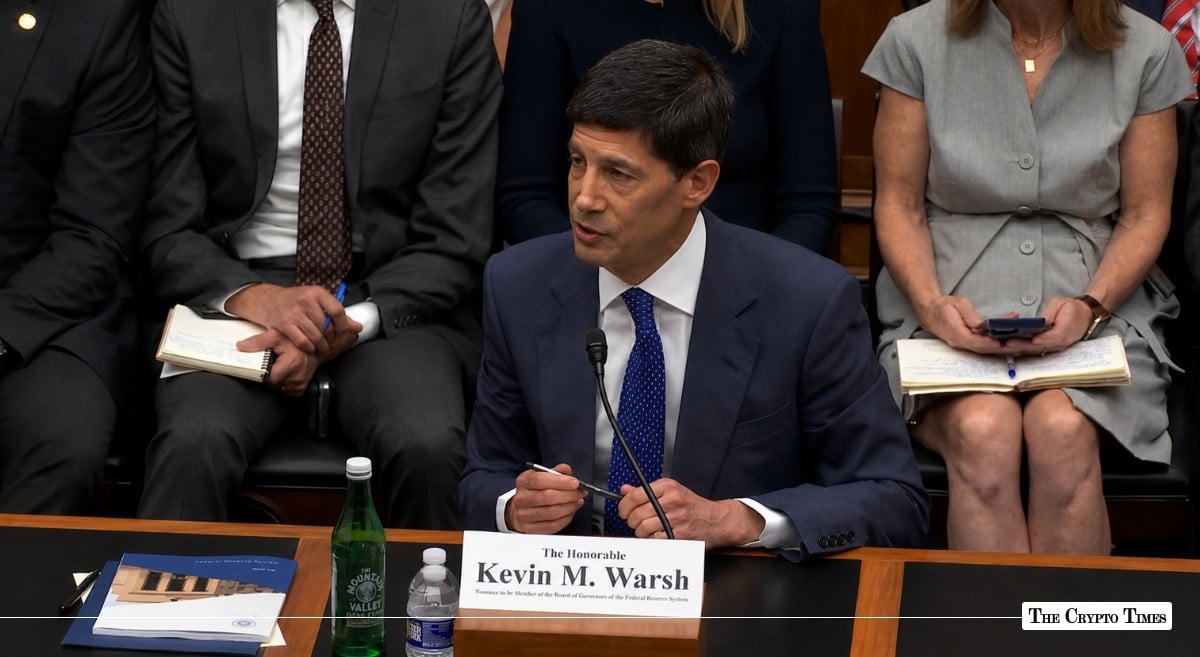
The Federal Reserve is working to meet this week’s rulemaking deadline under the GENIUS Act, with Fed Chair Kevin Warsh telling lawmakers that the central bank is “racing” to issue the required regulations.
During a House Financial Services Committee hearing on the Federal Reserve’s Semi-Annual Monetary Policy Report on Tuesday, Rep. Bryan Steil asked Warsh whether the Fed would meet the statutory deadline, which falls one year after the GENIUS Act was signed into law.
Fed races to meet GENIUS Act deadline
Steil noted that the GENIUS Act established a series of regulatory deadlines after becoming law and reminded Warsh that the Federal Reserve’s deadline for publishing proposed rules expires this Saturday.
Responding to the question, Warsh acknowledged the challenge but said the Fed is working to complete the rulemaking on time. “We’re racing to put that out by this deadline,” Warsh said.
He added that his preference is for U.S. banking regulators to release coordinated proposals rather than separate rulemakings, allowing the agencies to seek public feedback through a more unified process.
Warsh calls for coordinated bank regulation
Warsh said regulatory coordination among banking agencies remains one of his priorities as the Federal Reserve develops rules required under the stablecoin law. He explained that, while joint proposals may not be possible in every instance, regulators should aim to publish rules simultaneously whenever practical to provide greater consistency across the banking system.
The Fed chair said that coordinated rulemaking would help streamline the public comment process and reduce regulatory fragmentation.
Lawmakers seek clarity on stablecoin implementation
Steil said Congress expects regular updates if the Federal Reserve misses the statutory deadline, emphasizing that lawmakers are closely watching implementation of the GENIUS Act.
He said stablecoin regulation was a central objective of the legislation, particularly to strengthen consumer protections while establishing a clearer regulatory framework for the industry. According to Steil, the timely implementation of the law is important for providing certainty to financial institutions and digital asset companies preparing to comply with the new requirements.
Warsh weighs AI’s impact on jobs and productivity
The hearing also turned to artificial intelligence and its potential effects on the labor market. Asked whether AI could disrupt employment, Warsh said previous technological advances have generally increased productivity, wages, and economic growth despite creating short-term disruption.
He described artificial intelligence as one of the most significant technological developments of his lifetime because it changes not only products but also the pace of innovation itself.
Warsh said he expects AI to augment existing workers rather than permanently eliminate jobs, while acknowledging that some occupations could face near-term disruption. He added that the Federal Reserve has assembled an external group of experts to study AI’s long-term economic effects as part of its mandate to maintain price stability and maximum employment.
Fed continues broader economic assessment
Closing the exchange, Warsh cautioned against drawing broad conclusions from a single economic data release.
He said the Federal Reserve will continue evaluating a wide range of indicators rather than relying on individual reports as it assesses inflation, employment, and broader economic conditions while implementing new responsibilities under the GENIUS Act.
Also Read: Fed Chair Warsh Says No Crypto or Stablecoin Bailouts Under Fed