Key Highlights
- CryptoQuant reports memecoins have seen over $1.2 billion in net selling on Binance since Bitcoin’s October 2025 peak.
- The data shows investors have been moving away from risky memecoins as the broader crypto market remains under pressure.
- Major memecoins have recorded steeper losses than Bitcoin and Ethereum, while new memecoin listings on exchanges continue to decline.
Memecoins have faced more than $1.2 billion in net selling pressure on Binance since Bitcoin (BTC) reached its last all-time high in October 2025, according to a report by CryptoQuant.
The data suggests traders have been selling significantly more memecoins than buying them as the broader crypto market remains under pressure and investors reduce exposure to riskier assets.
In the report published on Tuesday by CryptoQuant analyst Darkfost, Bitcoin is described as trading more than 50% below its record high. As the largest cryptocurrency lost value, many traders also reduced their exposure to assets considered riskier.
Memecoins were among the biggest losers because they are usually driven by hype, online trends, and short-term excitement instead of strong real-world use cases or long-term development.
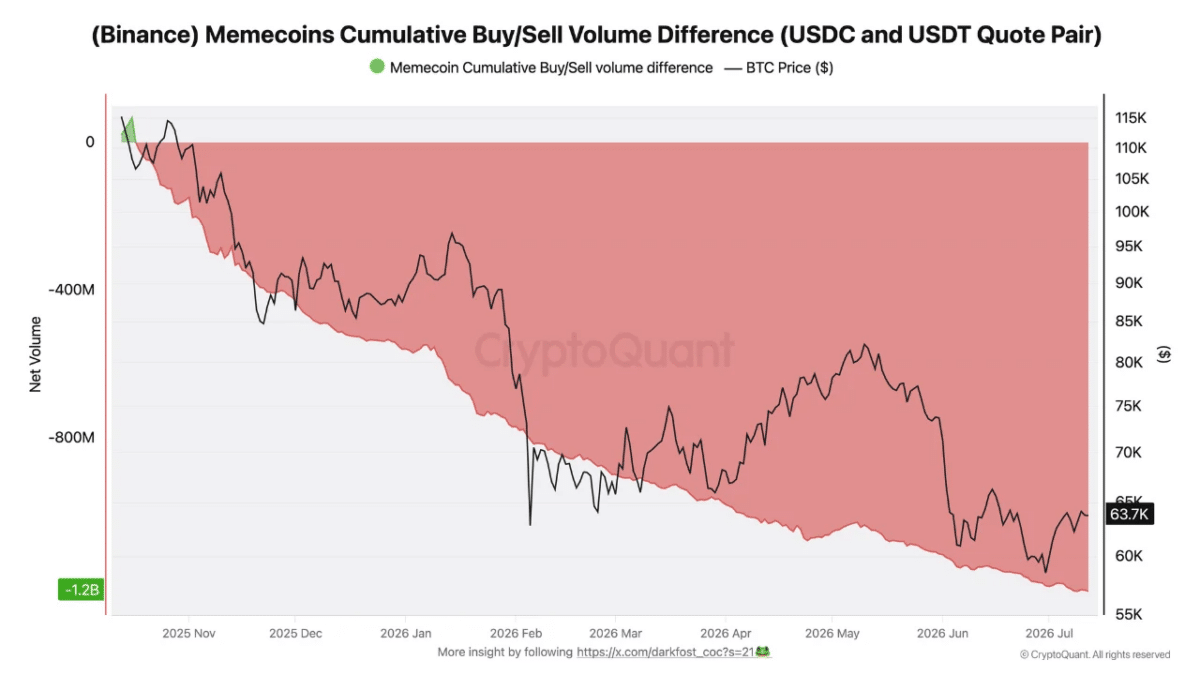
Darkfost said the numbers clearly show how hard the memecoin sector has been hit during the current market correction.
“This represents massive selling pressure on the riskiest assets in the crypto ecosystem. It illustrates just how much this sector suffers during corrections, and serves as a reminder that exposure to it carries a high risk of capital loss.”
CASHCAT shows hype is still alive
But even with the ongoing sell-off, some new memecoins have still managed to attract attention. One of them is CASHCAT, a token that gained popularity after Robinhood launched its own blockchain on July 1.
Shortly after its launch, the token’s market capitalization climbed above $200 million before falling to about $173 million, where it currently stands.
At the time of reporting, the token is up about 13% today and trades for $0.1733. In addition, trading activity is also up by 53% to $49 million.
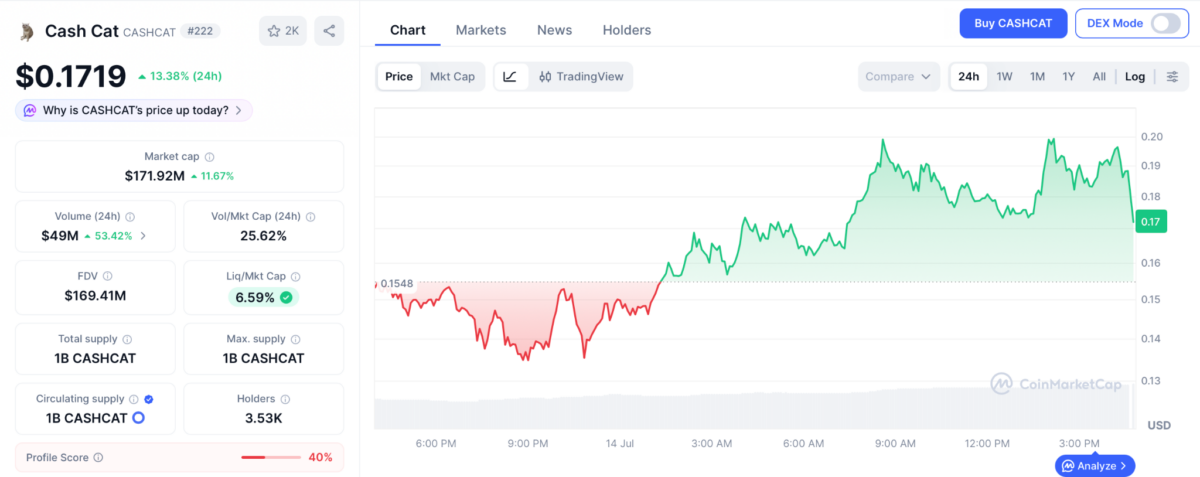
However, Darkfost said that these types of rallies are often driven by excitement over something new rather than long-term demand.
“Novelty tends to drive short-term performance for memecoins, but the story looks very different over the long run,” he said.
Also Read: Binance.US Plots Market Comeback Targeting 20% Market Share
Memecoins continue to lose ground
The overall market has also slowed down. According to data from CoinMarketCap, memecoins now account for about 3.7% of the altcoin market, which is the lowest share since February 2024.
The sector’s total market capitalization has also fallen 16.58% over the past 30 days to about $23.64 billion.
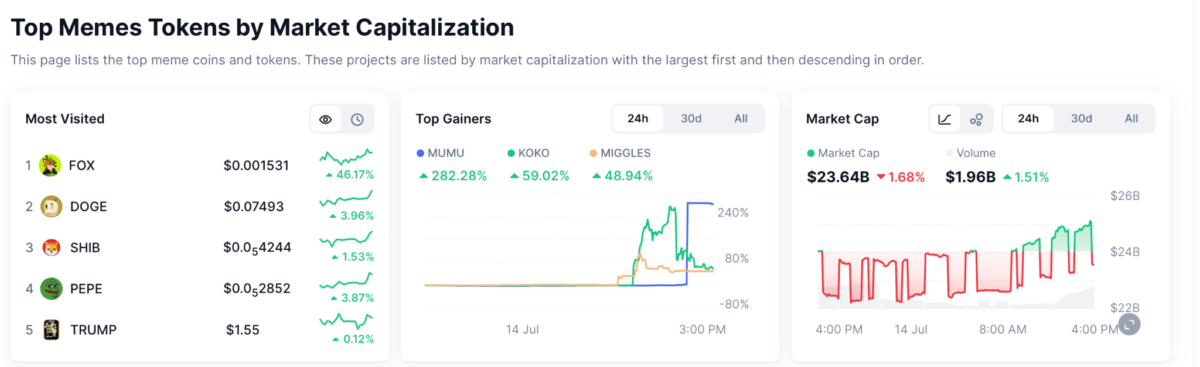
Major memcoins have also seen larger losses than Bitcoin and Ethereum over the past year. For instance, Dogecoin is down about 62% in a year. Shiba Inu has also fallen by around $69%, Pepe has dropped nearly 78%, and Bonk has also lost roughly 86%. Meanwhile, Bitcoin and Ethereum have declined by about 48% and 41%, respectively.
Exchanges become more selective
The decline in interest is also showing up on crypto exchanges. According to data from CryptoRank, centralized exchanges listed far fewer memecoins during the first half of 2026 than before.
After reaching a peak of 196 new memecoin listings in the fourth quarter of 2024, the number continued to fall over the next six quarters, dropping to just 41 listings in the second quarter of 2026. At the same time, tokenized assets became the most common new listings on major exchanges.
The trend suggests exchanges have become more selective about the projects they list as interest in memecoins cools. Fewer new listings also reduce opportunities for new memecoins to attract traders and gain broader market attention.
Also Read: Zcash (ZEC) Price Jumps 15% This Week as Trading Volume Falls