The world of cryptocurrencies is both unpredictable and rife with asymmetric opportunities, where risk and reward collide in ways that test human judgment, timing, and sheer luck, fortunes can shift dramatically with a single decision. One wallet’s quiet entry into a fledgling memecoin has become the latest reminder that markets reward patience as often as they punish it, turning modest capital into life-altering sums while most participants chase fleeting hype.
A trader using the address ending in 0xDE4C spent $838 roughly 20 days ago to buy 15.04 million CASHCAT tokens. As the memecoin exploded higher on Robinhood Chain, the holder sold 13.5 million for $917,600 and retained 1.5 million now worth about $133,700, for total profits near $1.05 million, marking an over 1,250-fold return.
Lookonchain spotlighted the trade on July 8 amid a broader surge in activity on the new network.
The purchase took place when CASHCAT was trading at negligible levels on the chain’s decentralized exchange setup. The wallet held steady through quieter phases before the recent breakout. Selling most of the bag during the acceleration locked in the bulk of gains while leaving some skin in the game.
This holding period stands out in a space where rapid flips dominate. Broader analytics across chains often show average hold times for memecoins measured in seconds or minutes rather than weeks. Surviving early volatility and catching the momentum wave proved decisive here.
Robinhood Chain and the Meme Coin Catalyst
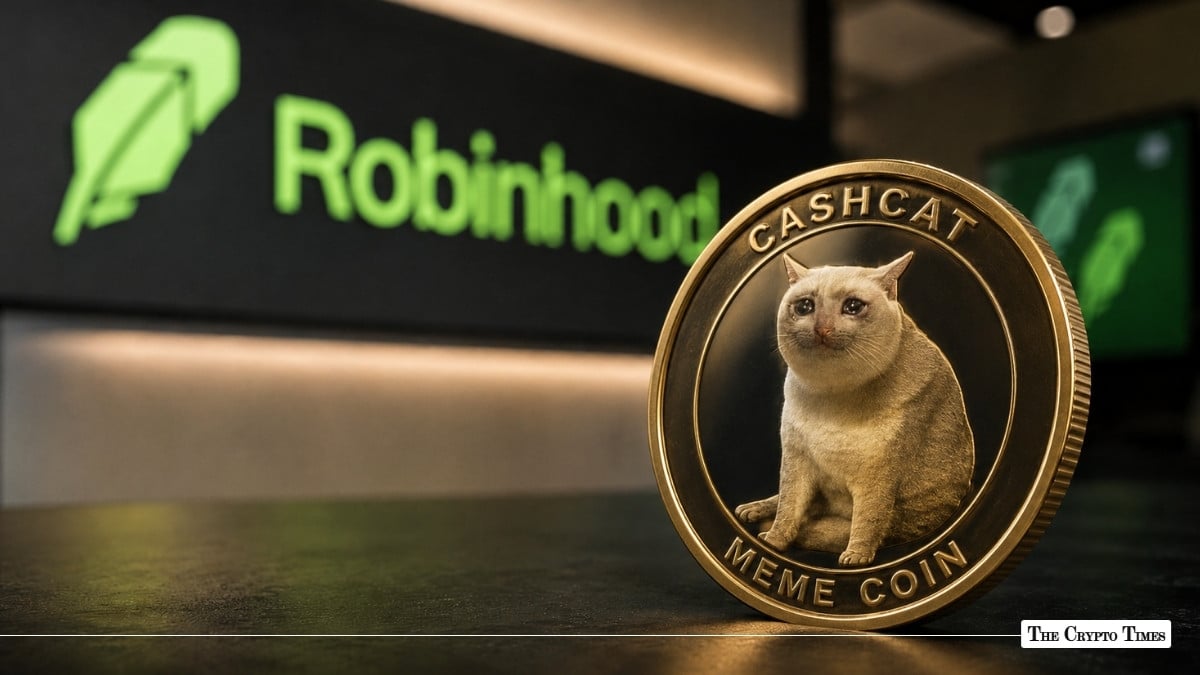
CASHCAT trades on Robinhood Chain, the Layer 2 network that Robinhood launched with its public mainnet on July 1. Built on Arbitrum, the chain emphasizes on-chain finance and tokenized assets, yet early traction has come heavily from speculative tokens.
CEO Vlad Tenev’s recent observation that the chain works well for memes added fuel as trading intensified around CASHCAT and similar projects.
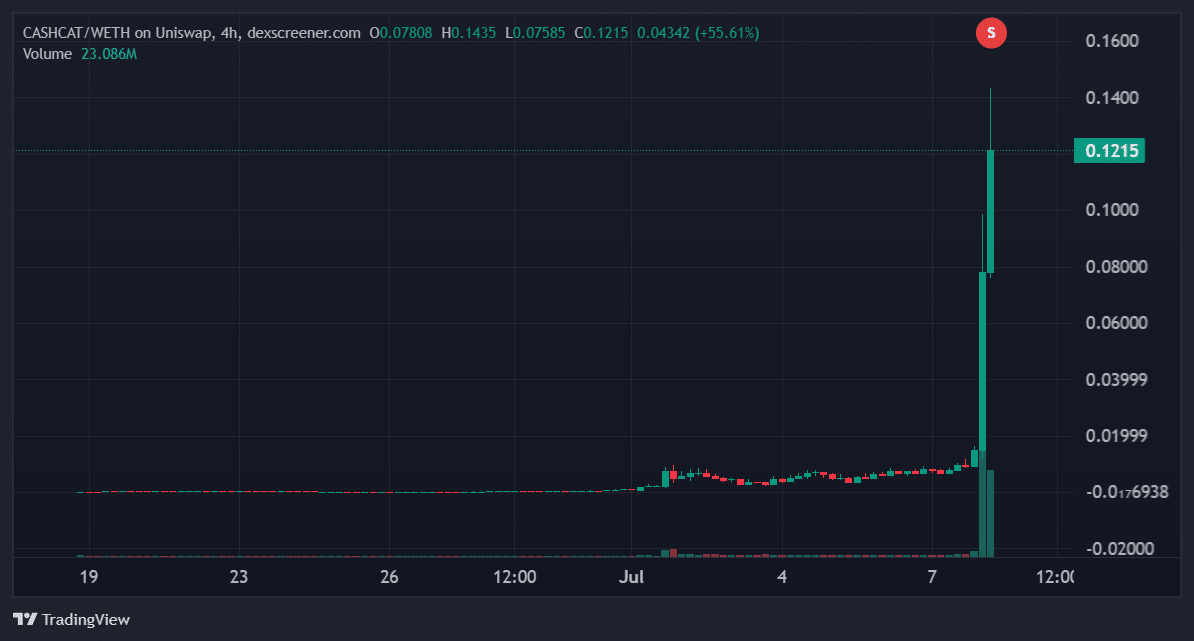
The token draws thematic inspiration from Robinhood’s own history, nodding to an early “Cash Cat” mascot from the brokerage’s origins. Price action turned explosive on July 8, with reported gains of 700% to nearly 950% in 24 hours. Market capitalization climbed from low millions into the $68–100 million range at peaks, supported by rising volume and liquidity on the chain’s Uniswap V3 deployment.
This development fits into a wider 2026 resurgence for memecoins after a tougher stretch in 2025, as new infrastructure draws fresh attention and liquidity.
Similar Wins and the High-Stakes Reality
Another success story follows the jackpot for trader 0xeee2 who turned just $86 into $1.6 million—a remarkable 19,061x return—by purchasing 17.5 million $CASHCAT tokens roughly three weeks ago. He later sold 3.6 million tokens for $390,500 while retaining 13.8 million tokens now valued at approximately $1.24 million.
Such comparable breakouts have appeared regularly in different tokens during recent months. One trader converted about $2,480 into more than $12 million by holding the Binance Life memecoin for roughly eight months after an early buy, according to June reports.
In March, an $8,000 position in PUNCH reached peaks above $3.1 million. These examples highlight how early conviction in narrative-driven tokens can pay off when conditions align.
Yet the landscape remains unforgiving for most. Data around prominent political-themed memecoins showed nearly one million buyers facing collective losses of $3.8 billion by late June, illustrating the asymmetry where winners are celebrated publicly while widespread erosion goes quieter.
Meme markets thrive on speculation, community momentum, and rapid narrative shifts. Factors like wash trading or liquidity dynamics appear in many high-return cases, though outcomes vary by token. The CASHCAT episode adds to the pattern: a fresh chain with built-in visibility, a relatable theme, and on-chain transparency that turns private bets into shared spectacles.
For other traders, the lesson echoes across cycles. Opportunity exists, but so does rapid reversal once hype cools. The latest Robinhood Chain standout serves as both inspiration and cautionary tale in a sector defined by extreme volatility and uneven results.
Also read: Justin Sun Confirms $13.3M BTTC Bridge Drain Was Sunset Program, Not an Exploit