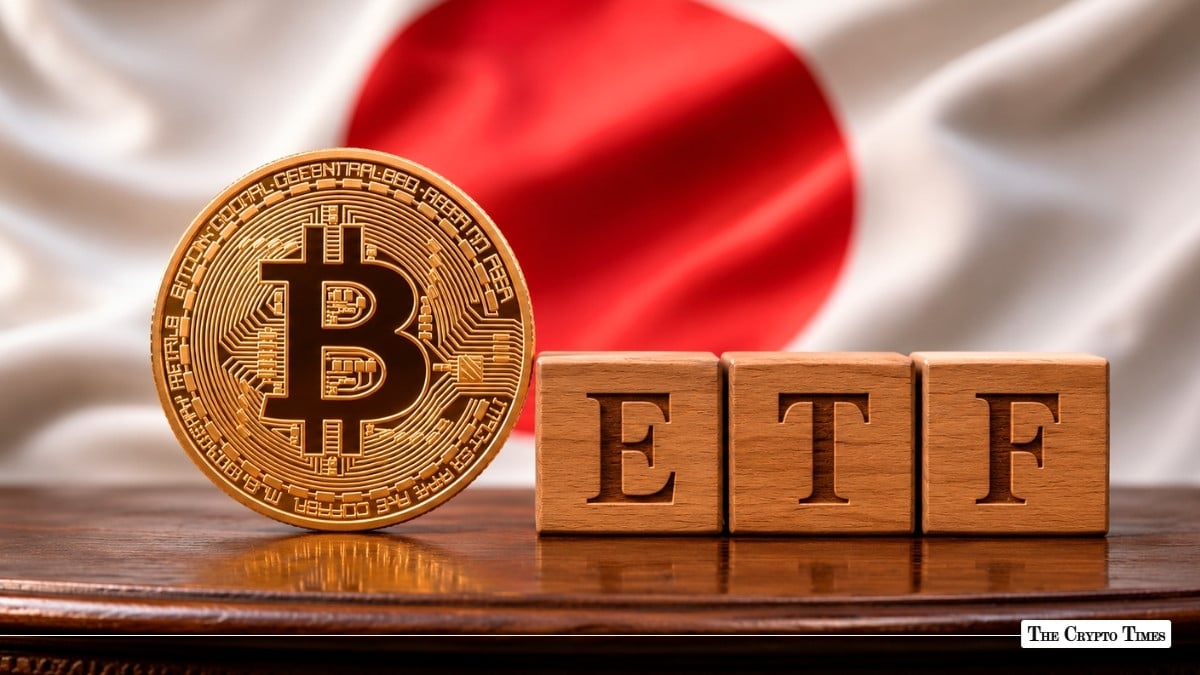
Japan is on the verge of rewriting its relationship with crypto. The Upper House committee has approved the amendment reclassifying Bitcoin and other digital assets as financial instruments, clearing the last procedural hurdle before a full chamber vote, one that observers widely regard as a formality given the ruling Liberal Democratic Party’s control of both houses.
When it passes, the world’s fourth-largest economy will have done in a single legislative package what the United States has spent years failing to do.
What the Bill Actually Does
The core of the reform is a legal migration. Crypto in Japan has been governed since 2017 by the Payment Services Act (PSA), a framework built in the aftermath of the Mt. Gox collapse that treats digital assets primarily as payment tools, with a correspondingly light disclosure and protection regime. The bill moves Bitcoin, Ethereum, XRP and other tokens under the Financial Instruments and Exchange Act (FIEA), the same law that governs stocks, bonds and investment trusts.
That is not a relabeling exercise. It reconstitutes crypto as an investment asset class in the eyes of Japanese law, and everything else in the package, ETFs, the tax cut, insider-trading rules, flows from that single reclassification.
The ETF Pathway
The headline consequence is exchange-traded funds. By bringing crypto under securities law, the bill creates the legal architecture for licensed operators to offer spot crypto ETFs, a product category that has never existed in Japan. Representatives of the Tokyo Stock Exchange have indicated trading could begin as soon as 2027, and Japan Exchange Group has signalled crypto-linked ETFs could start listing next year.
The institutional pieces are already moving into place: Nomura and SBI, two of Japan’s financial heavyweights, are positioned for future spot crypto products. The template is obvious — US spot Bitcoin ETFs, launched in early 2024, became the fastest-growing ETF category in history and permanently altered who owns Bitcoin. Japan is a market with more than 13 million crypto accounts and one of the world’s largest pools of household savings, and it has never had a regulated wrapper through which conservative capital could touch the asset.
One caveat matters: the pathway is not the product. Any ETF would still require the Financial Services Agency to write approval criteria and issuers to file, and no concrete product has been filed yet.
The Tax Cut and the Timeline Nobody Gets Right
For Japan’s retail traders, the tax change is the reform they have waited years for. Crypto gains are currently taxed as miscellaneous income on a progressive scale that can reach roughly 55%, up to 45% national plus about 10% local inhabitant tax. The bill would shift qualifying gains to separate taxation at a flat 20% (often cited as 20.315%), identical to what an investor pays on stock market gains.
But the two halves of the reform run on different clocks, a distinction most coverage blurs. The FIEA reclassification is targeted to take effect in fiscal 2027, roughly a year after enactment. The flat tax follows separately under the 2026 Tax Reform Outline and would activate in 2028. In practice, that means Japan could see institutional product availability first and retail tax relief the year after.
The economic logic is about unlocking frozen capital as much as attracting new money. A punitive top rate does not just deter buyers; it deters sellers, creating tax-driven inertia among holders reluctant to ever realise a gain. Roughly 70% of Japan’s 13 million-plus crypto accounts hold less than ¥7 million (about $43,600), a heavily retail-skewed market that stands to benefit directly.
The Price of Legitimacy
This is not a giveaway, and the industry knows it. In exchange for securities status, crypto inherits securities obligations. The bill extends insider-trading prohibitions to crypto for the first time, covering anyone with material non-public information: issuers, exchange operators, and those aware of pending listings, delistings, or major technical incidents. It imposes expanded disclosure requirements across the 105 tokens currently approved for domestic trading, and it sharpens enforcement dramatically: the maximum prison term for operating an unregistered crypto business rises from three years to ten, with fines up to ¥10 million.
Not everyone is celebrating. During FSA working-group meetings, industry representatives warned the compliance burden may be excessive, noting that roughly 90% of Japan’s domestic exchanges already operate at a loss. Some committee members described the proposals as “too heavy-handed” and urged regulators to balance investor protection against market viability. The reform’s cost will fall hardest on the smallest operators, a consolidation pressure that securities-grade compliance tends to produce everywhere it lands.
Notably, stablecoins are carved out entirely, remaining under the Payment Services Act as electronic payment instruments; a deliberate split that lets Japan’s banking giants MUFG, SMBC and Mizuho pursue their joint stablecoin plans on a separate track.
The Global Contrast
Japan’s achievement is coherence. In one bill, it settles classification, taxation, ETF access, insider trading and licensing — the entire architecture of a crypto market. Set that against the alternatives and the gap is stark.
In the United States, the CLARITY Act remains stalled on the Senate calendar, deadlocked over ethics provisions, developer protections and stablecoin yield, with prediction markets pricing its 2026 passage near a coin flip. Europe got its rulebook through MiCA but at the cost of an 80% attrition rate among firms. And in India, the world’s largest market by adoption, the trajectory runs the other way: a 30% tax and 1% TDS remain untouched, pushing the bulk of trading offshore, and the Reserve Bank told Parliament this month that it does not recommend granting crypto legal status at all.
Two of Asia’s largest economies are now moving in precisely opposite directions. Japan is cutting its top rate from 55% to 20% and building ETF rails; India is holding at 30% plus a transaction levy with no legal recognition. Capital notices these things.
The Bottom Line
The reform arrives in a market that badly needs a structural story. Bitcoin is down roughly 30% year-to-date and trading near $62,000, weighed down by rate fears and geopolitics, and Japan’s news has not produced a price spike, because legislation works on a slower clock than sentiment. The reclassification lands in fiscal 2027, the tax cut in 2028, and the first ETF is still an application nobody has filed.
But that is the point. What Japan is building is not a catalyst; it is plumbing. Regulated ETF access, stock-equivalent taxation, and securities-grade market rules are the conditions under which institutional money stops treating crypto as an exotic and starts treating it as an allocation. If the floor vote lands as expected, Japan will have gone from crypto’s most notorious cautionary tale, the country of Mt. Gox, to the jurisdiction with the clearest, most complete rulebook in the developed world. The rest of the field is still arguing about the first chapter.
Also Read: Ben McKenzie, Senate Democrats Come Out Against CLARITY Act Over Ethics