Key Highlights
- Qivalis plans to issue its euro stablecoin on Ethereum, according to Ethereum Institutional.
- The consortium now includes 37 banks across 15 European countries.
- The stablecoin is planned to be backed 1:1 by euros under the EU’s MiCA framework.
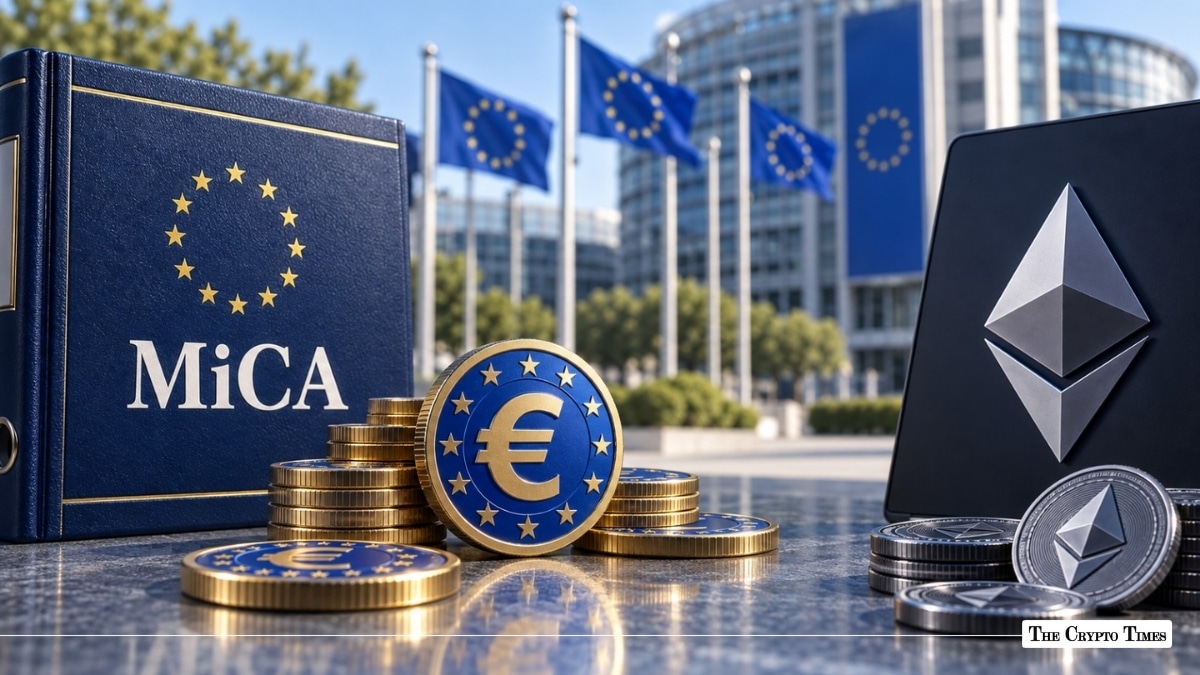
A consortium of 37 European banks across 15 countries is preparing to launch a euro stablecoin on Ethereum’s public blockchain, adding a bank-backed digital asset to an established onchain ecosystem.
According to an Ethereum Institutional X post on September 8, the consortium plans to issue the stablecoin on Ethereum rather than limiting it to a private banking network. Known as Qivalis, the initiative is being developed under the European Union’s Markets in Crypto-Assets (MiCA) framework.
The stablecoin is planned to maintain a 1:1 value with the euro, but Qivalis has not yet launched and remains subject to regulatory approval in the Netherlands.
Qivalis plans to issue stablecoin on Ethereum
The planned use of Ethereum’s public blockchain is a central part of the Qivalis project.
Ethereum Institutional said Qivalis intends to issue the euro stablecoin on a public blockchain, while some other bank-led digital-money projects have focused on private or permissioned networks.
The planned deployment would place Qivalis within Ethereum’s existing network of wallets, applications and blockchain infrastructure.
However, Qivalis has not yet provided details on which applications or institutions will support the stablecoin after launch. Its eventual use will depend on the final product design, regulatory approval and distribution arrangements.
Qivalis still awaiting regulatory approval
Qivalis is targeting a launch in the second half of 2026, but the project remains in its pre-launch stage.
The consortium is seeking authorization from De Nederlandsche Bank (DNB) to operate as an Electronic Money Institution (EMI), Qivalis website read.
The proposed stablecoin is expected to be backed one-to-one by euros and operate within the applicable European regulatory framework.
Qivalis has not yet issued the stablecoin to the public, so details around its final reserve structure, distribution arrangements and operational model could change before launch.
The Pharos stablecoin tracker also currently lists Qivalis as pre-launch, with an expected launch in Q4 2026.
Qivalis expands from nine banks to 37
The consortium has expanded significantly since the initiative was first announced.
Qivalis was incorporated in September 2025 as a nine-bank consortium, including ING, UniCredit and KBC, which sought to develop a shared MiCA-compliant euro stablecoin.
BNP Paribas joined in December 2025, followed by DZ BANK in late December and BBVA in February 2026, bringing the group to 12 banks.
The consortium expanded in May by adding 25 banks, including ABN AMRO, Rabobank and Intesa Sanpaolo, taking the total to 37 banks across 15 countries.
In April, several Spanish lenders, including Banco Sabadell, Bankinter, Kutxabank, Abanca and Cecabank, were involved in discussions around joining the initiative.
The growing membership gives Qivalis a larger group of potential banking participants ahead of the proposed launch, although membership alone does not indicate future stablecoin usage.
Euro stablecoins remain smaller than Dollar assets
Qivalis is entering a stablecoin market dominated by U.S. dollar-denominated assets.
Ethereum Institutional estimated that dollar-pegged stablecoins account for around 99.5% of the roughly $300 billion global stablecoin market.
Euro-denominated stablecoins represent a much smaller portion of the market. Qivalis is being developed as European banks examine the use of regulated euro-based digital money for blockchain-based payments and settlement.
MiCA provides the regulatory framework for stablecoin issuers operating in the European Union, including requirements covering authorization, reserves, governance and consumer protection.
Ethereum connects Qivalis to existing onchain infrastructure
Issuing Qivalis on Ethereum would allow the planned stablecoin to operate within an existing public blockchain environment rather than a closed banking network.
The deployment would place Qivalis within Ethereum’s broader infrastructure, although the project’s final access, transfer and distribution rules have not been disclosed.
The distinction between a public and private network is relevant to Qivalis because the stablecoin is being developed for regulated financial institutions while also targeting blockchain-based payments and settlement.
Whether that structure leads to broader onchain use will depend on how the participating banks and other institutions deploy the asset after launch.
Also Read: BDACS Taps LayerZero to Expand Korean Won Stablecoin