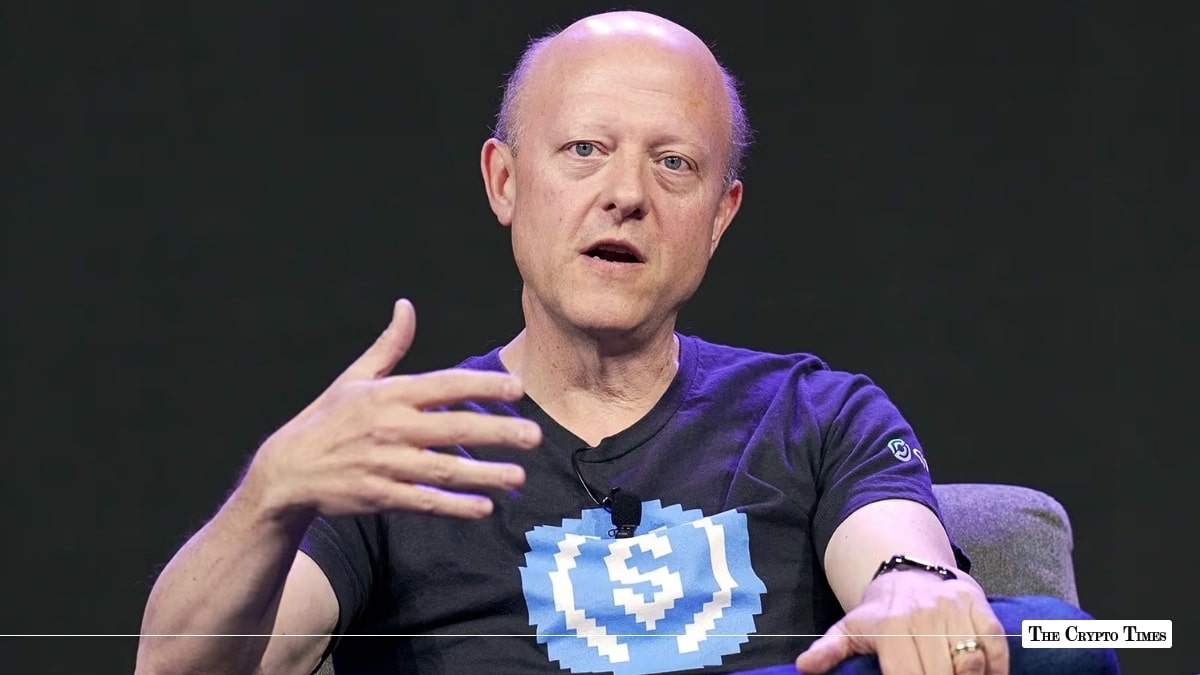
Circle CEO Jeremy Allaire has issued a detailed, point-by-point rebuttal of Open USD, the consortium-backed stablecoin whose launch helped knock Circle’s stock down sharply this week, arguing that the rival’s headline advantages will buckle against the network effects USDC spent a decade building.
Taking apart the pitch
Responding to what he said were numerous investor questions about OUSD, Allaire addressed the three features the newcomer has leaned on hardest and dismissed each in turn.
On free minting and redemption, he argued the case is thinner than it sounds. The entire payments industry, he noted, is built on small basis-point fees at various points on a network, and stablecoins with strong redemption facilities and deep liquidity tend to become the off-ramp for weaker competitors regardless of advertised fees. A blanket promise of unlimited, free redemptions, he suggested, is the kind of pledge market reality eventually forces issuers to walk back, a concern Circle addresses through contractual arrangements rather than a universal fee waiver.
On Open USD’s promise to share reserve income broadly with partners, Allaire countered that Circle already distributes the majority of its income to distribution partners but deliberately retains a meaningful share to reinvest in infrastructure. Giving away all the income, he warned, is “a recipe for starving an infrastructure, systematically underinvesting and ensuring that your platform will remain limited in scope.”
It was his third rebuttal, on governance, that landed hardest. Allaire called the track record of consortium products “absolutely dismal” at achieving scale, product-market fit, or basic agility, arguing that large groups of large companies coordinate poorly, move slowly, and tend to starve the shared venture out of self-interest. He disclosed that Circle itself tried a consortium model in USDC’s early days and “ran into endless challenges and complexity” even with a small group—and predicted that many firms lending their logos to OUSD will still route real business to the market leader when it serves their customers.
The moat thesis
Underpinning the rebuttal is Allaire’s core claim: that stablecoins are not commodity products but platform businesses that tend toward winner-take-most outcomes, defended by three compounding layers of network effect.
The first is integration. Every developer or service that connects to USDC, he argued, adds utility and draws more builders, which drives demand for the currency itself. The second, which he called fundamental, is liquidity—”liquidity begets liquidity.”
He positioned USDC among the three most liquid digital assets in the world alongside Bitcoin and USDT, claiming the next-closest dollar stablecoins are roughly ten times smaller and concentrated in promotional order books on a single exchange versus USDC’s liquidity, dispersed across dozens of venues. The third is regulatory: Allaire said USDC is the only large global stablecoin currently available across all of Europe and in Japan, the product of years of licensing work.
To quantify the gap, he cited third-party analytics firm Artemis, which he said measured USDC handling nearly $30 trillion in on-chain transactions in the first quarter of 2026: about 80% of all dollar-stablecoin transaction volume, with USDT accounting for the remaining 20% and every other dollar stablecoin combined registering effectively zero.
That figure is worth reading precisely: it measures transaction share, a metric on which USDC leads, rather than total circulation, where USDT remains the larger stablecoin by market value. Allaire’s point was that circulation without usage is hollow—that rival coins carry supply propped up by incentives while real activity concentrates in the two dominant networks.
The Coinbase question
The most closely watched line in Allaire’s statement was the one he could not avoid: what OUSD means for Circle’s relationship with Coinbase. The exchange is Circle’s single most important distribution partner in the USDC arrangement and also a founding member of Open USD.
Allaire moved to defuse it directly, saying the stablecoin partnership with Coinbase “remains as strong as ever” and that both companies see a large opportunity ahead to expand USDC. He extended the same framing to OUSD’s other backers, stating that Circle works closely with many of the consortium’s founding members and expects them to remain major USDC partners and customers even as they participate in a competing venture. It is, in effect, the argument that a company can bankroll a rival with one hand while remaining a loyal customer with the other.
That reassurance is precisely the tension the market is scrutinizing. Open USD’s roster—Visa, Mastercard, Stripe, BlackRock, Coinbase, and more than 140 partners in all—is not a list of also-rans, and the same distribution muscle Allaire’s credits for USDC’s dominance is what make those partners formidable if they lean into an alternative. Whether Circle’s biggest allies stay aligned or gradually hedge is the question his statement acknowledges without fully resolving.
Confidence, and the market’s doubt
For all the pointed critique, Allaire closed on a deliberately magnanimous note, saying Circle is a “huge believer” in the stablecoin ecosystem’s growth and welcoming OUSD “as a new member of the community.” He emphasized that Circle now collaborates with dozens of other stablecoin issuers across its expanding product stack—Arc, CCTP, CPN and others—helping rivals launch and interoperate even as it competes with them.
The gap between that confidence and the market’s reaction is the story’s real fault line. Circle’s stock fell roughly 16-17% on the OUSD launch and was simultaneously dropped from five Russell growth indexes, extending a slide that has drawn pointed valuation scrutiny.
Allaire’s argument — that liquidity and network effects, not launch-day partner lists, decide these contests — is a credible reading of how stablecoin markets have behaved so far. But it is a thesis about the past applied to a challenger unlike any USDC has faced, one whose entire design targets the reserve-income economics at the center of Circle’s business. His earlier, briefer reassurance did little to stem the selling; this fuller case is his attempt to change that. Whether investors buy it is the open question.