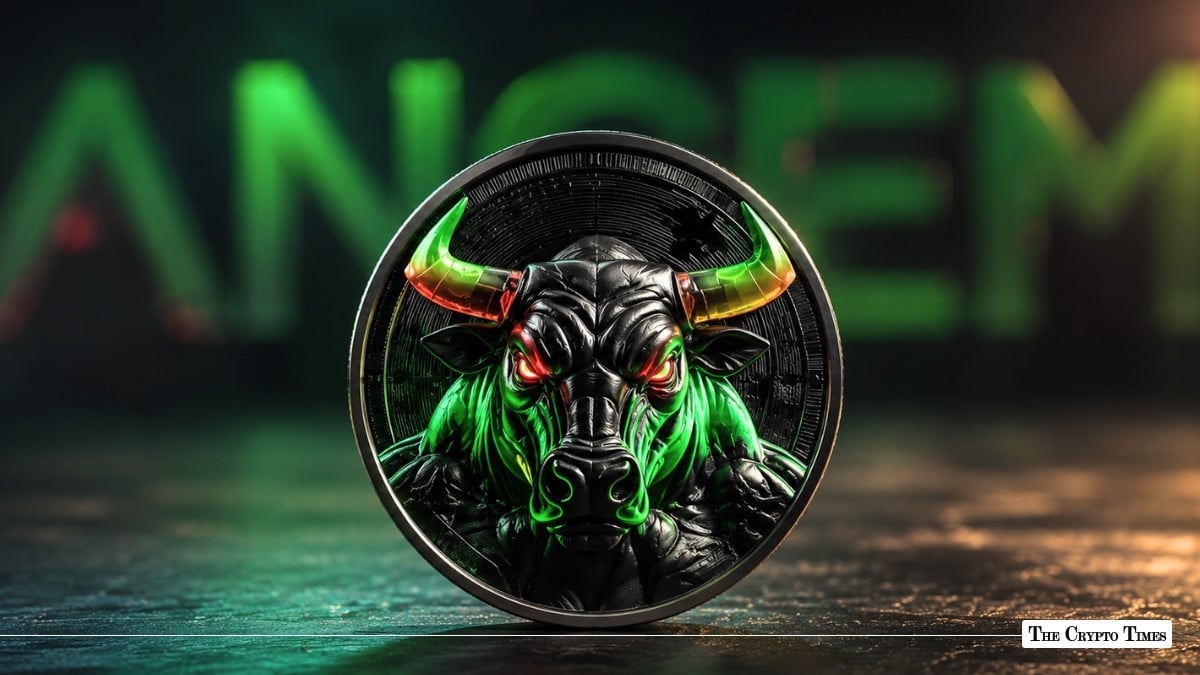
In the volatile arena of Solana memecoins, market capitalization often functions as little more than a glittering mirage. It draws crowds, fuels euphoria, and dominates social feeds, yet frequently masks thin liquidity, concentrated supply, and inherent fragility.
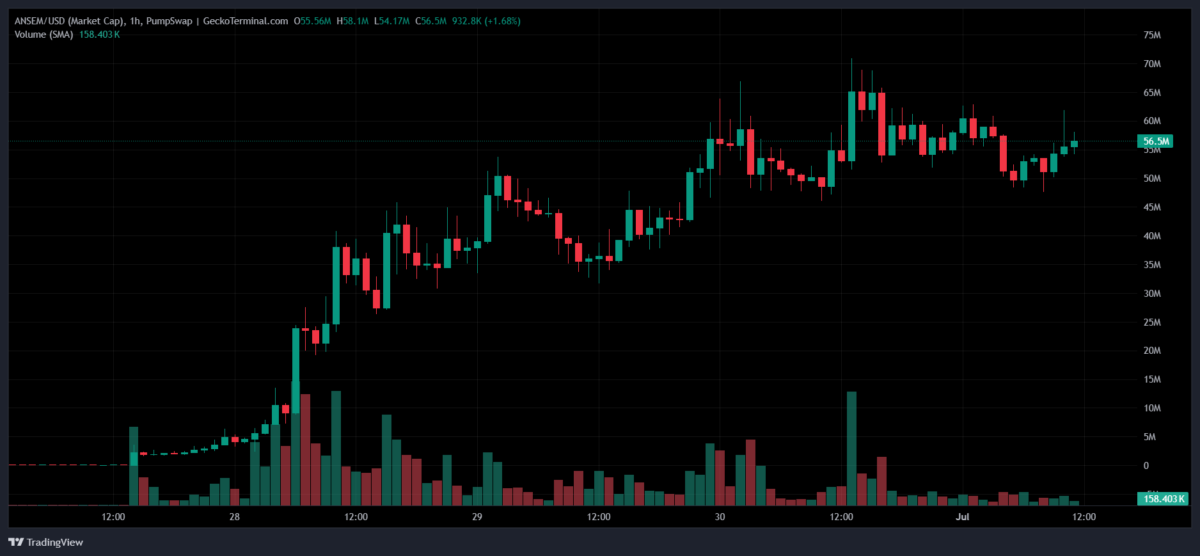
Few recent examples illustrate this disconnect more vividly than The Black Bull ($ANSEM). Surging from microcap levels to peaks well above $70 million in market cap (Mcap) within days of its launch on Pump.fun, the token delivered headline-grabbing gains of 18,000% or more for early participants.
Trading volumes for this token routinely soared into the tens of millions daily amid influencer-driven hype and airdrop announcements. However, with total liquidity lingering below $2 million across pools, ANSEM stands as a textbook case of why traders and observers should look past the MCAP scoreboard.
In meme coin markets, where speculation reigns, market cap and volume often obscure the one metric that truly determines survival: genuine liquidity depth. This critique uses ANSEM’s rapid rise—and its underlying mechanics—to expose systemic issues plaguing the sector.
The Launch: Community Takeover Meets Influencer Magnetism
ANSEM originated as a community-driven deployment on Pump.fun around June 16–17, 2026. An anonymous developer minted the token (contract ending in “pump”), and a substantial supply allocation, reports indicate roughly 65%, was directed to the public wallet of prominent Solana trader and influencer Ansem (@blknoiz06). This on-chain move forged a powerful association, even though the project began without direct official endorsement from the influencer himself.
The timing proved fortuitous as multiple $ANSEM variants emerged, sparking competition among copycats and impersonations that fragmented early liquidity. Ansem publicly distanced himself from several lesser versions while the dominant “Black Bull” gained traction.
The pivotal catalyst arrived around June 27–28: Ansem announced plans to redistribute his accumulated Pump.fun creator fees (hundreds of thousands of dollars) back to the community as airdrops or “stimmies,” criticizing the launchpad for not offering broader rewards.
This narrative—positioning the influencer as an ally to retail “trenches” against the platform—ignited explosive growth. Subsequent distributions of approximately $7 million worth of $ANSEM tokens to hundreds of wallets further amplified holder growth and momentum, though Ansem retained control over a large share of supply (around 60%).
Critics described the phenomenon as a “vampire token” dynamic: by monopolizing attention and speculative capital around one influencer-linked asset, ANSEM arguably drained liquidity and focus from other Solana projects and narratives. Instead of broadening the ecosystem with new capital or users, much of the activity represented internal cycling among existing memecoin participants.
Market Cap: The Hype Mirage
Market capitalization remains the most visible and celebrated metric in crypto social circles. For ANSEM, it delivered an intoxicating narrative: rapid escalation from low single-digit millions to peaks surpassing $100 million (and briefly higher), often cited as evidence of explosive traction.
Yet MCAP is inherently flawed for speculative assets. Calculated simply as price × supply, it captures the last traded price rather than executable value at scale. In environments with concentrated holdings and limited depth, modest buying pressure—or coordinated social campaigns—can inflate it dramatically. ANSEM’s surge relied heavily on whale activity, FOMO, and the influencer’s announcements, creating self-reinforcing price discovery detached from broad-based demand.
This metric also conceals risks around supply distribution. With significant portions controlled by a few wallets, including the influencer’s, the “value” represented by MCAP becomes precarious. Large unlocks, profit-taking, or shifts in sentiment can trigger rapid unwinds that MCAP figures fail to foreshadow.
Across the meme coin space, tokens routinely achieve impressive market caps only to retrace 80–95% as hype dissipates, underscoring how the number often signals peak exuberance rather than underlying strength.
Volume: Frenzy, Not Fundamentals
High trading volume similarly dominates discussions as a proxy for interest and momentum. ANSEM frequently posted $15–80 million+ in 24-hour volume during its ascent, with turnover ratios that appeared exceptionally strong relative to its MCAP at times.
In traditional markets, sustained volume signals genuine participation and discovery. In meme coins, it more often reflects frantic churning: leveraged flips, bot activity, and social-driven entries and exits. While impressive on the surface, such volume can be largely internal—participants trading the same volatile asset back and forth amid narrative-driven swings—without introducing fresh capital or building durable ecosystems.
For ANSEM, volume spikes aligned closely with key announcements (fee airdrops, community distributions), illustrating how narrative catalysts manufacture the appearance of robust markets. However, when the music slows, this churn often evaporates, leaving holders exposed. Volume-to-MCAP ratios that look healthy can therefore mislead, masking the difference between speculative frenzy and organic, sustainable demand.
Liquidity: The Metric That Actually Matters
Liquidity—the depth of capital available for trading without massive slippage—reveals the true health of any asset. Here, ANSEM’s profile diverged sharply from its headline metrics. Gecko Terminal data shows that the primary PumpSwap pool hovered around $1.3–1.4 million, while combined liquidity across Meteora, Orca, and other venues remained under $4 million.
This thin depth relative to a multi-million (or hundred-million) MCAP creates acute risks. Moderate sell pressure can cause outsized price drops, amplifying volatility and deterring larger participants. It also heightens manipulation potential and leaves retail traders vulnerable during exits. Even with routing across DEXes and community liquidity efforts, the aggregate pool remains modest for an asset of ANSEM’s valuation, highlighting a structural weakness common to rapid Pump.fun launches.
Sustainable markets require liquidity that scales meaningfully with interest. In its absence, high MCAP and volume become performative, impressive on dashboards but fragile in practice.
ANSEM as Prime Example and Broader Implications
ANSEM encapsulates the meme coin playbook’s strengths and pitfalls. Permissionless launches enable rapid experimentation and community participation, while influencer involvement and airdrop mechanics turbocharge adoption. Yet they also concentrate power, foster copycat chaos, and prioritize short-term speculation over resilience.
The “vampire” effect—siphoning ecosystem-wide attention and capital into one hype cycle—exacerbates opportunity costs. Resources flow toward narrative-driven assets rather than infrastructure or applications with longer horizons. Retail participants, lured by MCAP milestones and volume surges, often provide the liquidity that facilitates early exits for insiders.
This dynamic is not unique to ANSEM but finds its clearest expression here: a token propelled by social momentum and fee redistribution, yet underpinned by liquidity that lags far behind perceived value. It revives critiques of the celebrity-coin meta, where reputation and attention convert quickly into paper gains but evaporate under pressure.
The Path Forward
Meme coins will persist as outlets for creativity, community, and high-risk bets. Their cultural resonance and potential for asymmetric returns are undeniable. However, fixating on MCAP and volume distorts decision-making. Liquidity, distribution transparency, and exit realities deserve far greater scrutiny.
For the broader crypto space, ANSEM’s story offers a timely reminder. True progress lies not in chasing ever-higher headline numbers, but in fostering markets with genuine depth, aligned incentives, and resilience beyond the next viral pump.
Until metrics align with economic reality, participants would do well to remember: in meme coins, what glitters on the chart often conceals thin ice below.
Also read: Goliath Ventures CEO Pleads Guilty in $250M Crypto Ponzi Case