The same Chinese organization whose executives were convicted in the U.S. over fentanyl-precursor smuggling is now suspected of operating a large-scale cryptocurrency fraud from a corporate base in Japan, according to an investigation.
A fake “zksync.jp” token built to catch crypto users
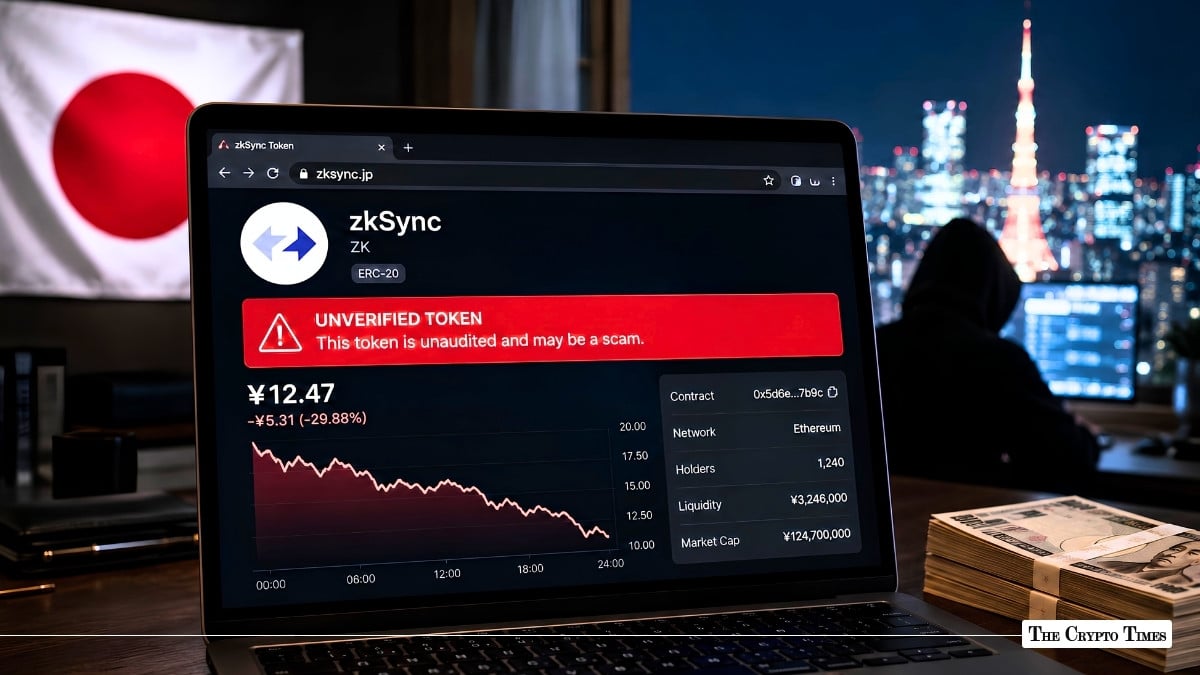
The crypto-native detail sets this apart from a routine drug-money case: the network allegedly distributed a fraudulent token under the name “zksync.jp,” impersonating the legitimate zkSync Ethereum Layer-2 network to deceive holders worldwide. Reported losses run to hundreds of millions of yen, or upwards of $1 million, according to Nikkei.
The choice of disguise mattered. zkSync is one of Ethereum’s larger scaling networks, and borrowing its name lent the fake token instant, unearned credibility. The scam also leaned on Japanese internet domains to project legitimacy, a familiar impersonation playbook aimed squarely at retail crypto users, run alongside, not instead of, the network’s chemical trade.
One distinction is worth holding firmly: the drug convictions are established fact, while the crypto-fraud link is Nikkei’s investigative finding and remains suspected, not adjudicated.
On-chain trail: 120+ transfers to sanctioned wallets
To map the money, Nikkei built an analytical program around wallet addresses disclosed in U.S. court evidence, focusing on activity after September 2022, when the Japan front relocated to Nagoya, and flagging suspicious transactions as early as that October. The blockchain trails connected the network to Chinese financial-fraud groups, the report said.
Nikkei traced more than 120 cryptocurrency transactions between the network and entities under U.S. sanctions, evidence it said points to money laundering. Tien-Peng Ho of analytics firm TRM Labs told Nikkei that Japan’s proximity to mainland China, its open financial system, and heavy cross-border trade make it an attractive place to disguise illicit proceeds as legitimate funds.
That read tracks a documented pattern. TRM Labs has found that roughly 97% of more than 120 China-based drug-precursor manufacturers it studied accept crypto, while Chainalysis has traced fentanyl-linked on-chain flows for years, including $5.5 million in stablecoins routed from Latin American cartels to Chinese fentanyl producers and an estimated $250 million reaching suspected chemical-shop wallets since 2015.
How Japan became the network’s quiet hub
At the center sits Hubei Amarvel Biotech, a Wuhan-based chemical manufacturer. Two of its executives were convicted in a Manhattan federal court in February 2025 of conspiring to import fentanyl precursors into the U.S., a case in which prosecutors said the firm agreed to sell roughly 210 kilograms of precursors in exchange for cryptocurrency, and the two were later sentenced to 25 and 15 years.
Amarvel’s Japanese front was Firsky KK, a company registered in Nagoya that presented itself as a Japanese-owned supplier while serving as an operational hub. A figure Nikkei previously identified as Chinese national Xia Fengzhi, referred to in U.S. court materials as the “boss in Japan,” allegedly directed logistics and money management from there. Firsky was liquidated in July 2024, and Xia’s whereabouts are unknown. European investigative collective Bellingcat has separately confirmed that Firsky and Amarvel were effectively the same organization.
That Japan figures at all is itself notable: the country had not previously been officially linked to fentanyl trafficking before this strand of reporting.
A network that no longer separates drugs from fraud
The Japan thread points to a convergence crypto investigators have flagged repeatedly: the same shell that moved chemicals also appears to have run token fraud, collapsing two rackets onto one set of rails. It fits a run of recent enforcement, including a March grand jury in Ohio that indicted two Chinese firms and six nationals over crypto-paid fentanyl precursor sales to a Mexican cartel.
The pattern also overlaps with the Chinese laundering networks that have industrialized crypto fraud across Asia. The timing is pointed for Tokyo: Japan’s cabinet approved a bill in April to reclassify crypto as financial products, and regulators are weighing the country’s first crypto ETFs, even as this case suggests its open system has already been exploited as a laundering node.
Also Read: The 2026 Pig Butchering Reckoning: Inside the Year’s Biggest Crypto Scam Crackdowns