Welcome to this week’s cryptocurrency market update. If last week was about SpaceX’s record IPO sparking a crypto frenzy, SBF losing his final appeal, and Humanity Protocol’s $36M hack being traced to North Korea, this week the narrative shifted to macro policy, institutional positioning, and a relentless string of DeFi exploits.
Kevin Warsh chaired his first FOMC meeting and held rates at 3.5%-3.75% while gutting the Fed’s forward guidance language, which triggered $122M in BTC and ETH liquidations within hours; Morgan Stanley filed an amended S-1 for a spot Ethereum ETF with built-in staking at a 0.14% management fee, undercutting BlackRock; Ethereum’s Glamsterdam upgrade entered final devnet testing with ePBS and a potential gas limit increase to 200 million; Strategy added another 1,587 BTC to its treasury amid growing STRC scrutiny; DeFi protocols lost over $12 million across exploits hitting Aztec Connect, Thetanuts, PancakeSwap, and Axelar; and Coinbase launched real 1:1 tokenized stocks for global investors. Let’s get into it.
Top headlines for this week
Below are the major headlines, giving an overview of what happened in the crypto market this week.
Kevin Warsh’s first FOMC meeting rattles crypto markets
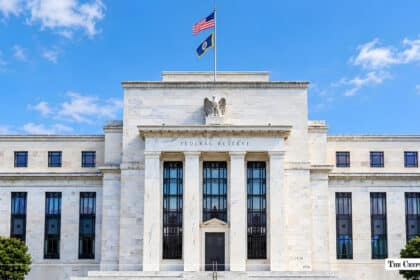
The most market-moving event of the week came from Washington, not from any blockchain. New Fed Chair Kevin Warsh presided over his first FOMC meeting on June 17, and the committee voted unanimously to keep the benchmark rate at 3.5%-3.75%. The rate hold was expected. What was not expected was the overhaul of the Fed’s policy statement.
Warsh stripped the statement down dramatically, removing language that had long signaled a bias toward future rate cuts. The updated dot plot showed that nine of eighteen participants now anticipate at least one rate hike in 2026, a sharp shift from March when the median projection pointed toward a cut. Warsh himself did not submit a dot, a deliberate choice that underscored his stated preference for reducing forward guidance.
Crypto markets reacted swiftly. The FOMC decision wiped out $122 million in BTC and ETH liquidations as leveraged traders got caught on the wrong side of the hawkish signal. The move was less about the rate hold itself and more about the repricing of expectations.
When the Fed signals that hikes are more likely than cuts, risk assets across the board take the hit, and crypto, sitting at the far end of the risk spectrum, absorbs it first.
The bigger picture for crypto is the macro environment that Warsh is inheriting. With CPI running at 4.2% and the Fed’s inflation projections raised to 3.6% for headline, the era of cheap money that fueled the 2024-2025 crypto rally looks increasingly distant.
For Bitcoin and Ethereum, the question is no longer when the Fed cuts. It is whether the Fed hikes, and how much more pain leveraged positions can absorb if it does.
Morgan Stanley files for staking-enabled spot Ethereum ETF
The biggest institutional move of the week came from Morgan Stanley’s amended S-1 filing for a spot Ethereum ETF with a built-in staking component. The proposed Morgan Stanley Ethereum Trust would trade on NYSE Arca under the ticker MSSE, charging a management fee of just 0.14% while keeping only 5% of staking rewards.
That fee structure is aggressive. BlackRock’s iShares staked Ethereum product carries a standard fee of 0.25%, though its first-year promotional waiver drops it to 0.12%. Morgan Stanley’s approach is clearly designed to win market share on cost, with custody handled by Bank of New York Mellon and Coinbase Custody, and authorized participants including Jane Street, Virtu, Goldman Sachs, and Macquarie.
The staking element is the real differentiator. The trust plans to stake 50-80% of its ether holdings and pass rewards to shareholders, making it one of the first major institutional ETF products to offer passive yield on a crypto asset. If approved, this changes the investment thesis for institutional Ethereum exposure from pure price speculation to a yield-bearing instrument.
This filing arrives at an interesting moment for Ethereum, which simultaneously faces a funding crisis as core developers warn they have only 3-9 months of runway left. The contrast is stark: Wall Street is racing to package ETH as an institutional product while the people actually building the protocol are running out of money.
Ethereum’s Glamsterdam upgrade enters final testing
On the technical side, Ethereum hit a major milestone as its Glamsterdam upgrade entered final devnet testing. Ethereum Foundation developer Parithosh Jayanthi confirmed that devnets are now running with all planned EIPs included, describing Glamsterdam as “probably the largest fork we’ve had since the Merge.”
The upgrade bundles two headline proposals. EIP-7732 introduces Enshrined Proposer-Builder Separation (ePBS), which moves block building logic directly into Ethereum’s core protocol, reducing reliance on external relays that currently handle 80-90% of blocks.
EIP-7928 adds Block-Level Access Lists, which allow each block to declare in advance which accounts and storage it will touch, enabling parallel transaction processing. Together, these changes could raise Ethereum’s gas limit from 60 million to 200 million, a capacity increase that would fundamentally alter the economics of using the network.
Mainnet activation is now expected in H2 2026. The upgrade was originally penciled in for H1 but was pushed back given the scale of the changes. Simple ETH transfers could become up to 71% cheaper under the proposed gas repricing, a change that matters for everyday users who have long complained about Layer 1 costs.
For Ethereum, Glamsterdam represents a strategic pivot back to Layer 1 scaling after years of pushing activity onto rollups. If the upgrade ships cleanly, it addresses the throughput criticism that has dogged Ethereum in its competition with Solana and other high-performance chains. If testing reveals problems, the delay could compound the narrative damage from the funding crisis and the broader ETH price decline.
Strategy and Strive keep stacking Bitcoin
The Bitcoin treasury playbook continued to expand this week with two notable moves. Strategy added another 1,587 BTC to its holdings amid ongoing price volatility. The purchase came even as MSTR slid 5% under growing scrutiny of Strategy’s preferred stock instrument, STRC, which critics argue adds layers of financial complexity to what was supposed to be a straightforward Bitcoin bet.
Michael Saylor addressed the STRC scrutiny directly, reflecting on Strategy’s broader turnaround and framing the company’s Bitcoin accumulation as a long-term conviction play. Peter Schiff, as expected, aimed at the STRC price drop, calling it a sign of structural weakness. Meanwhile, Strive Asset Management added 73 Bitcoin worth $4.7 million to its treasury, growing its position in what is becoming an increasingly crowded corporate Bitcoin strategy.
Capital B went even bigger, securing a EUR 105 billion financing authorization for its own Bitcoin strategy. The war chest is staggering in size and signals that the corporate Bitcoin treasury trend is accelerating, not fading, even in a challenging macro environment.
The question that hangs over all of this is whether buying Bitcoin with leverage and preferred stock structures during a rate-hiking cycle is conviction or overreach. The strategy’s model works brilliantly when BTC goes up. The STRC scrutiny reveals what happens when the market starts asking what happens if it does not.
DeFi exploits pile up across multiple protocols
This was one of the worst weeks for DeFi security in recent memory. The exploit tally across protocols exceeded $12 million, and the variety of attack vectors on display was as concerning as the dollar amounts.
The Aztec Connect exploit drained $2.19 million from a dormant privacy protocol, with SlowMist later detailing the root cause of the vulnerability. Aztec Network’s RollupProcessor was hit separately for $2.21 million. Thetanuts suffered a $2.1 million flash loan exploit. PancakeSwap’s Labubu pool was exploited for $1.1 million. The DIP token bug drained $111K from another PancakeSwap pool. And the Axelar-Secret Network bridge lost $4.67 million after a custom code flaw in Secret’s CW20-ICS20 contract failed validation.
The Drift Protocol hack created collateral damage beyond the protocol itself, forcing Pyra to terminate all card operations. And Hyperbridge, which lost $2.5 million in April, came back this week claiming it rebuilt everything from scratch rather than simply patching the vulnerability.
The pattern is clear: dormant contracts, unaudited custom code, flash loan vectors, and bridge vulnerabilities remain the low-hanging fruit for attackers. The industry talks about security constantly but continues to ship code that gets exploited within weeks of deployment.
Coinbase pushes tokenized stocks and aims to comply with accredited investor laws
Coinbase made two significant moves this week. The exchange launched real 1:1 tokenized stocks for global investors, explicitly positioning the product as backed by actual equity rather than synthetic exposure or derivatives. The distinction matters, especially after last week’s SpaceX IPO highlighted how many crypto exchange products give users exposure without actual ownership.
Separately, CEO Brian Armstrong called U.S. accredited investor laws a “regressive tax”, arguing that wealth-based restrictions on who can invest in certain assets disproportionately hurt ordinary Americans.
The statement aligns with the broader push from the CLARITY Act supporters to open up crypto investment access, and it comes at a time when Senator McCormick is pushing hard to land the bill before the legislative window closes.
Coinbase’s tokenized stock product is a direct competitive response to what Bybit, Kraken, and others offered during the SpaceX listing. But by emphasizing 1:1 backing with real shares, Coinbase is betting that regulatory compliance and transparency will win the long game, even if synthetic products attract more speculative volume in the short term.
News you might have missed
- SIREN crashes 95% in a week: A whale dumped 670 million SIREN tokens worth $64.8 million, sending the token into freefall and wiping out holders who could not exit fast enough.
- “Bitcoin Rodney” pleads guilty: Rodney Burton, known as Bitcoin Rodney, pleaded guilty in the $1.8 billion HyperFund crypto fraud case, adding to the list of major crypto fraud convictions in 2026.
- Arichain shuts down with scam confession: In one of the most brazen exits of the year, Arichain shut down with a literal “We Are Scammers” confession, leaving users with zero recourse.
- Humanity Protocol hackers begin cashout: The attackers behind the $36M Humanity Protocol exploit from last week started moving stolen funds to KuCoin wallets, suggesting the laundering process is underway.
- India’s ED cracks down on crypto fraud: India’s Enforcement Directorate probed the Korvio Coin MLM scheme affecting 248K victims and separately alleged INR 2,500 crore in FEMA violations in a major crypto probe.
- Andrew Tate liquidated 8 times on Hyperliquid: Tate’s $3.8M Bitcoin bet ended in eight liquidations in a single day, a reminder that leverage does not care about social media following.
- Litecoin nodes still unpatched: Weeks after a double-spend bug fix, 70% of Litecoin nodes had not updated, leaving the network exposed.
- India’s FIU seeks OTC crypto data: India’s Financial Intelligence Unit requested data on OTC crypto deals above INR 9.4 lakh, signaling tighter surveillance on off-exchange activity.
- Tether kills Alloy and aUSDT: Tether discontinued its Alloy product, shifting its focus toward liquid assets in a strategic pivot.
- Jio’s mega IPO filed: Jio’s IPO filing raised questions about its potential impact on India’s mainstream crypto adoption, with some analysts arguing that increased retail participation in markets could spill over into digital assets.
- Aster revamps tokenomics: Aster announced it would tie platform fees to ASTER buybacks and burns, a deflationary model that drew attention amid the OKX founder’s public spat with CZ over Aster DEX links.
- Cardano audit dispute grows: Hoskinson defended a 1,096 BTC allocation as an early audit dispute heated up within the Cardano community.
- BitMine controls 4.66% of the ETH supply: BitMine continued buying Ethereum despite price struggles, now controlling 4.66% of the total supply.
- ZachXBT exposes elderly scam proceeds: The on-chain investigator connected a Changelly freeze case to $475K in elderly scam proceeds, continuing his work as crypto’s unofficial fraud detective.
Buzz of the Week
The buzz this week belongs to Kevin Warsh and the Federal Reserve, and not because the rate decision itself was surprising.
What made this FOMC meeting a defining moment for crypto is how thoroughly Warsh dismantled the forward guidance framework that markets had relied on for years. The old Fed statement was a roadmap. The new one is a weather report: it tells you what is happening right now and says nothing about tomorrow.
For crypto, which trades heavily on macro expectations and rate-cut hope, the removal of that forward guidance is like pulling the rug from under the most popular trade thesis of the past 18 months.
The $122 million in liquidations that followed the statement were not just about the hawkish dot plot. They were about the market realizing that the Warsh Fed is a fundamentally different animal than the Powell Fed. Powell communicated extensively and telegraphed moves months in advance. Warsh wants optionality. He did not even submit his own dot, the most visible signal that this chairman does not want to be pinned down.
For crypto traders, this creates a new reality. The old game of front-running Fed pivots, buying the rumor on rate cut expectations, and selling the news no longer works when the chairman refuses to give you the rumor. Volatility will likely increase because the market has fewer anchors.
Meanwhile, Morgan Stanley’s Ethereum ETF filing dropped into this environment like a counterweight to the macro pessimism. A 0.14% fee with staking yield is genuinely competitive. It tells you that Wall Street is not waiting for the Fed to ease before making its Ethereum play. The bet is that institutional demand for yield-bearing crypto exposure exists regardless of what the federal funds rate does.
The irony of the week is that the same Ethereum network attracting a Morgan Stanley ETF is simultaneously running out of developer funding. Core developers warning of a 3-9 month runway while a trillion-dollar bank files to package their work into an ETF captures everything about the disconnect between crypto’s financial layer and its infrastructure layer. The financialization of Ethereum is outpacing the ability to fund the people who build it.
And then there is the exploit wave. Over $12 million drained across six or seven protocols in a single week. Aztec hit twice. PancakeSwap hit twice. Axelar’s bridge was compromised through a custom code flaw that should have been caught in a basic audit. The cumulative effect of these exploits is not just financial loss. It is a trust tax on the entire DeFi ecosystem.
Every week that goes by without a clean security record is another week where institutional capital stays on the sideline, or worse, flows into centralized products like Morgan Stanley’s ETF instead of the protocols themselves.
What to expect for next week?
Next week has several critical threads to watch.
First, the post-FOMC positioning in crypto markets will set the tone. The $122 million in liquidations cleared out some leverage, but the broader question is whether traders adjust to the new Warsh paradigm or keep getting caught by hawkish surprises. If more dot plot repricing leaks out through Fed speakers next week, expect another round of volatility.
Second, the Humanity Protocol fund movement demands attention. Stolen funds hitting KuCoin wallets mean the laundering pipeline is active. Whether KuCoin freezes those wallets fast enough and whether the DPRK attribution from last week triggers any coordinated exchange response will determine if any of the $36 million is recoverable.
Third, the Ethereum Glamsterdam timeline needs watching. With devnet testing now running all planned EIPs, the next milestone is public testnet deployment. Any setbacks in testing could push mainnet activation deeper into H2 2026, which would compound the narrative pressure on Ethereum at a time when the funding crisis and the ETH price decline are already creating anxiety.
Fourth, the CLARITY Act continues its push through Congress. Senator McCormick’s urgency language suggests the bill is entering its make-or-break phase. With Coinbase’s Armstrong publicly attacking accredited investor laws and the broader crypto industry mobilizing, the next round of amendments or committee votes could determine the bill’s fate.
Fifth, keep watching the DeFi exploit pattern. The volume and frequency of attacks this week suggest that attackers are actively hunting for dormant contracts, unpatched code, and bridge vulnerabilities. Any protocol that has not had a fresh audit in 2026 should be considered at risk.
Also Read: Inside the High-Stakes Corporate War Over the GENIUS Act