Crypto Times Logo Black
Google News Follow Banner
  • News
    • Market
    • Bitcoin
    • Ethereum
    • Altcoins
    • Regulations & Policies
    • DeFi News
    • Blockchain News
    • Industry
  • Exclusive
    ExclusiveShow More
    Telegram Ban India Crypto, TON & Durov's Attack on Reliance
    Telegram Ban in India: Crypto, TON & Durov’s Attack on Reliance
    Hormuz Peace Dividend How the US-Iran Deal Fuels Dubai RWAs & Not Tehran
    Hormuz Peace Dividend: How the US-Iran Deal Fuels Dubai RWAs & Not Tehran
    Kevin Warsh's First FOMC What It Means for Bitcoin and Crypto
    Bitcoin and the ‘Fed Chair Curse’: What Kevin Warsh’s First FOMC Means for Crypto
    Crypto Tax Overhaul What Congress’s New Framework Means for 60M Americans
    Crypto Tax Overhaul: What Congress’s New Framework Means for 60M Americans
    One Laptop, $36 Million, and a Token Collapse Inside the Humanity Protocol Exploit
    Humanity Protocol $36M Exploit: 447M $H Hit After Laptop Breach and Multisig Failure
  • Opinion
    OpinionShow More
    The Arthur Hayes Paradox Macro Prophet or Market Opportunist
    The Arthur Hayes Paradox: Macro Prophet or Market Opportunist?
    RBI Denies Gold Sale Amid Oil Crisis: Could It Speed Up India's Digital Rupee Push?
    RBI Denies Gold Sale Amid Oil Crisis: Could It Speed Up India’s Digital Rupee Push?
    The CLARITY Act War Starts Jamie Dimon Vs Armstrong
    The CLARITY Act War Starts: Jamie Dimon Vs Armstrong
    Is Crypto Dying, or Is Pump.fun Turning It Into an Attention Casino
    Is Crypto Dying, or Is Pump.fun Turning It Into an Attention Casino?
    CoinSwitch on TMKOC India Saw a ₹100 Crypto Pitch, But Not the Risks Behind It_
    CoinSwitch on TMKOC: India Saw a ₹100 Crypto Pitch, But Not the Risks Behind It
  • Learn
    • Explained
    • How To
    • Insights
  • Videos
  • More
    • About Us
    • Our Authors
    • Contact Us
    • Editorial Policy
The Crypto TimesThe Crypto Times
  • All News
  • Market
  • Bitcoin
  • Ethereum
  • Altcoins
  • Regulations & Policies
  • Blockchain
  • DeFi
  • Industry
  • Exclusive
  • Opinion
Search
  • News
    • Market
    • Bitcoin
    • Ethereum
    • Altcoins
    • Regulations & Policies
    • Blockchain
    • DeFi
    • Industry
    • Exclusive
    • Opinion
  • Learn
    • Explained
    • How To
    • Insights
  • Quick Links
    • About Us
    • Our Authors
    • Contact Us
    • Editorial Policy
    • AI Policy
    • Sponsored & Advertorial Policy
  • Podcasts
Follow US
© 2026 By Crypto Times. All Rights Reserved.
Market News

Coinbase CEO Brian Armstrong Calls US Accredited Investor Laws a ‘Regressive Tax’

The Coinbase chief argues rules meant to protect retail investors instead lock them out of private-market gains, and floats either a financial-literacy test or scrapping the rule entirely.

Written By:
Dhara Chavda

Last updated: June 16, 2026 12:33 PM
Published 2026-06-16
Share
Coinbase CEO Brian Armstrong Calls US Accredited Investor Laws a ‘Regressive Tax’
Show AI Summary
CEO Brian Armstrong advocates for reforming accredited investor laws to allow more people to access high-growth investments.
Armstrong proposes a merit-based standard or removing the rule entirely to increase accessibility and reduce wealth concentration.
The overhaul could significantly impact the US financial landscape by altering who can invest in private placements and venture rounds.

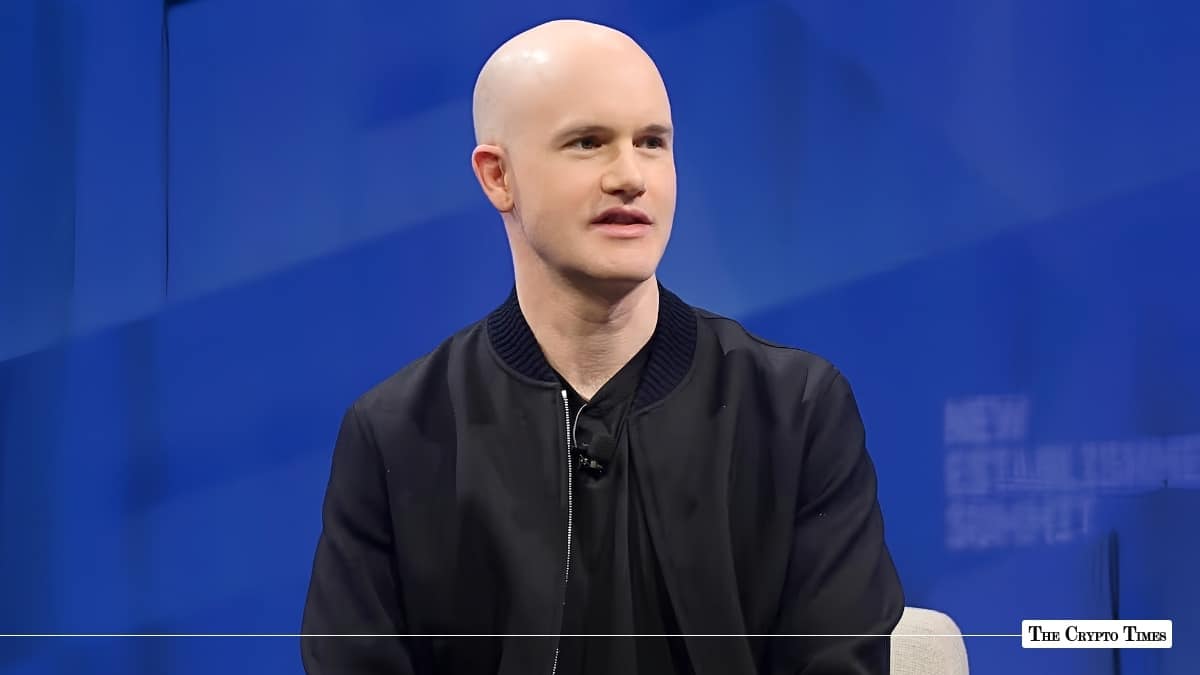
Coinbase CEO Brian Armstrong has called for the United States to overhaul its accredited investor laws, arguing the rules meant to shield ordinary people from risky deals have instead walled them off from the market’s biggest gains.

In a post on X, Armstrong said that with companies staying private far longer, only accredited investors — “aka rich people,” in his words — can buy in early, leaving retail investors to enter after an IPO once much of the upside is gone. The rules, he wrote, were created with good intentions but have in practice “made it illegal to get richer, unless you’re already rich,” calling the result a “regressive tax.”

Armstrong’s Case Against the Rules

Under current Securities and Exchange Commission rules, an accredited investor must earn at least $200,000 a year ($300,000 jointly) or hold a net worth above $1 million excluding their primary residence — thresholds that gate access to private placements, venture rounds, and other high-growth opportunities. Armstrong’s core complaint is that the gate now matters more than ever, because the most valuable companies are delaying public listings for years, concentrating early returns among the wealthy and institutional investors who qualify.

He laid out two possible fixes. The first is a merit-based standard, such as a financial-literacy test: pass it and you qualify, regardless of income. The second is more radical — remove the rule entirely and let consenting adults assess their own risk, while keeping disclosure requirements and fraud enforcement to punish bad actors. “We have to judge policies based on their outcomes, not on their intentions,” he argued.

The Crypto Play Behind the Pitch

The argument is not a one-off. It extends a sustained Coinbase campaign to reshape how capital is raised and who can access it. In January, Armstrong proposed fully on-chain public listings — a “press the raise money button” model settled in USDC — and said Coinbase had been working with the SEC on structures to let ordinary investors join on-chain financings under appropriate safeguards. It also maps onto his broader eight-point framework for crypto’s future, which centers on tokenizing real-world assets, 24/7 trading, and expanding access to capital formation.

That context matters, because Coinbase stands to benefit directly from any loosening. The company has made tokenized equities a top regulatory priority and added stock trading in late 2025, positioning itself as an “everything exchange.” And the access gap Armstrong describes is one the industry is already racing to monetize. In the run-up to SpaceX’s June IPO, at least eight crypto platforms scrambled to offer pre-IPO SpaceX exposure, with venues like Trade.xyz and Ventuals listing pre-IPO perpetual futures on still-private giants such as SpaceX, OpenAI, and Anthropic — synthetic products built precisely to give retail a way around the private-market wall. A rule change that brought retail into those markets directly, rather than through derivatives, would only widen the opportunity. Armstrong’s policy argument and the industry’s product roadmap point in the same direction.

Why the Rules Exist, and the Pushback

The accredited investor framework exists precisely because private securities are riskier than public ones — illiquid, lightly disclosed, and harder to value — and regulators have long held that wealthier investors are better positioned to absorb losses. Critics of loosening it warn that opening private markets to retail could expose less-sophisticated investors to fraud and blowups, the very harms the rules were written to prevent. Notably, Armstrong’s “literacy test” idea is not without precedent: the SEC already added knowledge-based pathways in 2020, allowing holders of certain licenses to qualify, and lawmakers have floated bills to create an exam-based route.

The post drew a swift response. Billionaire investor Mark Cuban quipped that Armstrong should just sell memecoins, while Oculus founder Palmer Luckey backed the critique, casting the accredited label as a form of wealth-based privilege. Others pushed back harder, arguing that crypto’s own record of speculative excess is itself a case for keeping retail protections in place — a reminder that the debate cuts across, not neatly along, industry lines.

A Familiar Debate With New Momentum

Calls to modernize accredited investor rules have circulated in Washington for years without producing sweeping change. What is different now is the backdrop: a more crypto-friendly administration, a fast-growing tokenization wave that is blurring the line between public and private markets, and a stretch of marquee companies staying private well past the point where earlier generations would have listed. Whether Armstrong’s intervention nudges the SEC toward actual reform — or simply reframes a long-running argument in sharper terms — remains to be seen. But coming from the chief executive of the largest US crypto exchange, the push lands with more weight than a typical opinion, and ties a populist-sounding policy pitch directly to the industry’s commercial ambitions.

Also Read: Coinbase CEO Brian Armstrong Lays Out 8-Point Plan for Crypto’s Future
Disclaimer: The information researched and reported by The Crypto Times is for informational purposes only and is not a substitute for professional financial advice. Investing in crypto assets involves significant risk due to market volatility. Always Do Your Own Research (DYOR) and consult with a qualified Financial Advisor before making any investment decisions.

Follow The Crypto Times on Google News to Stay Updated!      Google News
Google News Banner

TAGGED:CoinbaseUnited States
Share This Article
Whatsapp Whatsapp LinkedIn Telegram Copy Link
Dhara Chavda- Crypto Research Analyst at The Crypto Times
By Dhara Chavda
Follow:
Dhara Chavda is a Content Strategist and Research Analyst with 5 years of experience in the crypto industry. She holds a Bachelor’s degree in Computer Engineering and brings a strong technical perspective to her work. Dhara specializes in DeFi, price analysis, and the core mechanics of cryptocurrencies. She also works on crypto news, including research, analysis, and assigning stories, ensuring accurate and timely coverage of key developments in the space.

Latest News

How the New Fed Chair Just Crushed Crypto's Rate-Cut Hopes
How the New Fed Chair Just Crushed Crypto’s Rate-Cut Hopes
BitGo Europe Launches MiCA-Compliant Crypto-as-a-Service Platform in EU
Tether Kills Alloy and aUSD₮, Shifting Focus to Liquid Assets
Kentucky Sues Kalshi and Polymarket As Prediction Market Wars Escalates
Aztec Network’s RollupProcessor Exploited for $2.21 Million
Aztec Network’s RollupProcessor Exploited for $2.21 Million 

Find Us on Socials

You may also like

OKX’s Star Xu Slams Binance, Says Compliance Dodging Is Over

OKX’s Star Xu Slams Binance, Says Compliance Dodging Is Over

Bitcoin Dips, Altcoins Plunge: Full Impact of June 2026 FOMC Meeting on Crypto

Bitcoin Dips, Altcoins Plunge: Full Impact of June 2026 FOMC Meeting on Crypto

CME to Sue CFTC Over Kalshi’s Bitcoin Perpetual Futures

CME to Sue CFTC Over Kalshi’s Bitcoin Perpetual Futures

Fed Shock Hits Crypto Stocks as MSTR, COIN, MARA, BMNR Crash

Fed Shock Hits Crypto Stocks as MSTR, COIN, MARA, BMNR Crash

The Crypto Times Logo PNG

Providing real-time, accurate Crypto reporting. Your trusted source for Crypto News and Research.

Stay Updated

All News
Exclusive
Opinions
Learn
Videos

Company

About Us
Our Authors
Editorial Policy
AI Policy
Advertorial Policy

Get In Touch

Contact Us
Career

Find Us on Socials

X-twitter Linkedin Telegram Youtube Instagram

© 2026 The Crypto Times | A BITROCK TECHNOLOGIES L.L.C. Company.

DMCA.com Protection Status
  • Terms and Conditions
  • Disclaimer
  • Privacy Policy
  • Cookie policy
Do Not Sell or Share My Personal Information