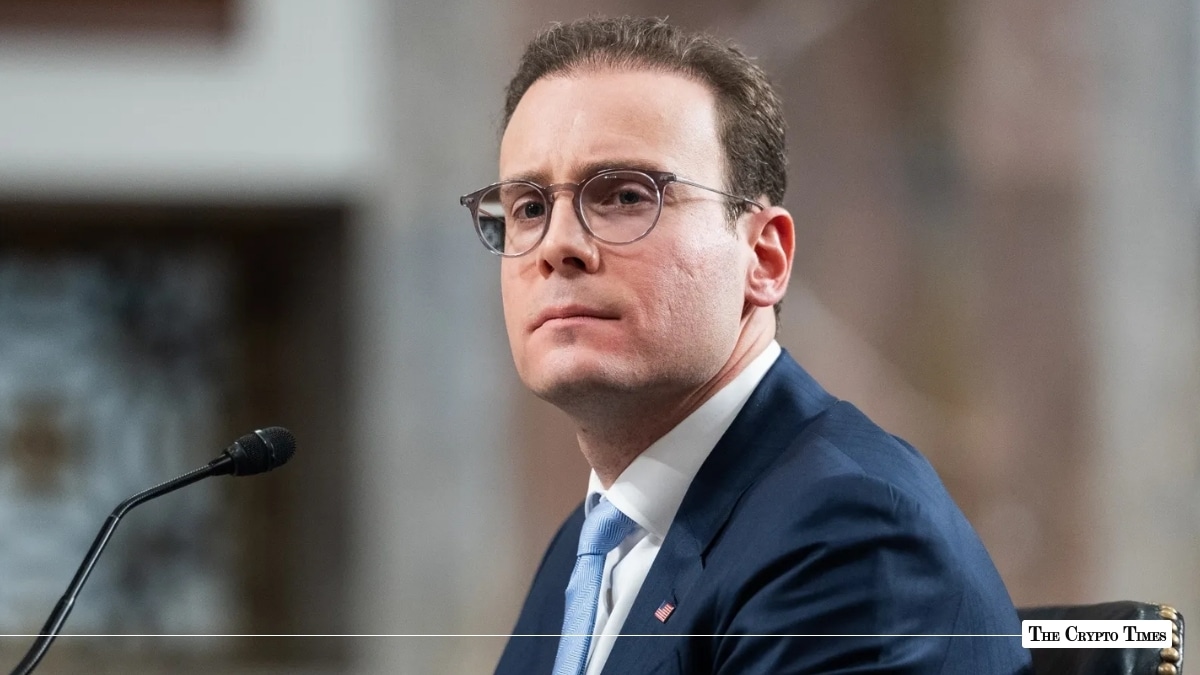
Commodity Futures Trading Commission (CFTC) Chairman Michael S. Selig has stated that the United States will prioritize financial innovation over international regulatory consensus, arguing that America should lead the next generation of financial markets rather than adopt rules designed for legacy systems.
In an opinion piece published by The Economist on August 6, Selig outlined his vision for modernizing US derivatives markets through digital assets, stablecoins, perpetual futures, artificial intelligence, and round-the-clock execution.
While affirming that international cooperation remains valuable, Selig emphasized that American regulators must champion policies that encourage domestic innovation and strengthen the country’s competitive posture in global finance.
Crypto drives the next phase
Selig noted that crypto markets have become a primary engine of financial innovation. He pointed to the launch of CFTC-regulated Bitcoin futures during President Donald Trump’s first administration as a key step that helped bring digital assets into mainstream finance by giving institutional investors regulated exposure.
According to Selig, Bitcoin exchange-traded products (ETPs) now collectively hold more than 1.2 million BTC, compared with almost none in 2016, showing how Bitcoin has become more integrated into the traditional financial system.
He also highlighted that during President Donald Trump’s second term, the CFTC approved what he called the first “true” Bitcoin perpetual contract regulated as a futures product. Unlike traditional futures, perpetual contracts do not have an expiration date and use periodic funding payments to keep prices aligned with the spot market.
The approval came in May 2026, when the CFTC authorized KalshiEX’s BTCPERP contract, allowing a U.S.-regulated exchange to offer Bitcoin perpetual futures under the federal derivatives framework instead of relying on offshore platforms.
Stablecoins and non-crypto perpetuals
Selig stated that recent federal legislation establishing a comprehensive federal framework for payment-focused, dollar-backed stablecoins opens key opportunities to integrate digital assets into financial markets. The CFTC is exploring how regulated stablecoins could be used as collateral in derivatives markets, a move he said could modernize market infrastructure while maintaining the safety and integrity of trading systems.
Beyond digital assets, Selig highlighted the launch of the country’s first major exchange offering 24-hour gold futures trading and revealed that the agency is also discussing the feasibility of non-crypto perpetual futures with industry participants.
Defense of prediction markets
The CFTC chairman also defended event contracts after several European financial regulators argued prediction markets should be treated as gambling rather than financial instruments.
Selig countered that prediction markets operate through regulated marketplaces instead of traditional bookmakers. He said these markets improve price discovery by bringing together information from participants and often provide more accurate forecasts than polls or expert predictions.
He also cited Federal Reserve research showing that prediction markets perform as well as, or better than, traditional forecasts for indicators such as the federal funds rate and consumer price inflation.
Setting global standards
Selig stressed that financial regulation must adapt to rapidly changing markets driven by automation, algorithmic trading, artificial intelligence, and real-time execution.
While reaffirming cross-border dialogue, he asserted that US rules should not wait for universal international consensus. Supporting broader legislative momentum, Selig also recently urged Congress to quickly pass the CLARITY Act, saying it would replace fragmented state rules with a clear federal framework while improving consumer protection, regulatory certainty, and innovation.
Selig’s directives mark a clear shift on his end to position the CFTC as a proactive regulator intent on retaining financial product innovation within American jurisdictions.
Also Read: Michael Saylor Says ChatGPT Helped Strategy Develop $15B Funding Plan